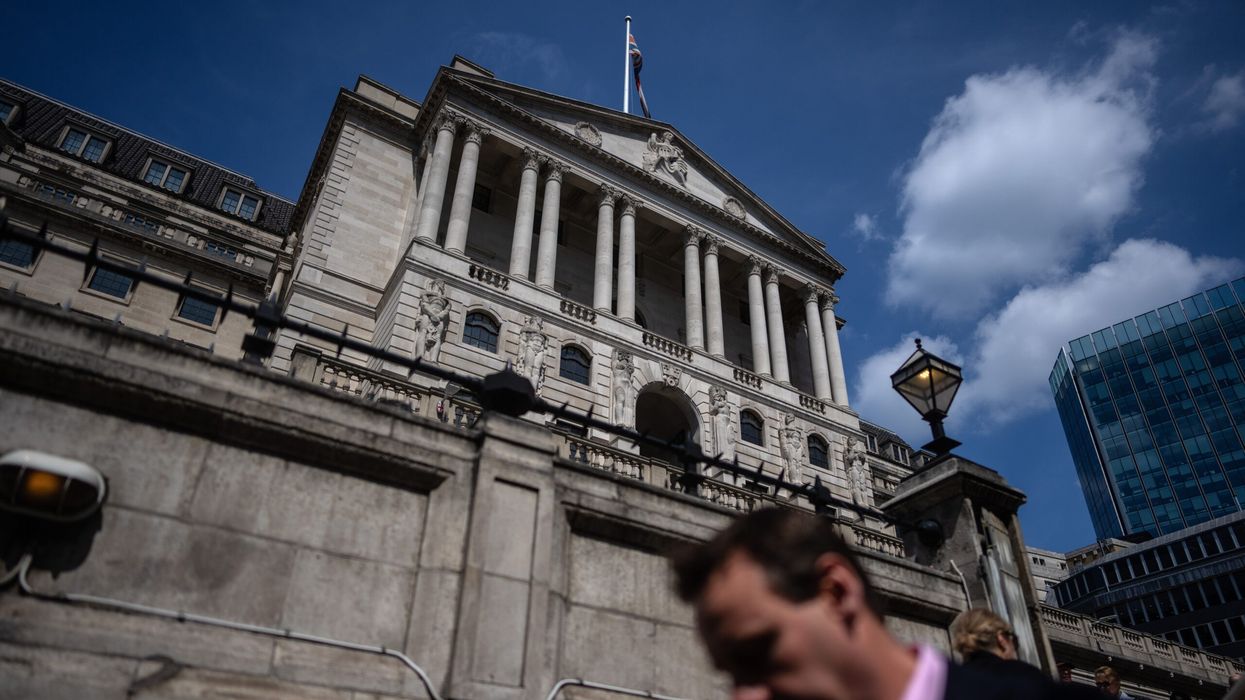

THE BANK OF ENGLAND on Thursday reduced its key interest rate by 0.25 percentage points to 4 per cent, the lowest level in two and a half years, as it looked to support the UK economy amid continued concerns over US tariffs.
The central bank also forecast that the British economy would grow by 1.25 per cent this year, a slight improvement from its earlier estimate of 1 per cent.
"The direct impact of US tariffs is milder than feared but more general tariff-related uncertainty still weighs on sentiment," the BoE said in a statement.
In May, London and Washington reached an agreement to cut tariffs of more than 10 per cent imposed by US president Donald Trump on certain UK-made products imported by the US, especially vehicles.
Thursday’s rate reduction marked the BoE’s fifth cut since it began a rate-trimming cycle in August 2024.
"Interest rates are still on a downward path, but any future rate cuts will need to be made gradually and carefully," said BoE governor Andrew Bailey.
The BoE’s primary objective is to maintain the UK’s annual inflation rate at 2.0 per cent. However, the most recent data showed inflation had risen to an 18-month high in June.
The Consumer Prices Index climbed to 3.6 per cent, with motor fuel and food prices remaining elevated.
Weak economy
Official data showed the UK economy contracted for a second consecutive month in May, and unemployment reached a near four-year high of 4.7 per cent.
The contraction has been attributed in part to prime minister Keir Starmer’s Labour government raising UK business taxes from April. That same month, the country became subject to Trump’s 10 per cent baseline tariff on most goods.
Finance minister Rachel Reeves welcomed the BoE’s decision.
"This fifth interest rate cut since the election (win by Labour in July 2024) is welcome news, helping bring down the cost of mortgages and loans for families and businesses," she said in a statement.
Last week, the US Federal Reserve held interest rates steady, resisting political pressure from Trump to lower borrowing costs to stimulate the US economy.
Asked about tariffs, Fed chair Jerome Powell said at a press conference, "We're still a ways away from seeing where things settle down."
The European Central Bank is expected to keep interest rates unchanged at its next meeting, as eurozone inflation remains close to its two per cent target. However, economists have noted this could change depending on the impact of Trump’s tariffs on the euro area.