
THE BANK OF ENGLAND (BoE) is expected to keep interest rates unchanged on Thursday, slowing the pace of its rate cuts for the first time since it began easing policy last year.
Some analysts, however, believe a rate reduction could still happen after recent data showed softer inflation and wage growth.
The BoE’s most recent rate cut — a quarter-point reduction to 4 per cent in August — was approved by a narrow 5-4 vote after two rounds of deliberation by the Monetary Policy Committee (MPC).
In September, Governor Andrew Bailey said the pace of rate cuts, which the BoE had been implementing once every three months since August 2024, was now “more uncertain.” British consumer price inflation remains the highest among major advanced economies at 3.8 per cent, driven largely by one-off factors including an April increase in employer social security charges.
However, inflation did not rise to 4 per cent in September as the BoE had forecast. Along with slower wage growth and higher unemployment, this has led to renewed expectations of a rate cut on Thursday.
Markets see one-in-three chance of cut
Financial markets on Friday priced in a one-in-three chance of a quarter-point cut on November 6, with odds rising to two-in-three by the end of the year. Last week, US investment bank Goldman Sachs revised its forecast to predict a November rate cut.
A narrow majority of economists polled by Reuters, however, did not expect the BoE to change rates before 2026.
The European Central Bank, with inflation near its target, held rates last week and appears to be at the end of its cutting cycle. The US Federal Reserve, which remains divided and under pressure from President Donald Trump, cut rates by a quarter-point to a range of 3.75–4 per cent.
James Smith, economist at Dutch bank ING, predicted another 5-4 split among BoE policymakers — but this time in favour of holding rates steady. He said a possible December cut could depend partly on Finance Minister Rachel Reeves’ November 26 budget.
Softer economic data since September was unlikely to have settled divisions within the MPC, Smith said. “Having turned more cautious over the summer, I don't think their thinking will have shifted as much as the market pricing has over the last month,” he said.
Some BoE policymakers, including Chief Economist Huw Pill and external MPC member Catherine Mann, are concerned that inflation’s rebound to near 4 per cent — less than three years after it was in double digits — could undermine public confidence in the BoE’s ability to meet its 2 per cent inflation target.
Others point to falling employment and slower wage growth as signs that pressure on pay is easing.
Bailey said last month that the latest wage data supported his view that labour market pressures were easing.
“It will not be a straightforward decision for the MPC,” said Nomura economist George Buckley, who expects a 5-4 vote in favour of a rate cut this week. He predicted Bailey and Deputy Governors Sarah Breeden and Dave Ramsden would side with external MPC members Swati Dhingra and Alan Taylor, who have consistently voted for lower rates.
BoE to implement more Bernanke recommendations
The BoE will also introduce further changes this week to how it explains its decision-making, following recommendations made last year by former US Federal Reserve Chair Ben Bernanke.
For the first time, individual MPC members will publish their personal policy views, and more attention will be given to alternative economic scenarios and different possible interest rate paths.
The MPC will also place less emphasis on fine-tuning its inflation forecasts, which have previously been used to guide market expectations.
In August, the BoE projected that inflation would not return to its 2 per cent target until the second quarter of 2027 and forecast modest annual economic growth of 1.25 per cent for this year and next.
(With inputs from Reuters)
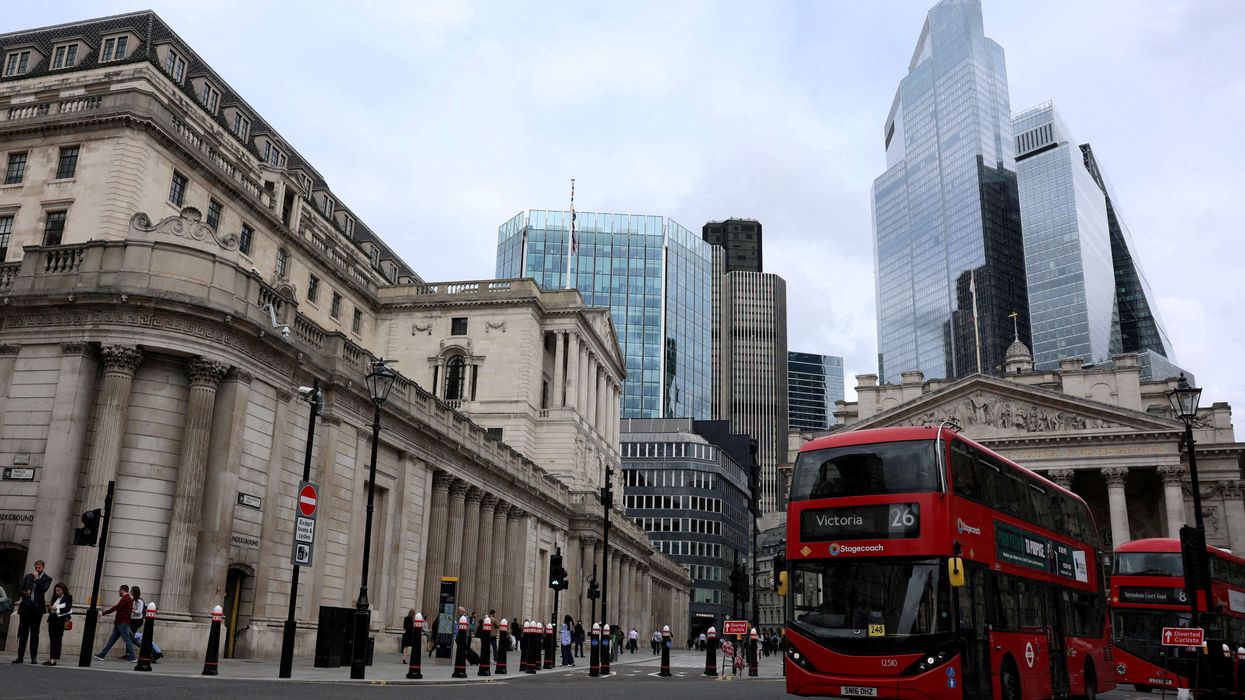
The Bank of England is pictured on May 9, 2024 in London. (Photo: Getty Images)
 The Bank of England is pictured on May 9, 2024 in London. (Photo: Getty Images)