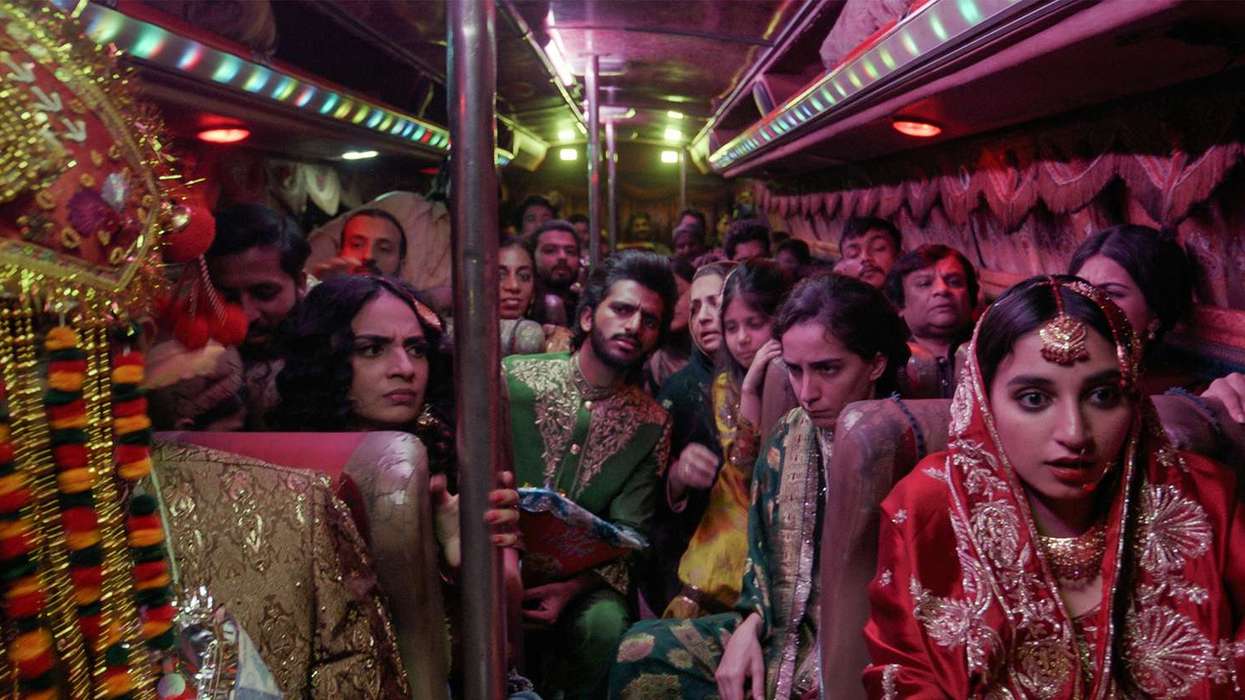

Highlights
- Bangladeshi filmmaker Mohammad Touqir Islam tells Eastern Eye how floods and the 2024 student-led movement inspired his debut feature Delupi.
- The film combines real stories from a flood-hit village with fictional characters to explore resilience, political change and social divisions.
- Indian filmmaker Anurag Kashyap is helping present the film internationally ahead of its UK premiere.
When floods cut off a remote village in southern Bangladesh, its residents attempted to protect their homes by building a dam themselves. Their determination became the starting point for Delupi, the debut feature by filmmaker Mohammad Touqir Islam, which brings together environmental disaster, political upheaval and the lives of ordinary people.
The film began with two events that shaped Bangladesh in 2024. A student-led uprising led to the fall of Sheikh Hasina’s government, while severe floods affected several parts of the country. In an exclusive interview with Eastern Eye, Touqir explained how these events led him to Deluti Union in Paikgachha, Khulna, where he found a story of people relying on one another when outside help failed to arrive.
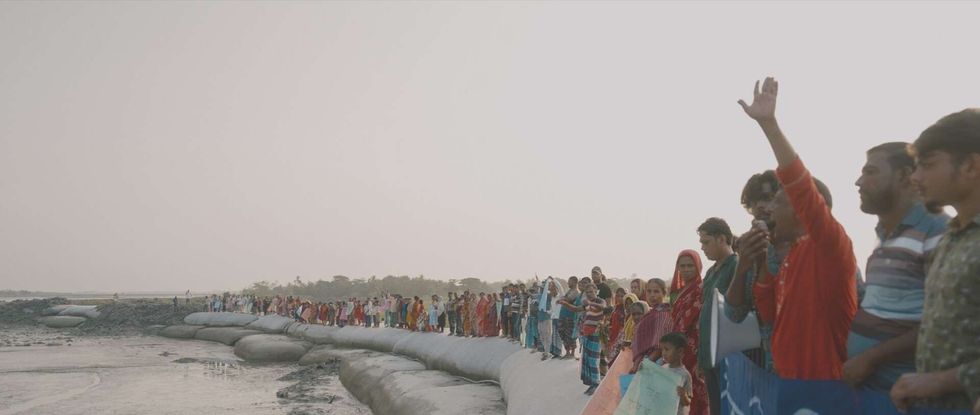 Their determination became the starting point for DelupiTouqir Islam
“We didn't have any story. We only had the vision that we had these two concepts and we wanted to make a film on them,” he said, speaking in Bengali through an interpreter.
Although flooding had affected other regions, the response in Deluti stood out to him.
“In other regions, help was coming from other places. But in Deluti Union, the people only had themselves,” he said. “No help came from outside. They were trying to build the dam by themselves. This story of resilience attracted us, and we thought we could go there and make a film telling the story of these resilient people.”
How real village stories shaped Delupi
Rather than building the film entirely around an invented narrative, Touqir and his team spoke to residents and incorporated their experiences into the screenplay.
“When we went to the village, we started to communicate with the local people,” he said. “The story of Nupur is a real story of people from that village. We collected their stories, and then to connect the dots, we also made some fictional stories.”
The film follows Mihir, a young activist determined to build a protective dam for his community. Although Mihir is fictional, his character was inspired by people Touqir encountered during the crisis.
“We didn't find a true Mihir in that village,” he said. “But we did find someone who was trying to collect people and funds to build the dam.”
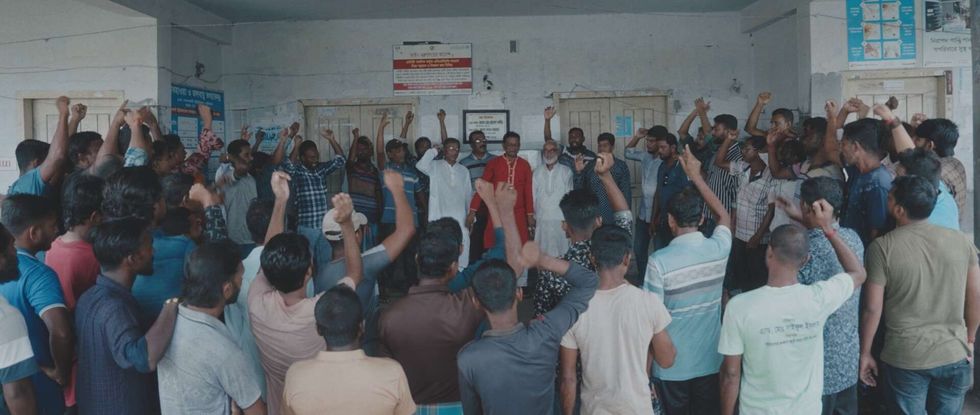 Touqir wanted Mihir to represent young people who genuinely hoped to improve their countryTouqir Islam
The student movement also influenced the character. Touqir wanted Mihir to represent young people who genuinely hoped to improve their country, particularly after some student activists became involved in corruption following the political upheaval.
“But there were also students who had genuine intentions to build a better nation,” he said. “Mihir represents those students who still have hope and a genuine interest in developing our country.”
The film also follows Partha and Nupur, whose relationship is complicated by their different social and caste backgrounds. Their personal struggles unfold against the larger environmental and political crises surrounding them.
“There were major crises in the film, the political crisis and the environmental crisis,” Touqir said. “In relation to those, the crisis of Nupur and Partha may seem very small and insignificant. It's a very personal crisis.”
“But during major crises, we often tend to neglect the smaller, personal ones. They are not that insignificant. They have their own importance and their own demand to be resolved.”
For Touqir, the couple's eventual union represents the possibility of a fresh start. “As they come together, they begin a new life,” he said. “Philosophically, that is what I wanted to convey: a new beginning.”
Why Touqir Islam chose local people instead of professional actors
One of the film's defining features is its use of people from the region, including farmers, fishermen, teachers and folk performers, rather than relying on professional actors.
Touqir wanted the performances to reflect the reality of the community and the crisis as closely as possible.
“This is a very hyper-realistic film, so I wanted the characters to be natural and real, rather than very good acting,” he said. “The film was shot while the crisis was ongoing. It was easier to cast local people and let them play their own roles than to bring in professional actors and train them to adjust to these lives.”
He describes his filmmaking approach as “incidental film”, a process of making cinema while events are still unfolding. For him, feature films can preserve experiences that might otherwise disappear as one crisis gives way to another.
“We live in a world of events. One event comes after another, and they change before we can hold on to them,” he said. “More than news or documentation, I feel a feature film can be a very strong medium to hold these events, and later it has very good archival value.”
Working with first-time performers, however, required patience. A scene between Mihir and Zakir, a local political operator, during the construction of the dam took three days to complete.
“It's full of surprises, because we can't predict when we will get the right expression or dialogue delivery,” Touqir said. “It's like catching fish with a rod. We don't know which fish we are going to get. The wait, the patience and the anticipation are very exciting.”
 The film has also received support from Indian filmmaker Anurag KashyapTouqir Islam
Anurag Kashyap helps take Delupi to international audiences
Beyond its account of a village confronting disaster, Delupi carries a message about unity in a country divided by different political beliefs and social experiences.
“This film reflects our society and our country as a whole,” Touqir said. “We might be people of different ideologies and different ways of thinking. But for the sake of our country and society, at some point we need to get united, for our own sake.”
The film has also received support from Indian filmmaker Anurag Kashyap, who watched it, reviewed it on Letterboxd and agreed to help present it internationally.
For Touqir, the involvement of a filmmaker whose work inspired him and his collaborators was particularly meaningful.
“Anurag Kashyap watching our film was a huge thing for us, because we grew up watching his films and getting inspired. He is a favourite filmmaker of ours,” he said.
“After he watched the film, we both agreed that it needs to reach more people. So he agreed to help us present the film, and now we are both working on reaching more people in every way possible.”
The film's journey began in Deluti itself. Having promised residents that they would see it first, the team organised its initial screening on the grounds of a primary school in the village.
It subsequently opened in Bangladeshi cinemas in November 2025 and received its international premiere at the International Film Festival Rotterdam before travelling to other European festivals. Its UK premiere is scheduled for Saturday, 24 October, at the London Breeze Film Festival, followed by a question-and-answer session.
Touqir said audiences from the village to international festival screenings had found their own ways to connect with the story.
“We're very excited for it,” he said. “I've seen the film with village audiences, then local audiences, then city audiences, and then global audiences. Everywhere, people connect with the film and interact with it in their own way.”
“When we see a film from a different culture, we connect with it if it has life in it. I guess we managed to put life in our film. That's why global audiences can connect with it.”
A theatrical release in India remains a challenge for the team. Touqir said the lack of access to Indian cinemas was a missed opportunity, particularly given the shared language and culture between Bangladesh and Bengali-speaking audiences in West Bengal. The filmmakers are in discussions with Indian film festivals and are also planning an over-the-top streaming release.
For Touqir, the film remains the clearest way to communicate his thoughts about society, politics and the people whose lives inspired it. Asked to sum up his approach to expressing himself, he offered a simple answer in English.
“What I want to say, I tell through my cinema.”