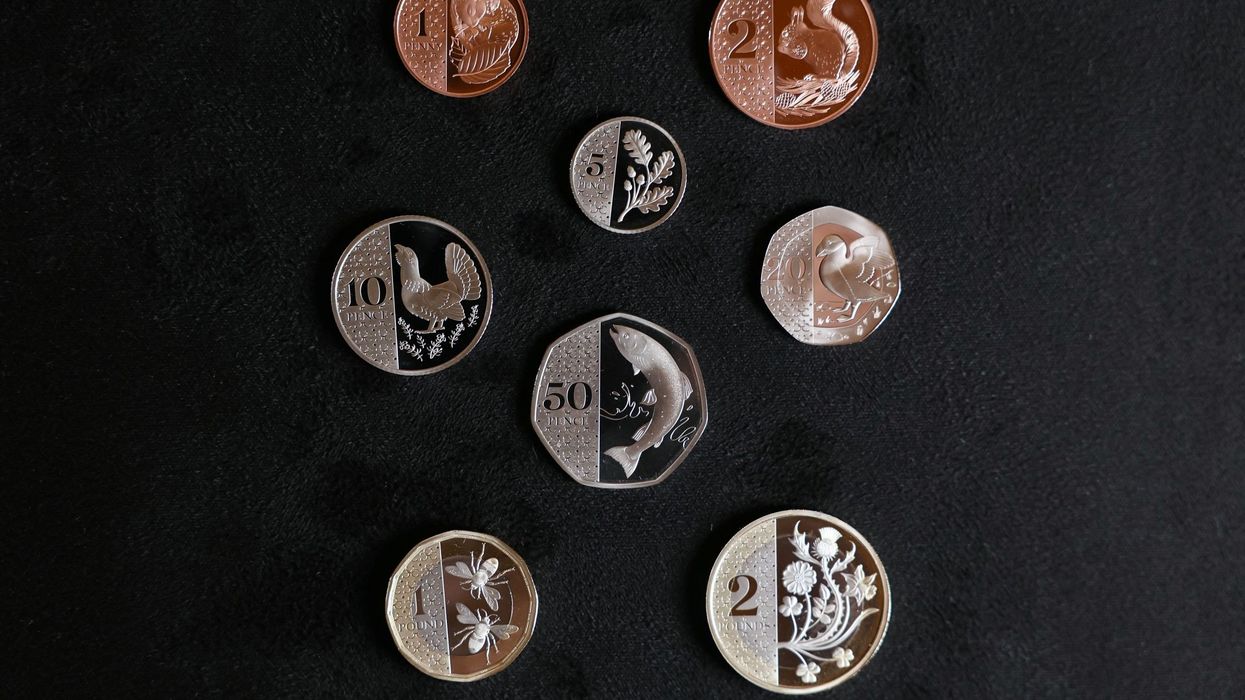

The Royal Mint has revealed eight new coin designs, showcasing King Charles' dedication to conservation and the natural world. Overseen by the king, the eight designs showcase the flora and fauna from different regions of the UK.
The 1p coin displays a hazel dormouse, the 2p coin depicts a red squirrel, the 5p coin features an oak tree leaf, and the 10p coin showcases the critically endangered woodland grouse, the capercaillie, The Guardian reported.
Additionally, the 20p coin portrays a puffin, the 50p coin displays a salmon, the £1 coin exhibits two bees, and the £2 coin includes symbols representing England, Wales, Scotland, and Northern Ireland: a rose, a daffodil, a thistle, and a shamrock, respectively.
The upcoming coin designs are set to replace the existing shield emblem, which showcases symbols representing the home nations: a rose, a thistle, a shamrock, and a leek, introduced during Queen Elizabeth II's reign in 2008.
These new coins, ranging from the 1p to the £2 denomination, are expected to enter circulation by the year's end. The coins will feature an effigy of the king, skillfully crafted by sculptor Martin Jennings and unveiled by the Royal Mint in 2022.
Following the British coinage tradition, the king's portrait will face left, contrasting with the late queen's right-facing portrait.
Chris Barker, the information and research manager at the Royal Mint Museum, said that by tradition British colony design had been dominated by heraldry.
According to Barker, the introduction of coins featuring flora and fauna marks a significant departure from centuries-old traditions in British coinage. He noted that while heraldic designs have been the norm for centuries, the new coins symbolise a shift toward nature-inspired themes, representing a complete gear change in the history of British currency.
He emphasised that these coins symbolise the current era, addressing issues such as climate change, and align with the conservation efforts championed by Charles.
A recurring design element of three interlocking C’s has been incorporated into all the coins, drawing inspiration from history and Charles II's cypher.
Additionally, the coins feature large numbering, a departure from past designs, aimed at enhancing accessibility.
Nicola Howell, chief commercial officer at the Royal Mint, expressed their intent to captivate younger audiences, fostering an understanding of numeracy skills and the value of money.
She emphasised the coins' potential to spark discussions and engage people in conversations about their value and design.
She added that the prominent numerical figures on the coins would aid tourists unfamiliar with the British coinage system. She also said that the designs enable everyone to appreciate British nature and expressed hope that the coins would initiate discussions and kindle interest in conservation.
The Latin inscription encircling the edge of the £2 coin, chosen by the king, reads "In servitio omnium," translating to "In the service of all." This phrase was drawn from the king’s inaugural speech in September last year.
The designs for the coins were supervised by Gordon Summers, the chief Royal Mint engraver, in collaboration with an advisory committee at the Royal Mint. Additionally, the Royal Horticultural Society (RHS) and the Royal Society for the Protection of Birds (RSPB) provided their support in creating these designs.