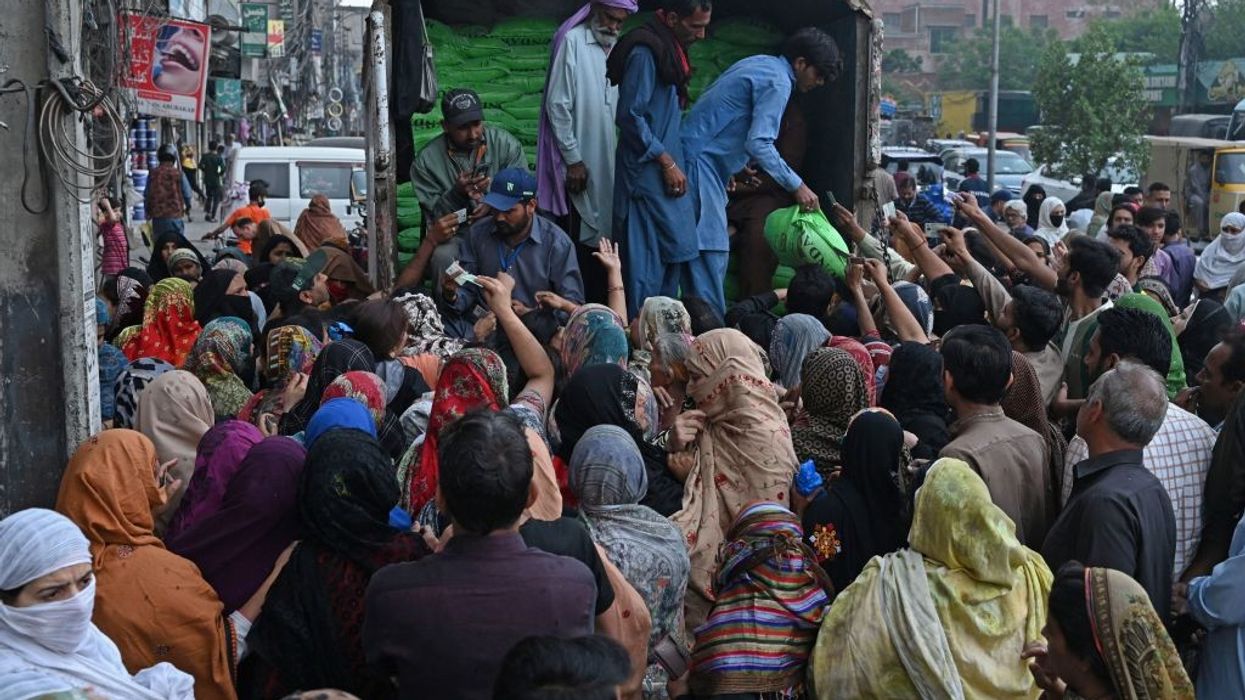
Naureen Ahsan earns more than twice the average wage in Pakistan, but the school administrator says she has no choice but to homeschool her daughters and delay their London-board certified final exams because she can't afford their education.
Like most people in the nation of 220 million, Ahsan and her husband, who owns a car servicing business, are struggling to cope with a surge in living costs triggered by the government's devaluing the currency and removing subsidies to pave the way for the latest tranche of an International Monetary Fund (IMF) bailout needed to stave off economic collapse.
Pakistan is no stranger to economic crises - this is its fifth IMF bailout since 1997 - but economists say the latest measures, which include higher taxes and fuel costs, are hurting educated professionals. Many say they are cutting down on necessities to make ends meet.
"We don't eat out any more," Ahsan said. "We no longer buy meat, fish. I've cut down on tissue paper and detergent. We don't see friends, we don't give gifts. Occasionally, we scream at each other."
The government-mandated minimum wage is about 25,000 rupees (£72.85), but with inflation at a record 31.5 per cent in February, its highest rate in nearly 50 years, many people who earn much more than that say their salaries do not last the month.
Abhi Salary, one of Pakistan's biggest fintech firms, which allows its 200,000 or so subscribers to withdraw wages in advance, says transactions have increased by more than a fifth every month for the last three months. Most people spend two-thirds of their money on groceries as they rush to stock up before prices rise again, Abhi CEO Omair Ansari said.
"Unfortunately the poor in Pakistan are left with nothing to lose," said Abid Suleri, the Sustainable Development Policy Institute of Pakistan, an economic think tank. "Educated professionals... find their purchasing power and savings eroded, and daily consumption either unaffordable or out of reach."
Ramadan, which began this week, is likely to add to price pressures in Muslim-majority Pakistan. Analysts predict inflation to rise to at least 35 per cent a month in March and April.
During the holy month, Muslims traditionally break their daylong fast with special foods and at large family gatherings, culminating in the Eid al-Fitr festivities. This year, for many people, Ramadan means more belt-tightening.
"We're cutting down on the number of meals and the food," said Ahmed, a senior manager at a multinational company who declined to give his family name because he was worried about possible backlash from his employer. "It will be more difficult to buy sweets and gifts for Eid, which is a break from our family tradition."
The economic turmoil is driving some professionals out of the country. Khaliq, a doctor who also didn't want to be give his full name because he was embarrassed by his financial situation, said he and his wife, who is also a doctor, work as much as they can to save up for exams to qualify them to work in Britain.
"We think twice about eating out or using the car," he said, adding that the weakening rupee was making the cost of their exam, which is in British pounds, higher by the day. "We plan to pass the exams and move out ASAP."
(Reuters)
Pakistan struggles with high costs as economy teeters
The economic turmoil is driving some professionals out of the country