
Highlights
- Novak Djokovic, 39, has returned to the China Open for the first time in 11 years, still holding a perfect career record in Beijing
- He's shown visible physical struggles in both his opening matches, repeatedly glancing at his box as if searching for answers
- He battled from the brink of defeat to beat Chinese wildcard Bu Yunchaokete, after also needing a tiebreak to see off Nuno Borges
- Despite his own struggles, Djokovic has spoken warmly about the rise of Chinese tennis, including the players now testing him hardest
Novak Djokovic is losing fights with his own body in Beijing. He keeps winning anyway.
A body that isn't cooperating
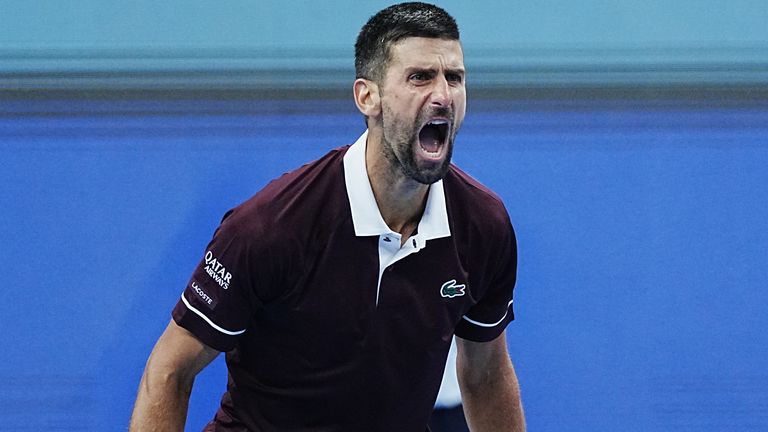
In both of his opening matches at this year's China Open, Djokovic has looked drained early, visibly anguished, repeatedly glancing toward his box as if trying to work out why he felt so bad so early into straightforward best-of-three matches. He needed a tiebreak to get past Nuno Borges, then had to fight back from the brink of defeat against Chinese wildcard Bu Yunchaokete — only to end both matches looking stronger than he had at the start, in what one commentator called a genuinely strange pattern for a player of his experience.
It isn't a new story this season. Djokovic has spoken openly since the Cincinnati Open about ongoing physical problems, and his first-round exit at this year's US Open, to Argentina's Mariano Navone, stunned even those used to seeing him grind through adversity. Tennis legend John McEnroe, speaking at a Eurosport and HBO Max event, didn't dress up what he'd seen: "Father Time, as they say, is undefeated. It's just one of those things." He pointed out that Djokovic had still reached the Wimbledon semi-finals and taken a set off Carlos Alcaraz in the Australian Open final this year — form that made the US Open collapse "shocking" by comparison, not a steady decline so much as a sudden, confusing drop.
The record he's still defending
What makes this Beijing run notable is the backdrop: Djokovic hadn't played the China Open since 2015, and arrived this year holding a six-time champion's record and an unbeaten streak in the city stretching back over a decade. In his pre-tournament press conference, he reflected on just how long he'd been away: "Eleven years has passed since I played here the last [time]. I have great record here. Always enjoyed playing in Beijing — in China in general, particularly here in Beijing. Great support. Great atmosphere." He also noted how much the facilities had changed since he first competed on courts built for the 2008 Olympics, calling it "one of the most impressive [venues] that we have in our sport."
Generous about the players now pushing him hardest
What's struck people almost as much as his physical struggles is his tone toward the rising Chinese players responsible for some of them. After his tight win over Bu Yunchaokete — the wildcard who had him on the ropes — Djokovic was unreservedly warm about the moment, and about Chinese tennis more broadly, pointing to Zhang Zhizhen's progress as a breakthrough for the men's game in a country whose success had mostly come through its women players, led historically by Li Na. He's previously said he thinks China's growth on the men's side "can only go up," crediting investment and infrastructure he says most countries outside the Grand Slam nations simply don't have.
It's a rare thing in elite sport: a 24-time Grand Slam champion, visibly struggling with the exact kind of physical decline that ends careers, still finding genuine enthusiasm for the players who may one day end his unbeaten record in the city he loves most. For now, at 30 matches and counting, that record is still his.