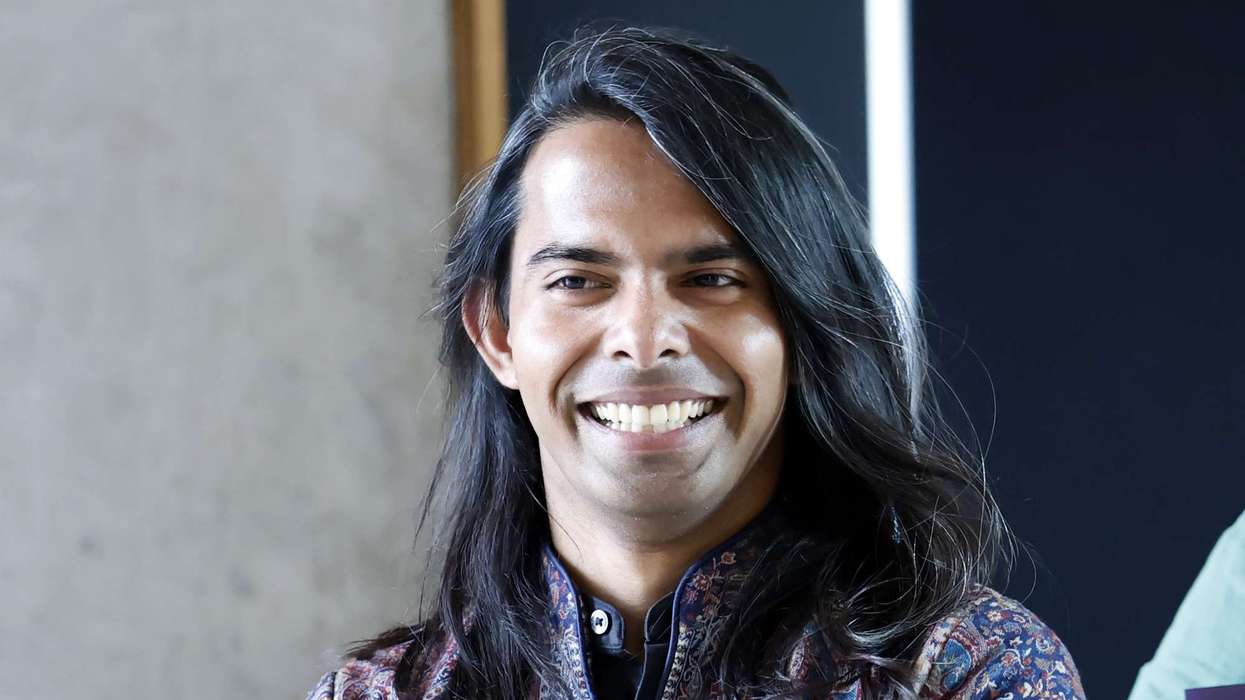

An INDIAN doctoral student from Tamil Nadu, who moved to Scotland on a student visa four years ago, has been elected to the Scottish Parliament, triggering debate around immigration, identity and political representation in the UK.
Q Manivannan, who identifies as non-binary and says they represent “diversity in power”, is among the newest members of the Scottish Parliament, also known as Holyrood.
The PhD student was elected on the Edinburgh and Lothians East regional list for the pro-independence Scottish Greens. Results of the elections held last week were announced on May 9.
“My name is Dr Q Manivannan, I am a transgender Tamil immigrant, my pronouns are they/them," said Manivannan while standing with supporters.
“I am to some in this country everything that the hateful despise and I am standing here as your MSP (Member of the Scottish Parliament) now with care. They say politics is the art of the possible, a politics of care I would say expands what is possible for everyone left behind, pushed out or never invited in,” the Indian student said.
Born in Tamil Nadu, Manivannan moved to Scotland in 2021 on a student visa to study international relations at the University of St Andrews.
Before the election victory, the Indian national had been crowdfunding online for a Graduate Visa, which allows doctoral students to live and work in the UK for three years after their student visa ends.
"Every barrier placed before me with the Greens was the reason also that we pushed further. This is what diversity looks like in power," said Manivannan, who uses the pronouns they/them.
The election has drawn criticism from anti-immigration voices over rules allowing some foreign nationals living in Scotland to contest elections.
“Dr Manivannan may be a nice young person. But I don't want to live in a country where people on student visas can become elected representatives to national parliaments," said Robert Jenrick, former Tory minister and now shadow chancellor in the anti-immigration Reform UK.
Manivannan was eligible to contest the election as a Commonwealth national under a rule change allowing foreign nationals on short-term visas, without indefinite leave to remain or permanent residency, to stand in elections in Scotland.
“Politicians should commit to removing the automatic right of Commonwealth citizens to vote in UK elections, and the ability of non-British citizens to stand in British elections,” Migration Watch, a pressure group campaigning for immigration curbs, said in a statement.
Scottish Greens co-leader Gillian Mackay told reporters that the party would support Manivannan through the process of applying for a new visa.
“There will have to be a renewal of Q's visa. That is a process they will have to complete over the session of Parliament,” Mackay said.
Manivannan’s campaign pamphlet described them as a politics PhD student, arts worker, co-convenor of the Scottish Green Party’s Palestine Solidarity Group, former United Nations health and disability worker and immigrant.
“If my mere existence causes this much trouble, I'm excited to see how much my words will,” Manivannan said in a social media post after the election results on Saturday.
The Scottish Greens said the Scottish Parliament had “rightly and explicitly” allowed people like the “queer Tamil immigrant” to contest the May 7 elections to “bring a politics of care and compassion to Holyrood”.
"Q is on a valid visa with the right to work and live in Scotland, and is a Commonwealth citizen. The UK's visa system is needlessly expensive and hostile, and we are determined to replace it with one that welcomes people with care rather than throwing up hurdles and barriers," a party spokesperson said.
The Scottish Greens made gains in last week's election in Scotland and in local councils across England.
(With inputs from agencies)