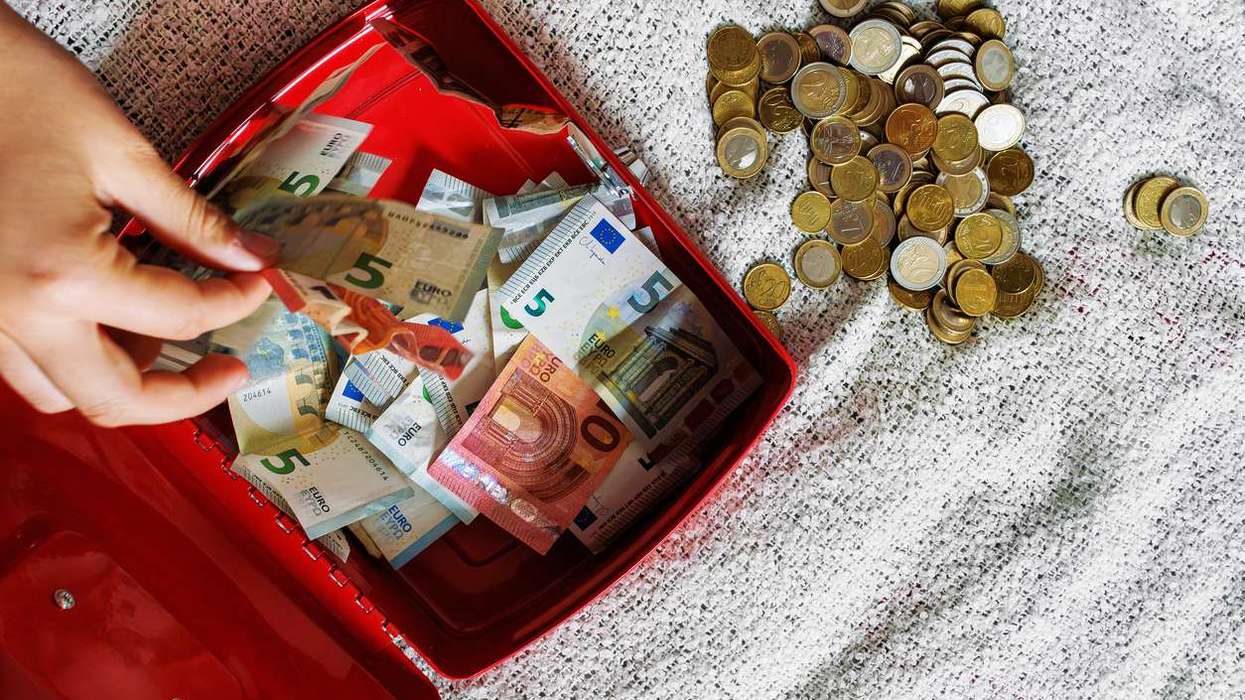

- Nearly one in five Britons now keep emergency cash at home
- Tinned food, torches and power banks are becoming common household backups
- Fears over cyber-attacks, blackouts and payment failures are driving the trend
A growing number of people across the UK are quietly preparing for the possibility that everyday life could suddenly stop working as normal.
From keeping cash hidden at home to stocking cupboards with tinned food and buying battery-powered torches, many Britons appear to be building small “emergency plans” of their own amid rising concerns over cyber-attacks, power outages and wider global instability.
Fresh data from Link, the UK’s ATM network, suggests the trend is moving beyond survivalist fringe culture and into ordinary households. The research found that 17 per cent of people now keep a stash of cash at home in case digital payment systems fail during a major disruptive event.
The findings come at a time when concerns around infrastructure resilience have grown sharply, with wars continuing in the Middle East and Ukraine, alongside repeated warnings about cyber threats, energy disruptions and extreme weather events affecting critical systems.
From card failures to canned food
According to the survey, many people are thinking less about dramatic doomsday scenarios and more about practical disruptions that could interrupt daily routines.
When respondents were asked how they would cope if card and mobile payments stopped working in shops, 54 per cent said they would head to an ATM to withdraw cash. Another 41 per cent said they would use whatever cash they already had in their wallets, while 36 per cent said they would rely on money stored at home.
Food preparation was another major theme. Around 47 per cent of respondents said they already keep supplies of tinned goods at home, while 49 per cent said they had battery-powered items such as torches ready in case of blackouts. More than a third, or 37 per cent, said they kept portable power banks to charge mobile phones during emergencies.
The survey also found that 20 per cent had access to portable gas hobs or camping stoves, while 15 per cent owned analogue radios that could still work during communication outages.
Only 27 per cent said they had done nothing at all to prepare for a disruptive event.
Interestingly, some respondents appeared to be planning specifically for banking or payment failures. Around 15 per cent reportedly said they had set aside banknotes and coins specifically for emergency situations where electronic payments might collapse temporarily.
A growing sense of uncertainty
The shift reflects a broader feeling that modern systems may not always be as dependable as people once assumed.
Graham Mott, director of strategy at Link, reportedly said the findings showed that cash was increasingly becoming part of people’s resilience planning as concerns around cyber-attacks and power outages rise.
The UK government has also been urging households to think more seriously about emergency preparedness. Its official Prepare guidance recommends that people keep essentials at home, including bottled water, first aid supplies, battery-powered torches, radios, spare batteries and non-perishable food that does not require cooking.
Specialist prepper shops have also reportedly seen stronger demand in recent years, particularly after the Covid lockdown period changed public attitudes around shortages and supply chain disruptions.
For many households, the idea no longer appears to be about preparing for an apocalypse. Instead, it is increasingly about managing the possibility that everyday services from electricity to online banking may not always be available when needed.