
India’s prime minister Narendra Modi will visit China later in August, his security chief said on Tuesday (19), during talks with Beijing's foreign minister in New Delhi.
Modi will attend the Shanghai Cooperation Organization summit opening on August 31 in Tianjin, his first visit to China since 2018, Ajit Doval said, in public comments at the start of a meeting with Beijing's foreign minister Wang Yi.
"Our prime minister will be visiting for the SCO summit," Doval said, speaking of "new energy" in diplomatic ties.
China "attaches great importance" to Modi's visit to the SCO summit, Wang said, according to an official translator.
"History and reality proves once again that a healthy and stable China-India relationship serves the fundamental and long term interests of both of our countries," Wang added.
The comments came as the neighbours rebuild ties damaged by a 2020 border clash.
"There has been an upward trend. Borders have been quiet. There has been peace and tranquillity," Doval told Wang as he opened the talks.
"Our bilateral engagements have been more substantial. The new environment that has been created has helped us in moving ahead in the various areas that we are working on.”
Wang said the setbacks the two countries experienced over the past few years were not in the interests of the people of the two countries, according to a translation of his remarks.
During talks on Monday (18) with Subrahmanyam Jaishankar, India's foreign minister, Wang said the two countries should "view each other as partners and opportunities, rather than adversaries or threats".
He pointed to the resumption of "dialogue at all levels" and "maintenance of peace and tranquility in border areas" as evidence bilateral ties were on a "positive trend of returning to the main path of cooperation".
Earlier on Tuesday, an Indian source said China had promised to address three key Indian concerns.
Wang, the source said, had assured Jaishankar that Beijing is addressing India’s need for fertilisers, rare earths and tunnel boring machines.
The Indian foreign and mines ministries did not respond immediately to requests for comment.
China's commerce ministry also did not immediately respond to a request for comment.
It was not immediately clear whether China had agreed to approve export licenses faster or grant blanket exemptions for India.
China has previously committed to speeding up export licenses for Europe and the US, without actually dismantling the control regime.
China's exports of rare earths and related magnets jumped in June after these agreements and as the commerce ministry worked through a huge backlog of applications.
However, rare earth magnet exports to India were still down 58 per cent compared to January levels, according to Chinese customs data.
June is the last month for which country-level data is available.
India has the world's fifth-largest rare earth reserves, at 6.9 million metric tons, but there is no domestic magnet production. India relies on imported magnets, mainly from China.
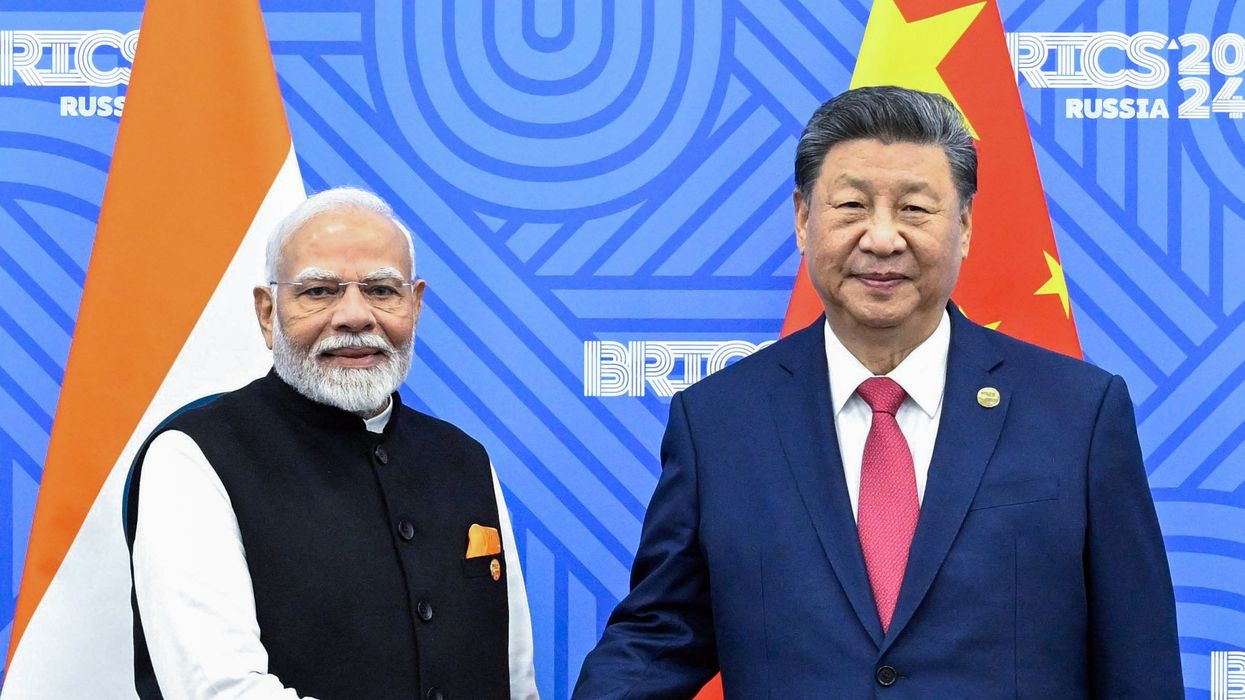
Bilateral relations have improved since October, when Modi and Chinese president Xi Jinping met for the first time in five years in Russia.
Chinese and Indian officials have said in recent weeks that the two countries were discussing the resumption of border trade, which has been halted since 2020.
Its resumption would be symbolically significant, and follows discussions to resume direct flights and issue tourist visas.