
Highlights
- CO2 used to slaughter nearly all pigs and two thirds of chickens in Britain.
- Supplies could fall to just 18 per cent of current levels.
- Emergency laws being considered to force factories into CO2 production.
According to a report by The Times , Carbon dioxide is used in the slaughter of nearly all pigs and more than two thirds of chickens in Britain. Without adequate supplies of the gas, meat processing lines slow down or stop entirely.
A secret government analysis has now warned that the prolonged closure of the Strait of Hormuz could cause CO2 supplies to collapse to just 18 per cent of current levels by June 2026, triggering a cascade of disruption across the food industry.
The warning did not come from outside observers. It came from inside Whitehall itself, where senior officials have been quietly preparing for what they describe as a reasonable worst-case scenario.
Farming and hospitality are expected to be hit earliest and hardest, given how deeply the food supply chain depends on CO2 at almost every stage, from slaughter to shelf.
Planning behind scenes
Senior officials from No 10, the Treasury and the Ministry of Defence have been secretly rehearsing the crisis under an exercise codenamed Turnstone, run through the government's emergency committee Cobra.
The scenario was set in June 2026 and assumed that the Strait of Hormuz had not reopened and that no permanent peace deal had been reached between the United States and Iran.
The exercise was attended by civil servants from the departments for health, defence, business, the environment, energy, housing and communities, as well as the Treasury, No 10 and the Food Standards Agency, underlining how seriously the government is treating the risk.
Beyond meat, CO2 plays a quiet but vital role across the food and drinks industry. It extends the shelf life of packaged salads, baked goods and processed meats.
It is also what makes fizzy drinks fizzy, meaning breweries and soft drink manufacturers would face serious disruption.
Officials raised specific concern about the timing of a potential shortage coinciding with the Fifa World Cup, which begins on 11 June, when demand for food and drink typically surges.
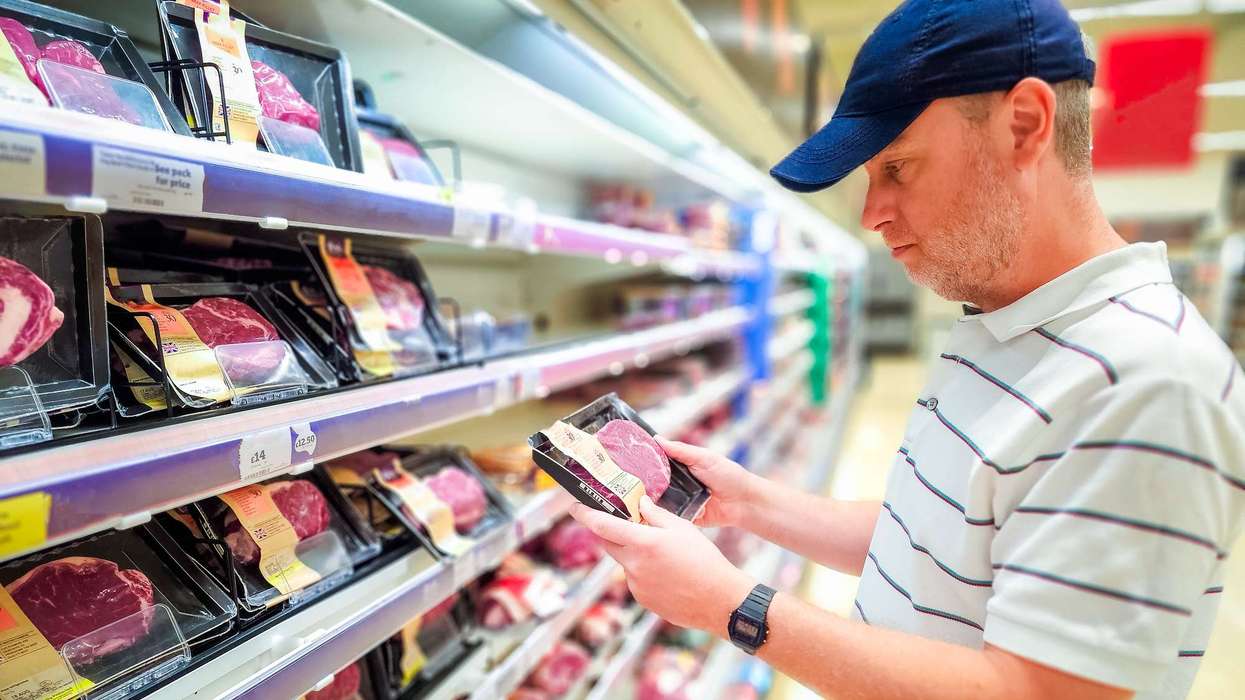
While officials do not expect a complete collapse in food availability, they warned there could be a noticeable lack of product variety on supermarket shelves.
Concern was also raised that such visible shortages could undermine wider government messaging around the security of supplies in other areas.
Healthcare has been identified as the top priority should CO2 supplies fall critically low. Dry ice, which is produced from carbon dioxide, is essential for cooling blood supplies, organs and vaccines.
A shortage could therefore pose a direct risk to life, as well as threatening Britain's civil nuclear supply chain.
To prevent the worst-case scenario from becoming reality, the government has drawn up plans to ask factories to increase CO2 production to full capacity by pausing other manufacturing.
Competition law may also be relaxed to allow prioritisation of limited CO2 supplies to critical sectors.
Business secretary Peter Kyle told Times Radio that ministers were prepared to act with creativity and boldness, adding that he had personally attended several of the contingency discussions.
He stressed that the situation in the Middle East was still unfolding and that the government's response would depend on how events developed.
Prime minister Keir Starmer told MPs: "The most important thing we can do is to de-escalate the conflict and get the Strait of Hormuz open."
Starmer is co-hosting a meeting on Friday of more than 40 nations working to unblock the waterway, which president Trump has tried to blockade using the US Navy.