

Indian companies are providing a lifeline to an ailing British economy, according to the latest figures revealed in Grant Thornton’s India meets Britain Tracker 2026.
“What is interesting about this year’s report is that this is actually a record year for Indian investment in the UK,” said Anuj Chande, partner and head of South Asia Business Group at Grant Thornton, a multinational professional services network based in London.
He was speaking at the Tracker launch at the firm’s eighth floor headquarters in Finsbury Square overlooking the City of London.
Chande was backed by the new Indian high commissioner in London, Periasamy Kumaran, who said: “The findings are genuinely impressive. These companies are not only expanding their commercial footprint, they are also generating employment and contributing to the UK tax take, thereby directly supporting growth and public services in this country.”
He emphasised: “All of this rests on the strength of India’s domestic economic story. Macroeconomic fundamentals (in India) remain robust with domestic drivers, including investment, demographics, consumption, and rapid urbanisation, providing the primary pulse to growth.”
The key highlights in the Tracker, the 13th Grant Thornton has compiled, show that the number of Indian companies with UK subsidiaries has gone up to 1,912 from 1,197 last year.
Their combined turnover has risen to £105.77bn from £72.14bn, while the corporation tax paid has gone up to £378m from £277m.
The number of employees who work for these companies – they are mostly local – has risen to 203,549 from 126,720.
 (From left) Malcolm Gomersall, Will Carne, Shehla Hasan and Keshav Murugesh Raj D Bakrania
Sixteen companies employ over 1,000 staff. They range from Jaguar Land Rover (44,103), Tata Steel (19,600), Borelli Tea Holdings (5,040) to Essar Oil (1,216) and Cyient Europe (1,107).
The Tracker does not include the branches of Indian companies, such as Tech Mahindra. If it did, the number of employees would probably double.
The UK-India Free Trade Agreement, signed in July last year when the Indian prime minister Narendra Modi met Sir Keir Starmer at Chequers, has given bilateral business a certain momentum. There is a quiet confidence that bilateral trade, currently worth about £48bn, could double by 2030.
There is a problem with perception, though.
The India investment story just does not appear to be registering even with apparently well-informed members of the British public, who typically keep complaining in letters to newspapers: “Why do we keep giving aid to India when the country is wasting money on its space programme?”
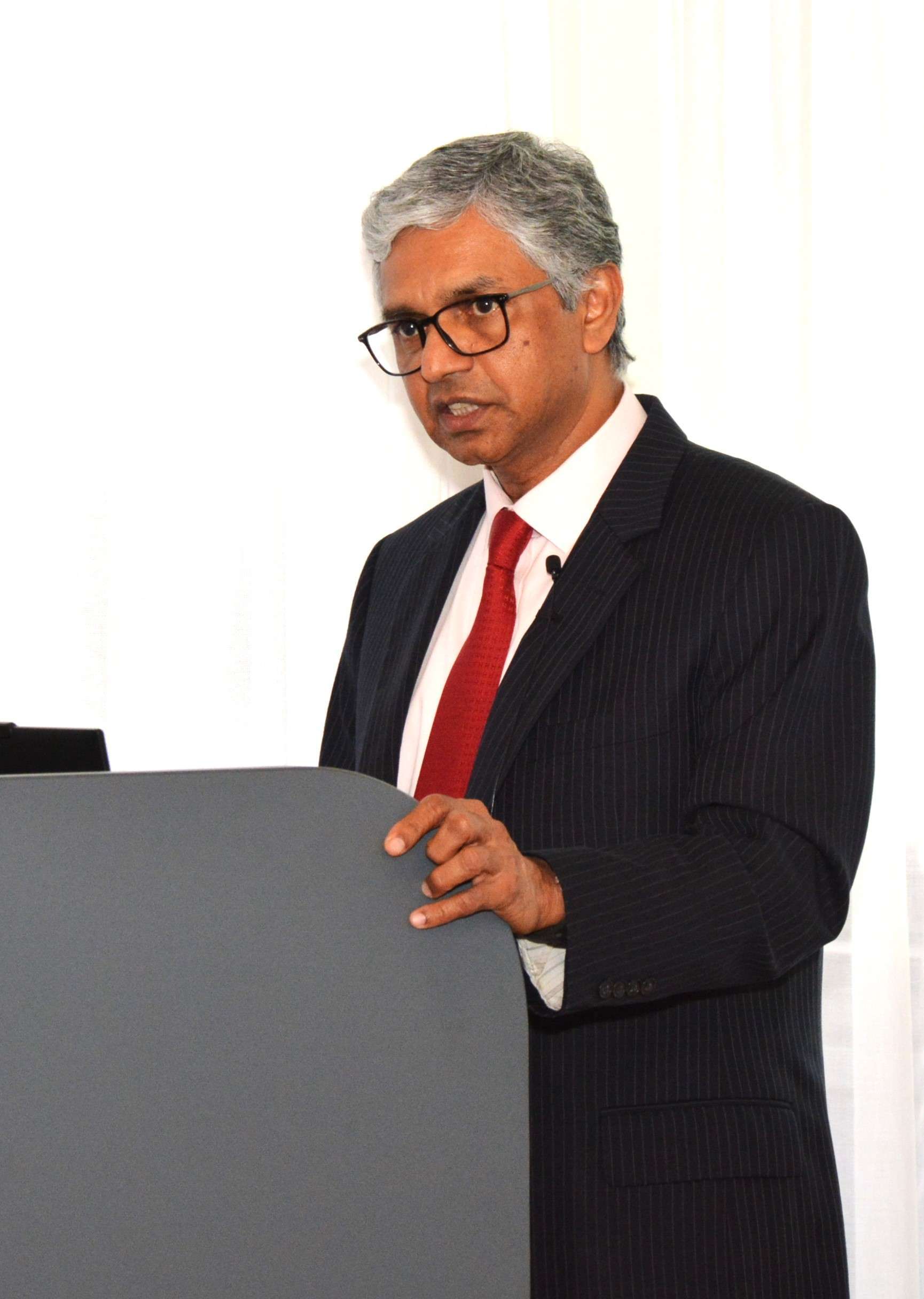 Periasamy KumaranRaj D Bakrania
They seem unaware that aid stopped many years ago. The two countries are balanced in how much they invest in each other.
The report says that the 1,912 figure for Indian companies “is the highest number recorded since we began the Tracker in 2014, and the strongest year-on-year increase to date, reflecting the growing strength of the India-UK economic relationship”.
Referring to the Free Trade Agreement by its technical name, it goes on: “The India-UK Comprehensive Economic and Trade Agreement (CETA), signed in July 2025, signals a new phase in the relationship. As India’s most wide-ranging trade deal to date, it opens the door to stronger trade between the two countries.”
It says: “Indian businesses are expected to benefit from clearer rules and better access to the UK market. The numbers already reflect this. Bilateral trade between India and the UK has reached £47.9 billion, up 10 per cent year-on- year. Both countries have also agreed to establish new joint institutions in technology, Artificial Intelligence (AI), and clean energy, as part of a broader ambition to reach $100bn in bilateral trade by 2030.”
It says: “Indian companies are investing across a wider range of sectors, from technology and advanced manufacturing to clean energy and consulting services. The UK continues to offer what businesses need: a stable legal system, strong capital markets, and close ties to global trade.
“This investment is also translating into stronger growth. In 2026, 66 companies recorded revenue growth of 10 per cent or more. The 2026 Tracker companies achieved an average growth rate of 61 per cent, up from 42 per cent in 2025, which illustrates the continued dynamism and robustness of Indian companies, despite a relatively soft UK economic environment.
“The Technology, Media, and Telecommunications (TMT) sector leads the Tracker for the 13th consecutive year, accounting for 33 per cent of companies. London remains the largest hub, but its share has fallen to 38 per cent, compared with peaks of over 50 per cent between 2018 and 2021, as more Indian businesses set up across the wider UK. Both trends point to an Indian business community that is growing in confidence and reach.”
 Tracker report unveiled Raj D Bakrania
It does draw attention to key challenges for Indian firms in the UK: “The UK’s regulatory requirements are tightening, labour shortages and employment tax rises are pushing costs, and geopolitical tensions continue to affect energy prices, investment decisions and global supply chains. Operating conditions are becoming more complex and demanding for Indian companies in the UK.”
It concludes that the India meets Britain Tracker 2026 tells a story of scale and staying power: “These numbers, however, only capture part of the picture. The pattern of growth is changing. Indian companies are expanding beyond London to the Midlands, the North, and Wales, supported by better infrastructure, skilled talent, and stronger regional investment strategies.
“The sector mix remains broadly stable, led once again by TMT although manufacturing is beginning to regain ground. This year, 26 per cent of companies in the Tracker are new entrants, indicating that the pipeline of Indian businesses entering the UK remains steady.
“This steady flow is backed by policy support. The CETA has added fresh momentum to the India-UK corridor. Companies that had been considering the UK are now making firm commitments, and those already established are looking to expand. During the October 2025 (Starmer’s) Prime Ministerial visit to India, Indian companies announced more than £1.3bn in investment across sectors such as advanced manufacturing, defence, electric mobility, Al, and edtech. These announcements show that the India-UK corridor is becoming more active and more established. Indian companies that succeed in the UK do not enter the market on a whim. They arrive well prepared, with long-term plans and a strong understanding of local market requirements.”
 Lucy Bouzzoni Raj D Bakrania
It states: “Different sectors, different journeys, but a consistent thread: the companies that succeed in the UK are those with a clear purpose and a plan to stay for the long term. As the corridor matures, businesses must seek advice from experts in both countries who understand the regulatory environments, business cultures, and operating realities. We congratulate every company featured in the Tracker, particularly those that have appeared year after year. Their continued presence is a testament to how much the India-UK corridor has grown.”
Chande focused on the highlights when summing up the main points in the Tracker.
He said that Grant Thornton (much like Eastern Eye) had been working in the UK-India corridor for the past 35 years.
The report has been drawn up in collaboration with the Confederation of Indian Industry, which was represented by, among others, its UK head, Shehla Hasan. The India Global Forum also had an input.
Chande observed: “Our report basically identifies and sets out the economic footprint of the Indian companies in the UK. It highlights the fastest growing businesses in the UK and also tracks the employment footprint in the UK. The balance is swinging from the traditional sectors that Indian companies have invested in to some of the newer age businesses, such as advanced manufacturing, life sciences, and innovation generally.”Giving an overall view, he said: “There is a lot of buzz around investing in India, and what India offers. What the UK offers is stability, particularly in this geopolitical turbulence that we live in today, and when you compare the UK to the US, you certainly see there is far more stability, notwithstanding some of the political issues that the (UK) government currently is having.”
He also said: “I have to point out here that this excludes the branches of Indian companies. Tech Mahindra, for example, is employing thousands and thousands of people. That’s not in any of these numbers. If you were to take the top five technology businesses in the UK, which operate through the branches, then you’d probably have a double of the number (of UK employees).
Present in the audience were senior representatives of Tech Mahindra, among them its president, Harshul Asnani.
He had visited the Chelsea Flower Show, where Tech Mahindra sponsored a balcony garden which won a gold medal.
Chande was followed by Kumaran, who has replaced Vikram Doraiswami as Indian high commissioner.
Kumaran, making one of his first public appearances since arriving in London in early May, said: “It is precisely through such analogical work (in the Tracker) that we are able to understand the depth, breadth, and the evolving character of the UK-India economic corridor. These studies move us beyond anecdotes to evidence, and they help both policy makers and businesses to see where the relationship is working well and where we can do more together. Taken together, these numbers tell a clear story.”
The new high commissioner clearly has come well briefed to promote and project rising India, but he was restrained while making his pitch.
He said: “The India-UK relationship is a unique and increasingly balanced partnership, particularly in the field of investments. If you look at recent compatible investment flows, India and the UK are now broadly balanced.
“This is a significant shift from past decades and it reflects growing trust, mutual confidence and a shared sense of opportunity. At the government-to-government level, several mechanisms are helping to underpin and accelerate this two-way investment story.
“The India-UK Economic and Financial Dialogue, co-chaired by our finance ministers, has become a key platform for cooperation on financial services, fintech, and the region economy, with the third round held in London in April 2025 and the next one will be hosted by India in 2026.
 (From left) Lord Dolar Popat,, Lucy Buzzoni, Periasamy Kumaran and Akshay Bhalla Raj D Bakrania
“Complementing this is the UK-India Infrastructure Financing Bridge, launched in 2024, which leverages London’s strength in green finance to support highways, rapid transit, and renewable energy projects in India.
“Beyond these, we have a wider architecture of cooperation, a joint working group on fintech, a mission 2035 document setting up long-term ambitions, the technology security initiative and a joint defence industrial roadmap to guide collaboration in security and advanced manufacturing. Together, these initiatives aim to align our demography and scale with the UK’s strengths in technology, education, finance. and services.
“On the trade side, the conclusion of the Comprehensive Economic and Trade Agreement between India and the UK is historical. Once it enters into force, CETA is expected to reduce the cost of trade, create new employment opportunities, and benefit consumers and businesses on both sides. Today, bilateral trade stands at about £48bn pounds, and what once seemed an aspirational goal of doubling trade by 2030 now appears genuinely with reach.
“Macroeconomic fundamentals remain robust with domestic drivers, including investment, demographics, consumption, and rapid urbanisation, providing the primary pulse to growth. Our external sector has been managed prudently with external debt to GDP at about 20 per cent and foreign exchange reserves providing import cover for about 11 months.
“We have also undertaken a wide-ranging programme of reforms to make India an easier, more predictable, and more attractive place to do business. These include simplifying regulations, liberalising FDI norms across key sectors, strengthening insolvency and backups of frameworks, improving corporate governance, developing better PPP frameworks and asset monetisation programmes, and investing heavily in logistics efficiency and digital public infrastructure.
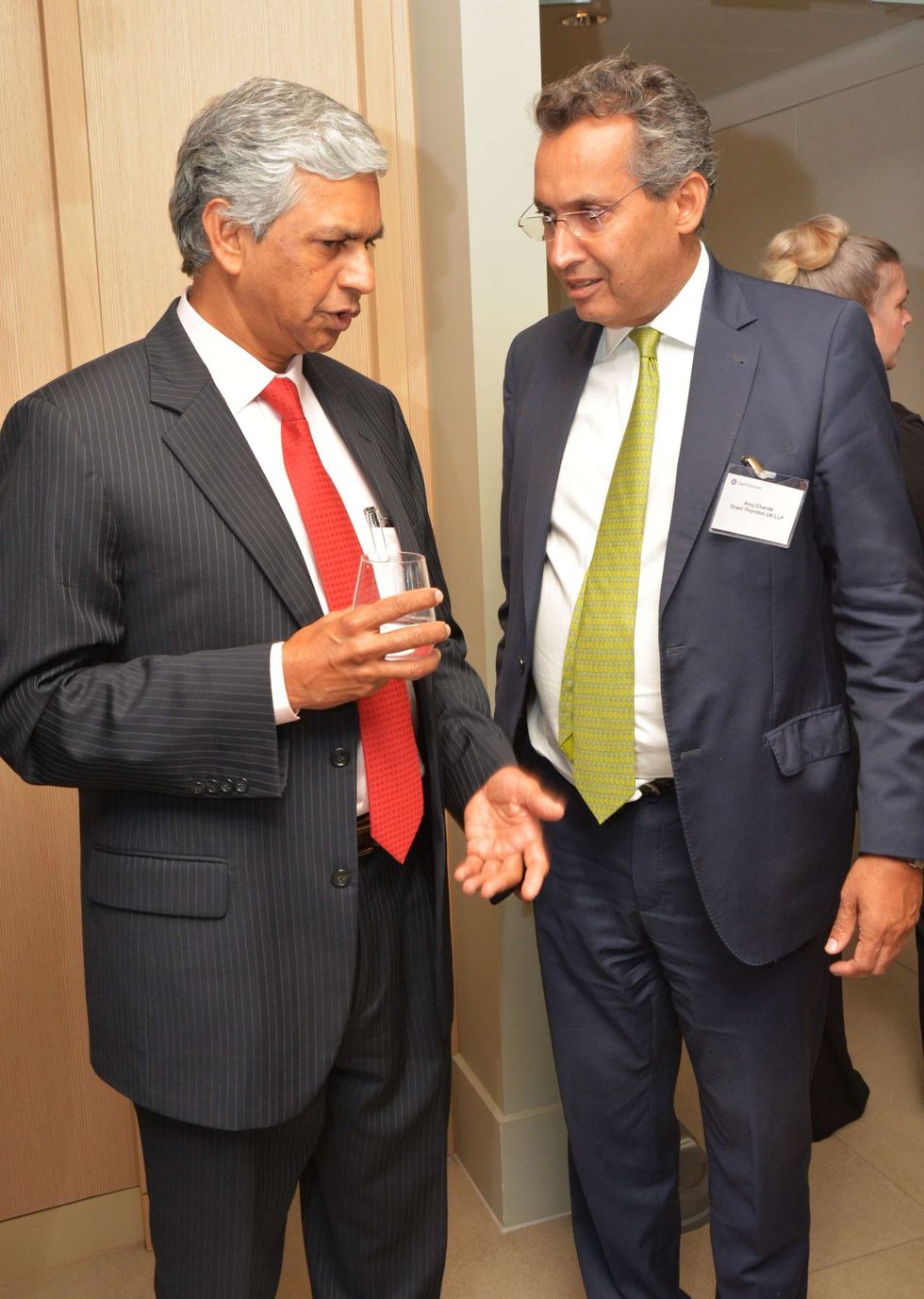 Periasamy Kumaran (left) with Anuj Chande Raj D Bakrania
“We also have a progressively improving dispute resolution framework, modern arbitration laws aligned with global standards, and enforceable international arbitration mechanisms. Labour reforms are expanding workplace protections for women, enabling flexible and night shift employment with appropriate safeguards, and increasing access to formal jobs and social security in a way which is both investor-friendly and supportive of India’s growing human capital.
“The energy transition is another critical pillar where India and the UK can work closely together. India has committed to ambitious renewable energy targets, including achieving 500 gigawatts of non-fossil fuel capacity by 2030 and is pushing ahead with an unprecedented transformation of its infrastructure, including railways, airports, logistic systems, green transport networks, and urban infrastructure. Within the energy sector, we are advancing on multiple fronts, diversification of sources, ethanol blending mandates, and reforms in the nuclear sector, including permitting FDI and exploring small modular reactors alongside offshore wind, hydrogen, and battery storage.
“These are precisely the kind of projects for UK firms with their strengths and management expertise, sustainability technologies and financial structure can be invaluable partners. Looking ahead, the opportunities for co-development are wide-ranging. Sectors of particular promise include critical and emerging technologies, innovation, defence and security, life sciences, climate and renewable energy, critical minerals, the broader green economy, MSMEs (Micro, Small, and Medium-sized Enterprises), education and scaling, and even the sports and creative industries, the so-called ‘orange’ economy.
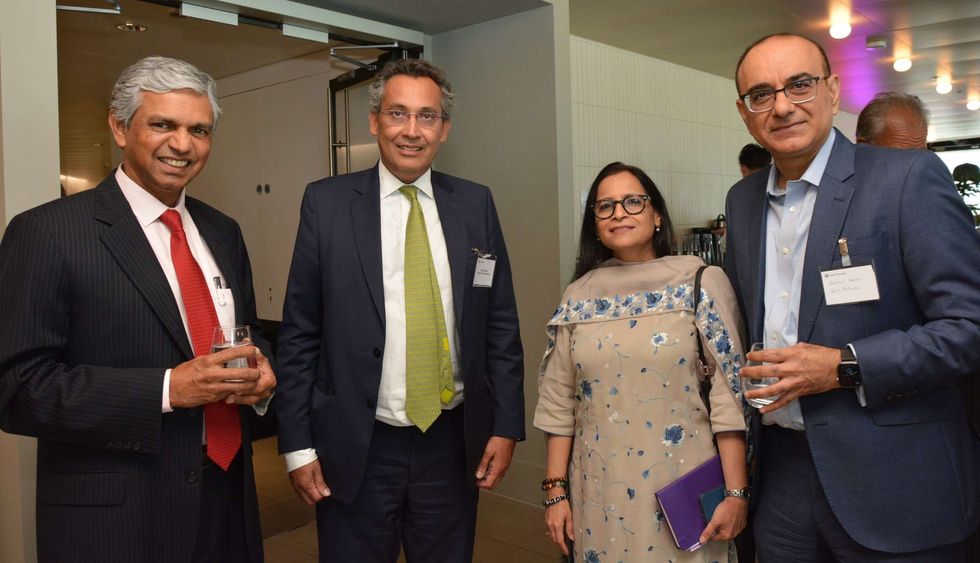 (From left) Periasamy Kumaran, Anuj Chande and Harshul Asnani Raj D Bakrania
“UK universities are really at the forefront in opening campuses and deepening partnerships in India, and this momentum can be harnessed to build the skills and talent pipelines that both our economies will need. For investment flows, India’s gross FDI inflows remain strong. Official data show that India received $81bn in FDI during financial year 2024-25, up 14 per cent from the $71bn it had received the year before, with gross inflows rising steadily over the past decade. Net FDI has been somewhat volatile because of factors in repatriation and disinvestment, and we have seen sharper movements in recent months as global financial conditions have tightened, bond yields have risen, and crude prices have added pressure to our balance of payments.
“The world is currently experiencing a level of geopolitical and economic uncertainty that we have not seen for many years yet. Notwithstanding these turbulences, the India growth slowly remains intact, and the India-UK relationship continues to move on a constant upward trajectory. Regular high-level engagement, including prime minister Modi’s visit to the UK in July 2025 and prime minister Starmer’s visit to India in October 2025 signal that both governments see each other as priority partners, not just in the bilateral sphere, but also in regional and multilateral arenas.
“The India-UK relationship today is no longer defined by nostalgia. It is defined by opportunity. India brings scale, growth, talent, and ambition, and the United Kingdom brings innovation, expertise, finance, and global leadership across advanced sectors, and together we have the chance to do very well in defining economic partnerships of the coming decades.”
Reflecting the upbeat note that India could help to rescue the British economy, Keshan Murugesh, chairman of the CII UK-India Business Forum, declared: “This year’s Tracker comes at a landmark moment in the UK-India relationship. The signing of CETA in 2025 marked a historic reset, as we have just been told and reminded again, and businesses in both countries are now looking ahead to the opportunities it will unlock.
 Keshav MurugeshRaj D Bakrania
“The CII UK India Business Forum, to which I belong, presents a dynamic community of Indian businesses across the UK. Businesses that are contributing across all sectors, including technology, finance, healthcare, as well as manufacturing, and their innovation, investment, and adaptability continue to strengthen the British economy as well as create jobs across this country, but this partnership is about much more than just economics.”
It was rooted in shared values and strengthened by the 2.5m strong Indian diaspora in the UK, “the living bridge I would say that connects our two nations. This year also marks 45 years of the CII London office, our first international office, really reflecting our long-standing commitment to deepen this India-UK partnership. So, as we review today’s findings, let us celebrate, not just the numbers, but also the people and the businesses shaping the future of both these countries.”