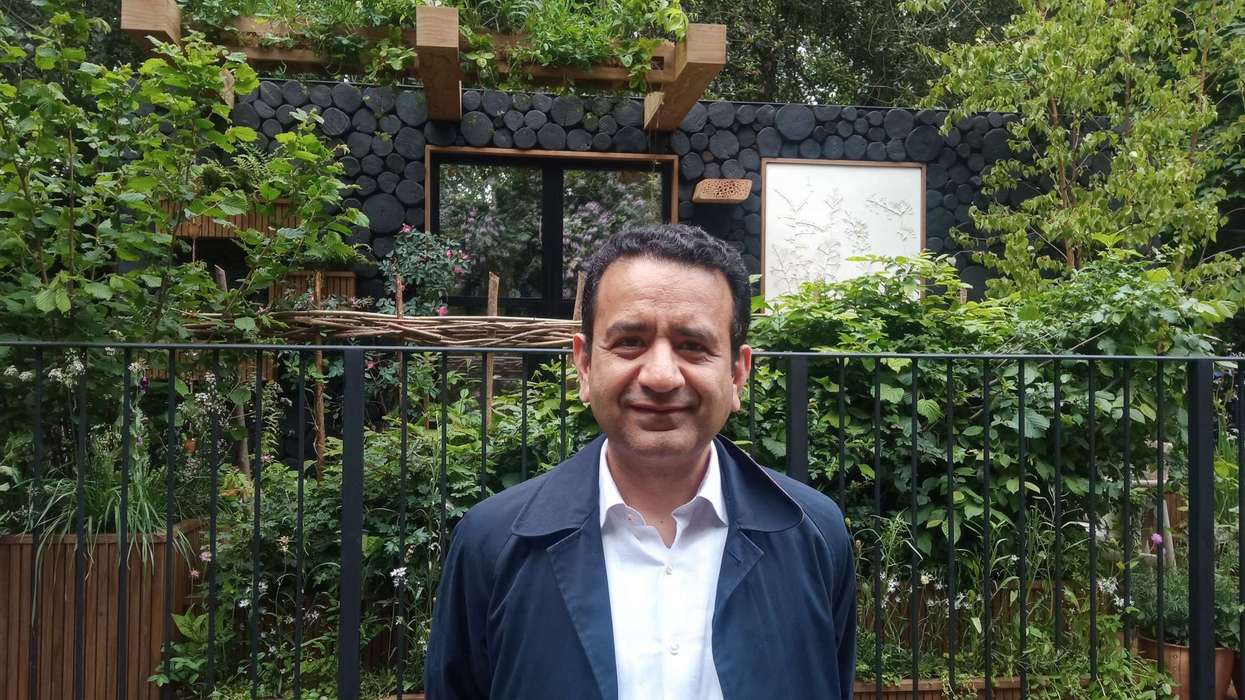

Mohit Joshi, CEO and managing director of the Indian IT firm Tech Mahindra, spoke to Eastern Eye on Tuesday (19) shortly after the balcony garden his firm had sponsored was awarded a gold medal at the 2026 Chelsea Flower Show.
“It’s fantastic,” he said, sitting in a quiet corner inside the garden, while crowds milled outside anxious to see the “Hedgerow in the Sky” that the landscape designers, Sarah Mayfield and Monika Greenhough, had created.
This was the first time that Tech Mahindra had sponsored a garden at Chelsea. It is likely that his victory will encourage many more Indian companies into Chelsea, described as “the greatest horticultural Show in the world”.
As it is, the headline sponsor this year is Tata-owned Range Rover.
Joshi said: “This is our first time ever being on display. Many people have been displaying here for years and years and have never won gold. It’s a moment of great pride for us.”
Recalling how he decided Tech Mahindra would seek to be a sponsor at Chelsea, Joshi said: “I’ve personally always been very, very interested in nature. I’ve lived in London now for 16-17 years and the Chelsea Flower Show is such an institution.”
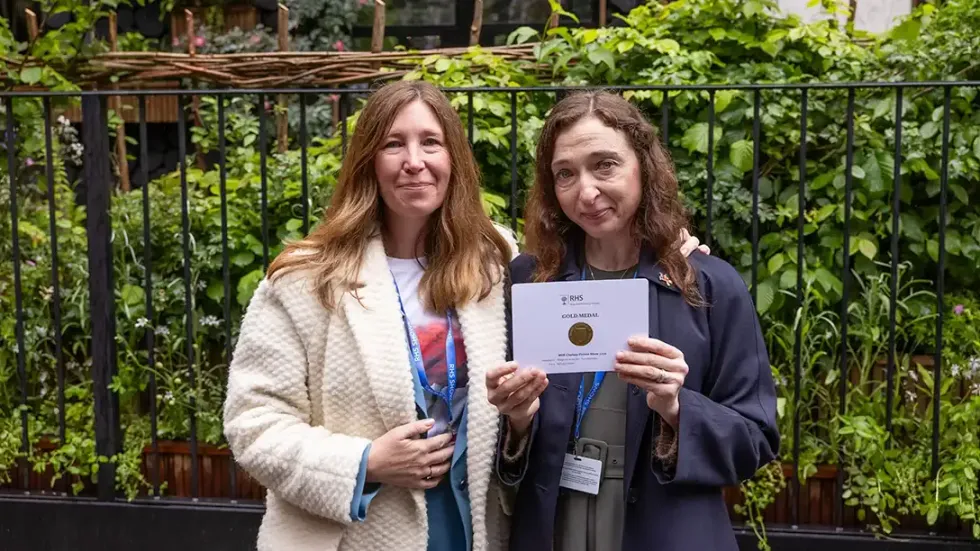 Landscape designers Monika Greenhough (left) and Sarah Mayfield Amit Roy
He went on: “There is so much of nature even in London. We live in central London but we have a communal garden and can see the flowers and the gardens, especially at this time of year.”
Joshi said that three years ago, “I came to the Chelsea Flower Show and could see what a wonderful venue this was, so beautiful and so scenic. I was invited by a company and came to visit the flower show as their guest. But when I came here I was completely hooked. The displays were so soothing and exciting at the same time.”
Initially, he wandered around the Great Pavilion where “there was this wonderful display of colours and flowers. When I went outside, I could see everything from Japanese gardens to the more traditional European style gardens. There was also the opportunity to be creative with nature.”
That was when the idea of sponsorship occurred to him.
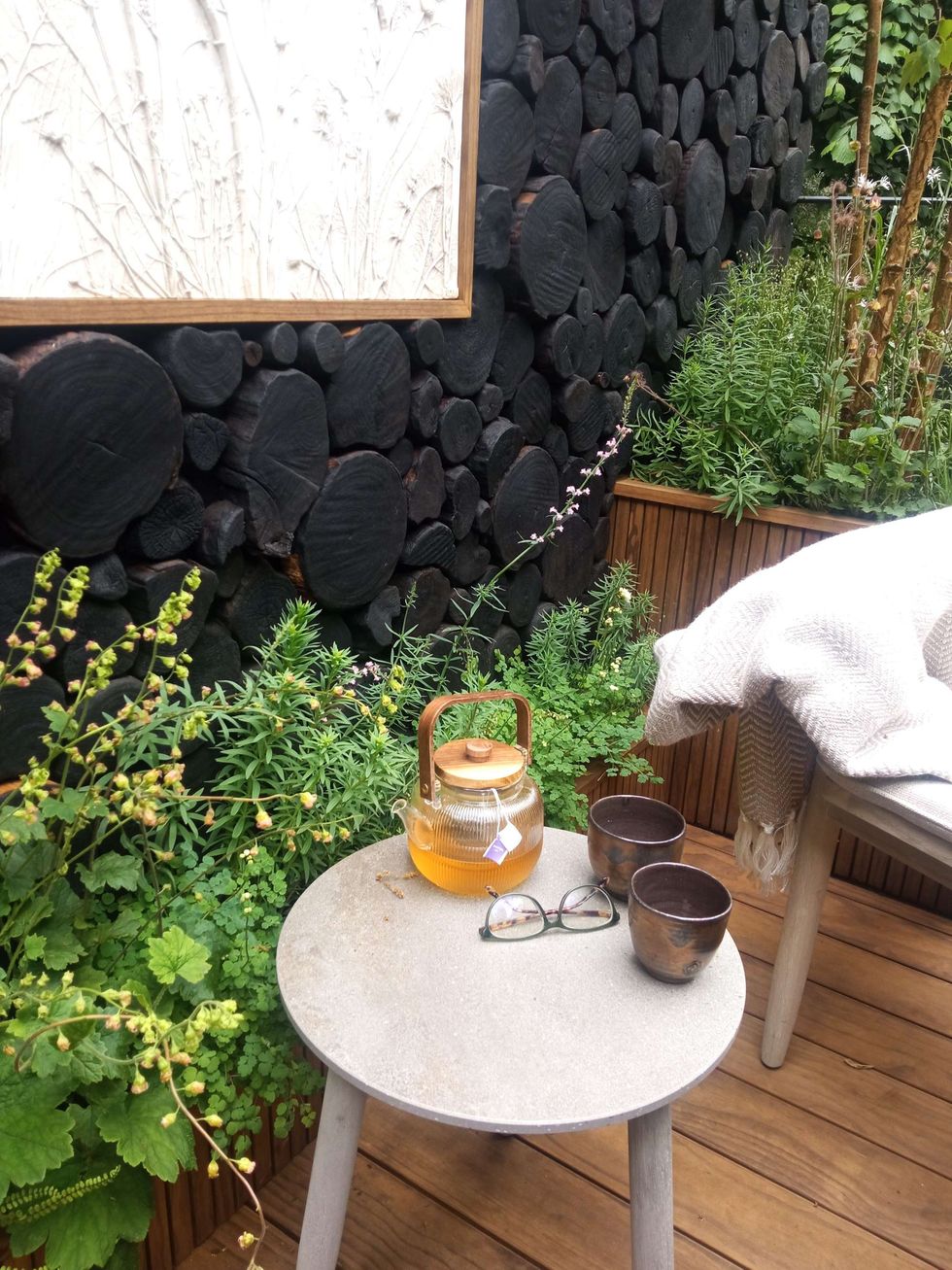 Quiet corner for tea in the Mahindra balcony garden Amit Roy
Joshi said: “I thought it was a good opportunity to give back but partly also to be able to invite our colleagues and clients to partake in a British tradition. I felt it was an opportunity to call our employees and our clients who may not otherwise come to an occasion like this.”
Joshi also spoke about his own interests and origins: “This was a wonderful opportunity and a lot of this comes from personal interest as well. I have a deep personal interest in gardens and nature and that’s how I thought about it. I mostly grew up in Delhi but originally we are from Almora, north of Nainital.”
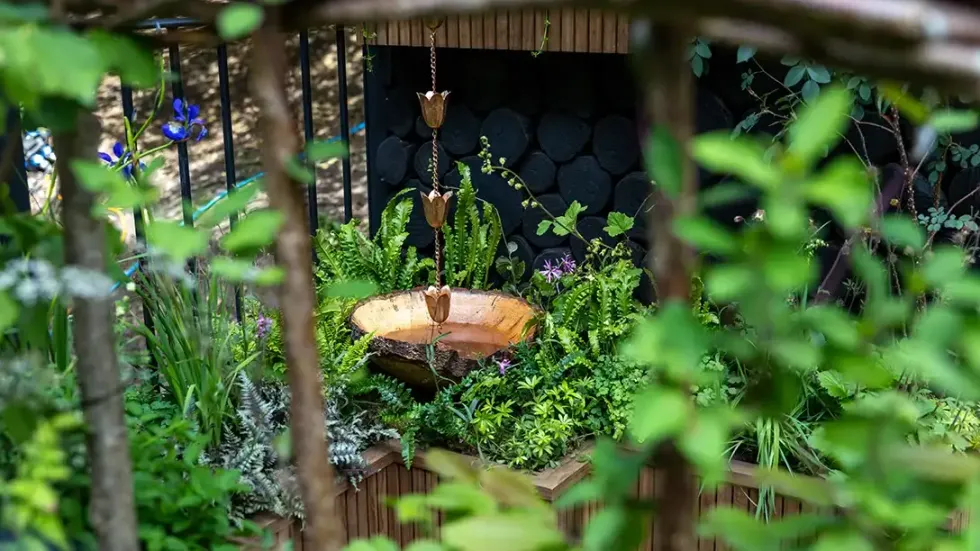 Tech Mahindra balcony garden Amit Roy
Almora is a historic hill station located in the Kumaon Himalayas of northern India. It belongs to the Uttarakhand state and sits on a crescent-shaped mountain ridge at an elevation of roughly 1,800 metres.
“The valley of flowers is in that part of the world,” he pointed out. “A lot of the flowers that we see in the UK, including Rhododendron, are originally from the Himalayas.”
There was a process to follow to get into Chelsea: “I spoke to our teams, we spoke to the organisers (the Royal Horticultural Society), and we figured out a way we could be participating sponsors. That’s when the idea of obviously having our own garden came up.”
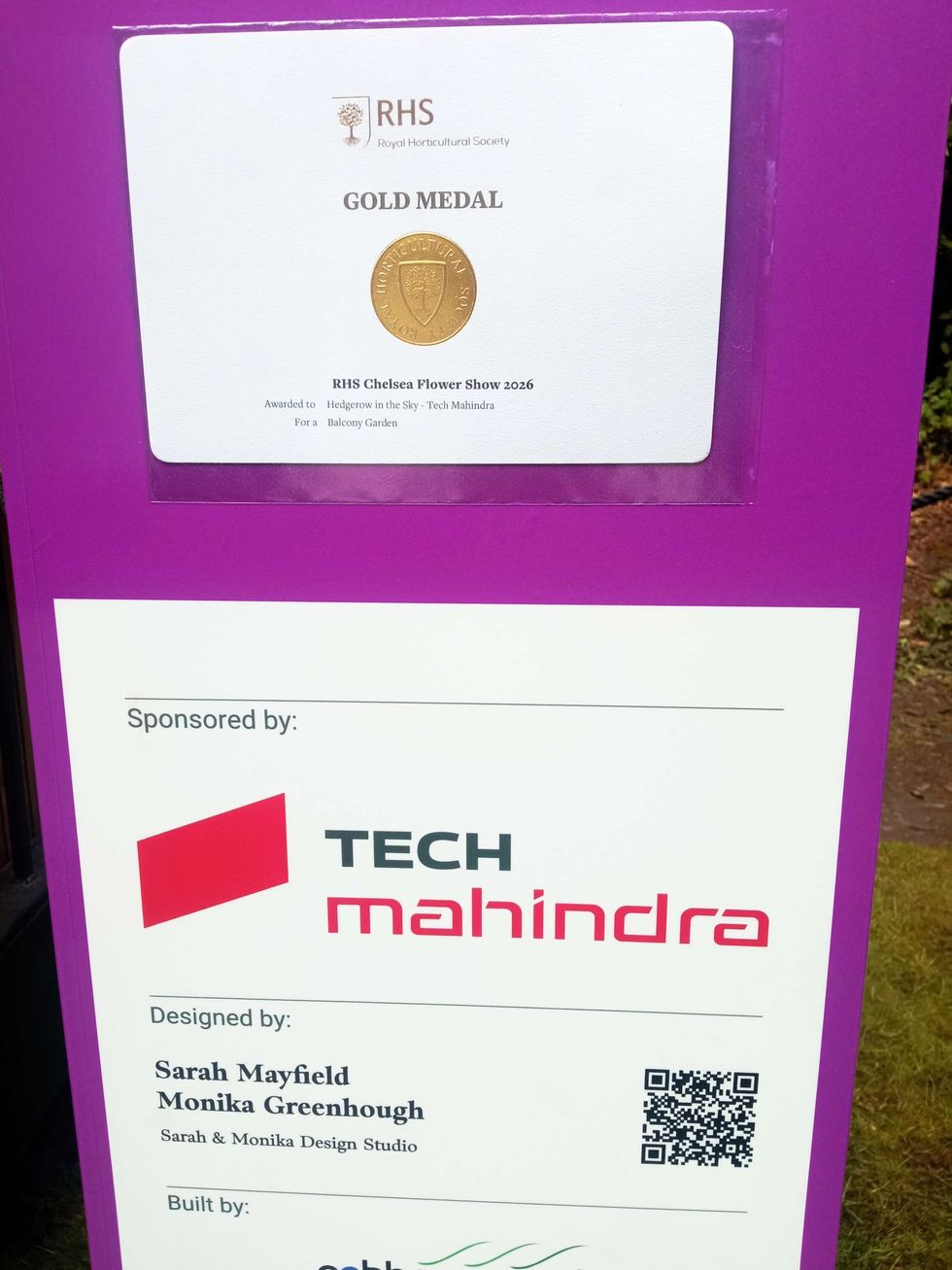 Tech Mahindra balcony garden wins gold medalAmit Roy
The Sussex-based designers were picked by Tech Mahindra in consultation with the RHS. When presented with the gold medal on Tuesday morning, they were understandably emotional, with Greenhough bursting into tears of happiness.
Sponsors are not allowed to display their logos in the garden. But one of the wooden designs appears to resemble the lozenge shape of the Tech Mahindra logo.
“We sneaked that in,” grinned Joshi.
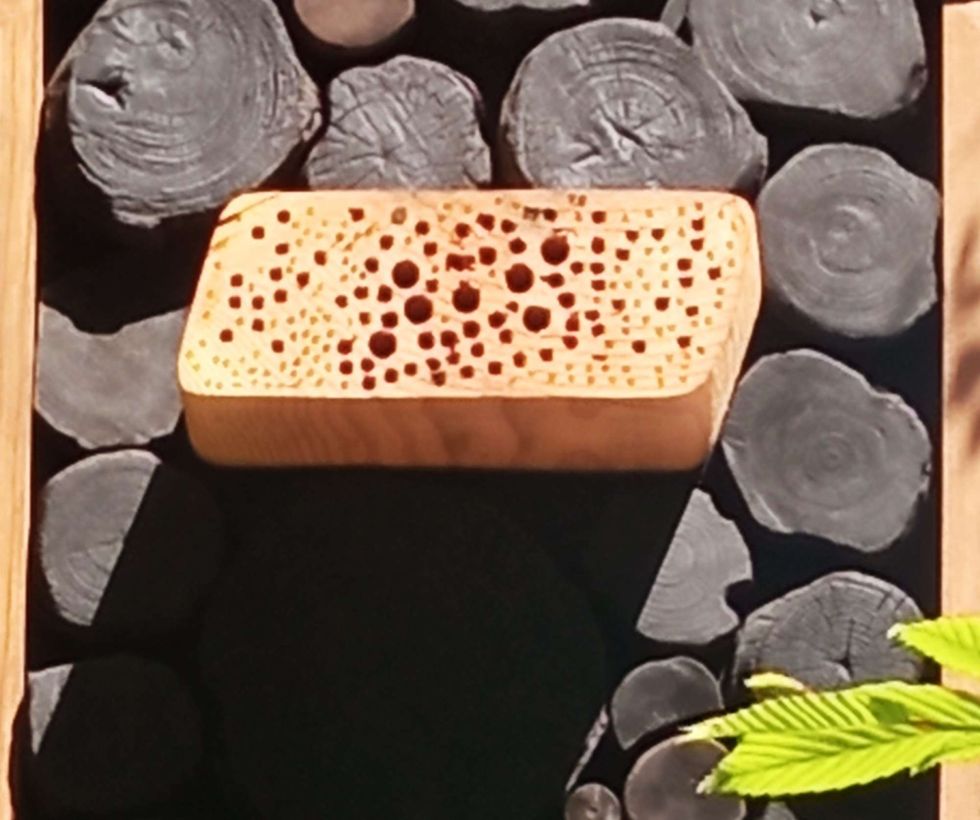 Tech Mahindra disguised lozenge shaped logo Amit Roy
The dinner he had planned for 25 friends and clients on Tuesday at the Sloane Restaurant inside the Chelsea Flower Show turned out to be a celebration.
Guests saw the garden has a corner for tea, and art work on a wall.
In fact, Tuesday’s Daily Telegraph had picked out the Tech Mahindra garden. It was included among “the seven must-see gardens” by Bunny Guinness, a garden designer, journalist and broadcaster who has been writing for The Telegraph for more than 20 years.
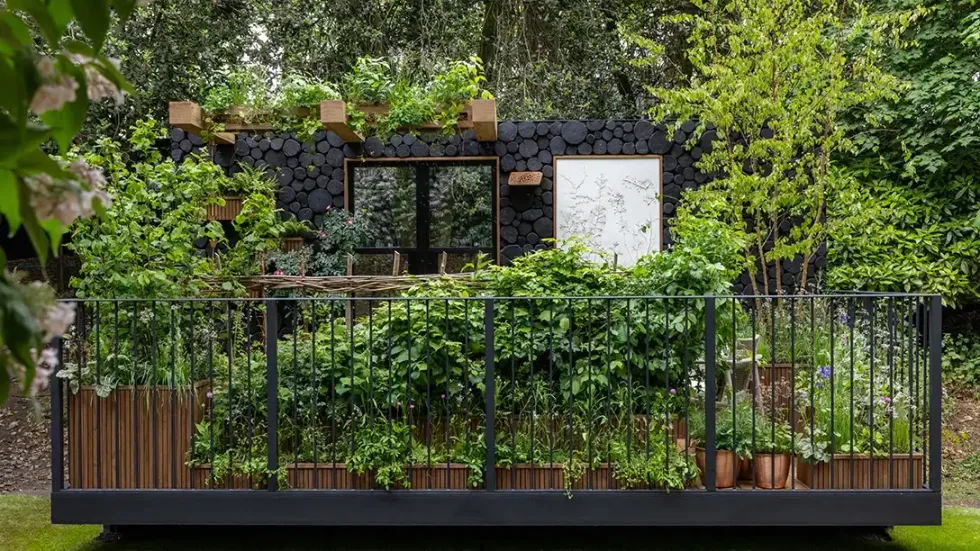 Tech Mahindra balcony garden Amit Roy
She said that Hedgerow in the Sky was one of the gardens that stood out, adding that “the Balcony and Container Gardens are well worth going off the beaten track to admire and pick up tips”. Sponsored by Tech Mahindra, it “has a cut and laid hedge along the front and exuberantly designed planting with resilient plants such as hazel, hawthorn and Rosa glauca. Designed by Sarah Mayfield and Monika Greenhough, it is fun, and I hope the judges don’t mark it down because the boundary hedge gives too much privacy to the occupants.”
They didn’t.
There is plenty of detail for gardening enthusiasts among Eastern Eye readers.
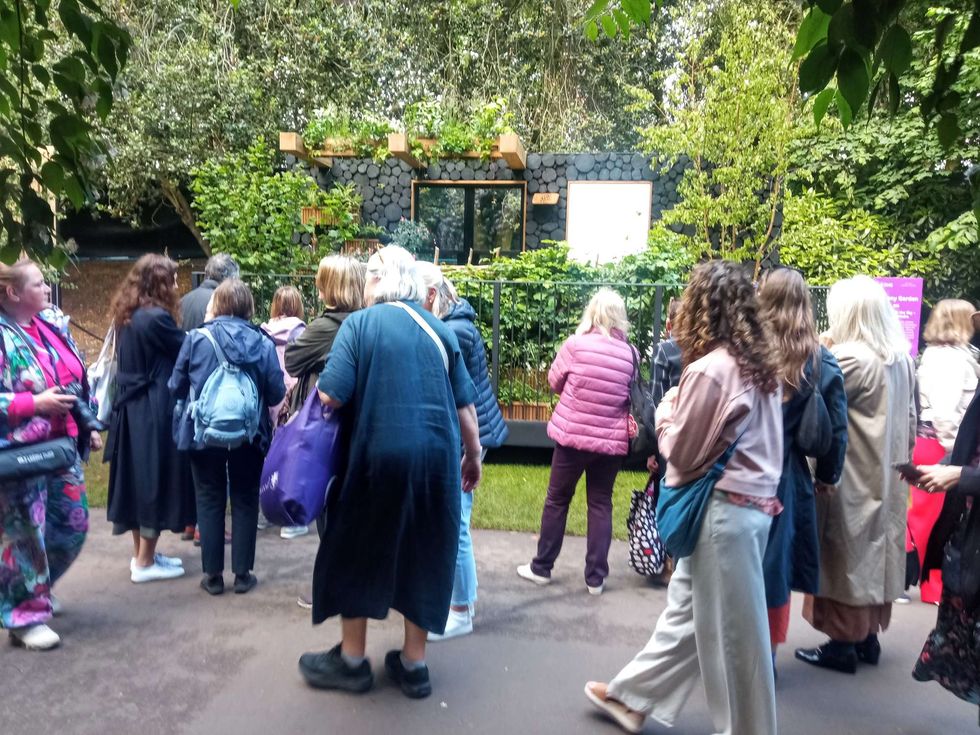 Crowds gather to see the balcony garden Amit Roy
The Hedgerow in the Sky Garden reimagines the character and biodiversity of British hedgerows within a contemporary urban balcony garden. Layered planting echoes the natural structure of hedgerows, offering year-round interest and creating moments of discovery for both pollinators and people.
A striking, dark backdrop crafted using the traditional Shou Sugi Ban technique adds depth and contrast while delicate pressed-flower artworks celebrate the beauty and fragility of wildflowers. Comfortable seating invites quiet reflection and a gentle water feature introduces movement and tranquillity, transforming the balcony into a serene urban sanctuary.
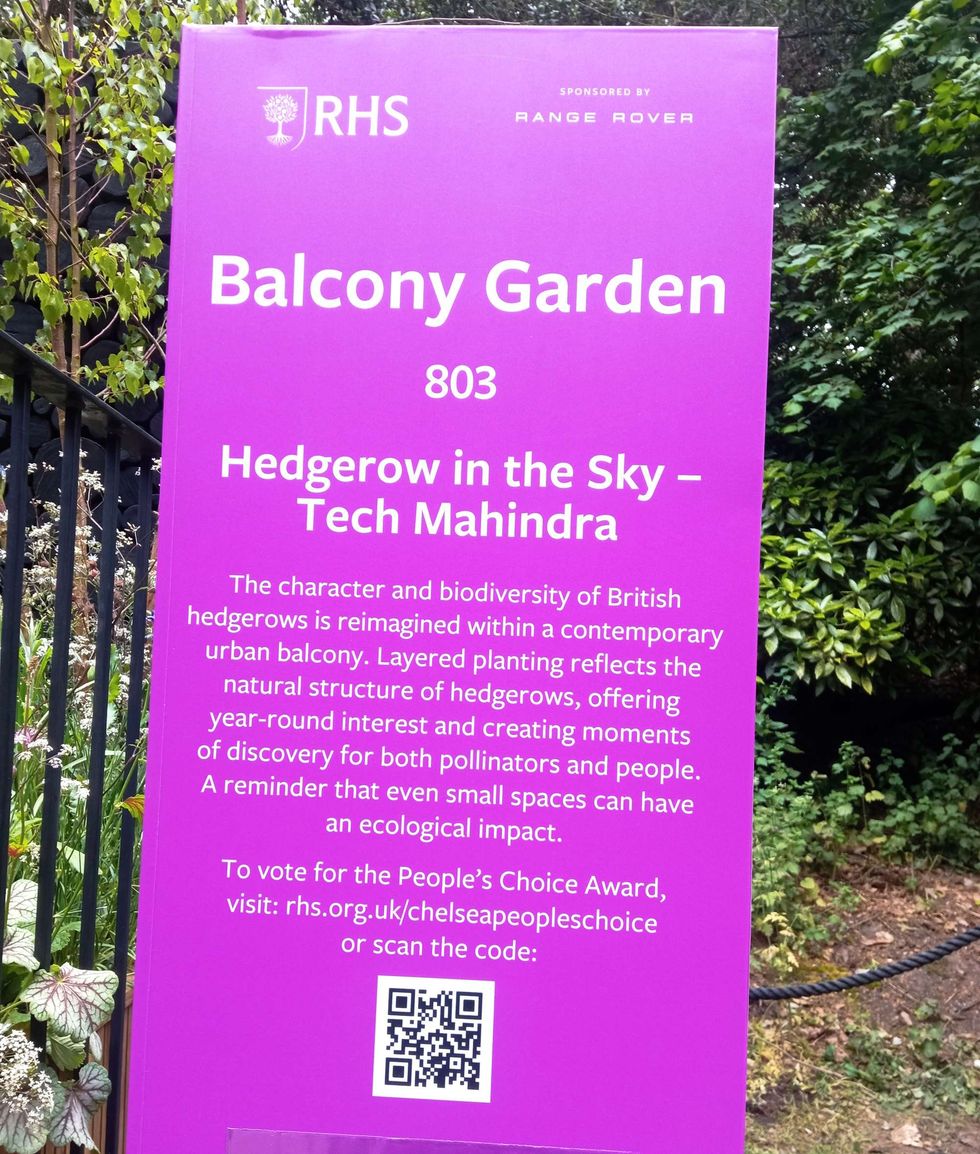 Tech Mahindra balcony garden posterAmit Roy
Inspired by the designer’s love of British hedgerows and concern for their decline, the garden encourages visitors to notice local wildlife and demonstrates how biodiversity can thrive even in limited outdoor spaces. It is a hopeful reminder that thoughtfully designed small spaces can nurture nature and create meaningful ecological impact.
Plant species are chosen for resilience to wind exposure, fluctuating temperatures and limited root space to ensure they are suited to growing in containers. The British hedgerow is the core inspiration, with a statement hedge using a mix of native trees and shrubs to reflect natural diversity. The colour scheme is predominantly green, lifted by soft touches of white, lavender and burgundy.
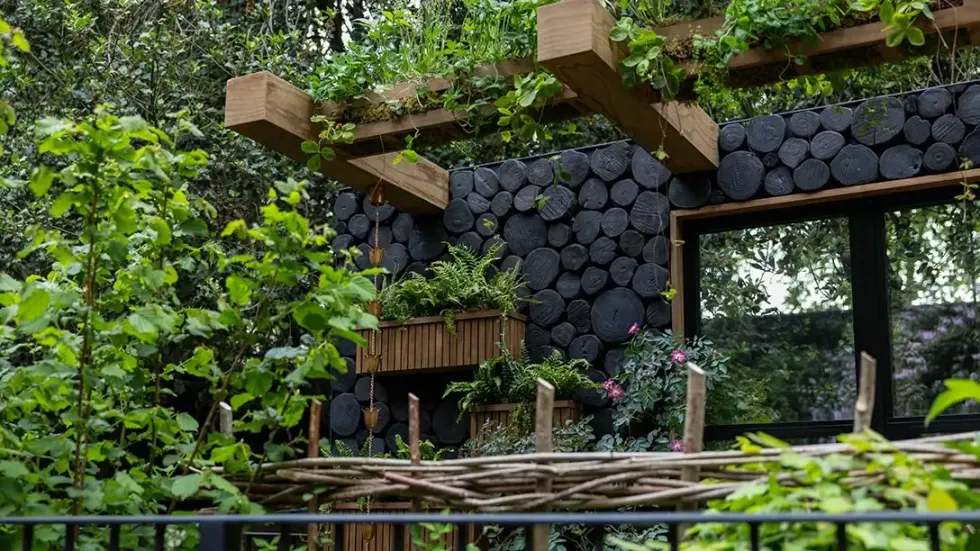 Tech Mahindra balcony gardenAmit Roy
In the garden are:
Polygonatum multiflorum (solomons seal): an elegant native plant with graceful arching stems and creamy white, bell shaped flowers in late spring. A plant of hedgerow shade, it will add height and gentle movement where space is limited on a balcony.
Rosa glauca: single pink flowers offer easy access for bees, while autumn hips are loved by garden songbirds such as thrushes and blackbirds. Aphids on the plant attract ladybirds, adding to its wildlife value. Its upright arching habit suits narrow spaces and its grey-purple foliage catches the light beautifully.
Corylus avellana (hazel): catkins provide early pollen for bumblebees. Its leaves are a larval food plant for the caterpillars of dozens of moth species. Its dense structure offers shelter for birds. Responding well to pruning, it can be kept compact, making it well suited to balcony planting
 Art work at the balcony garden Amit Roy
Crataegus monogyna (hawthorn): defining Britain’s hedgerows, its flowers attract bees and pollinating flies. Its leaves feed caterpillars that in turn provide food for birds and their chicks. In autumn, it is generous in offering rich red haws, an important food source for garden birds. Naturally resilient and well adapted to exposure, it brings seasonal change and strong ecological value to the balcony garden.
The garden features sustainably sourced FSC-certified timber and repurposed wood, preserved with the traditional Shou Sugi Ban technique to reduce chemicals and extend durability. Planting is peat-free and chemical-free, with mixed native hedgerows and wildflowers that support pollinators and provide habitats for birds and insects. Prefabricated planters and panels minimise waste, and visitors are invited to join citizen science projects with The Buzz Club at the University of Sussex to contribute to pollinator research.
The garden will be relocated to a city centre nursery and after-school club in Brighton, East Sussex, after Chelsea.






 Lift their trophies after their respective victories in The Hundred finals at Lord’s in London on August 16Philip Brown/Getty Images
 Michael VaughanPhilip Brown/Getty Images
  Mukesh AmbaniSujit Jaiswal/AFP via Getty Images
  Sanjiv GoenkaSajjad Hussain/AFP via Getty Images