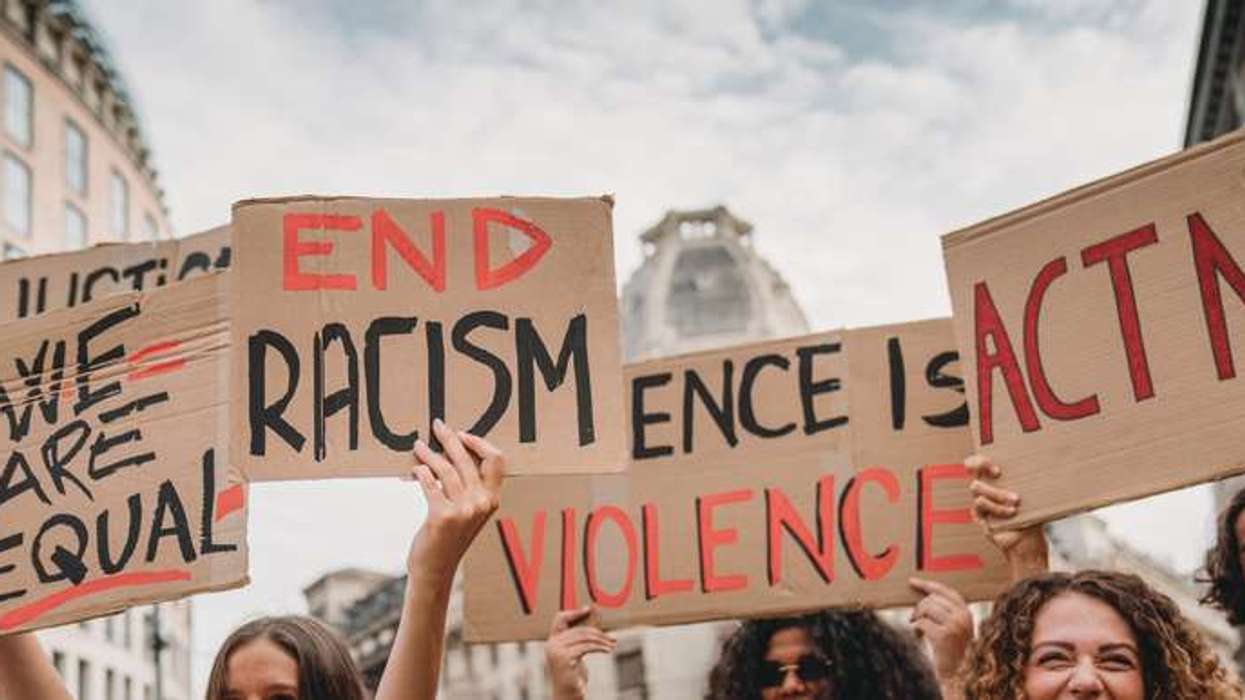

US BILLIONAIRE Elon Musk’s acquisition of X, the platform formerly known as Twitter, has created a lawless free-for-all where some users – largely minorities and women – are targeted with racism and hate of all kinds, seemingly without regulation. Overwhelmingly, it is the ‘p-word’ that has become the choice term of abuse, thrown at practically every British South Asian with any public profile, from former prime minister Rishi Sunak to TV personality Guz Khan. Just when we thought we'd come close to eradicating this foul slur from Britain's vocabulary, it has found a new place to incubate online.
Following Ofcom’s recent investigation, it was encouraging to see X recently commit to a 48-hour takedown policy when hateful content is reported to the platform. Yet X’s promise seems not to be worth the pixels it was written on. Initial testing by the British South Asian Bridger’s Project showed that it came woefully short, with hateful content still online more than two days after it had been brought to X’s attention.
The eradication of ‘p-word’ and ‘n-word’ abuses from everyday life resulted from hard-won, decades-long efforts by Britons of every community. Its resurfacing signals a time when these words were routinely painted on the walls of our homes and businesses to wake up to – alongside the words ‘…go home’. It’s the reason why my northern father still thinks twice when riding the London Underground after 8pm, still looking for paki-bashers out of the corner of his eye. By protecting perpetrators and not the victims, X has become the haven from which the virus of racism has regrouped, grown and resurfaced onto our streets and lives.
The British South Asian Bridger’s Project knows too well where this poison leads. We know that the only way to defeat hate is to stand with one another.
Fellow Bridger Jasvir Singh CBE, barrister and co-founder of South Asian Heritage Month has said, ‘Commitments made publicly must now be matched by action. If X is unwilling or unable to meet such commitments, it is right that regulators and those in authority step in to ensure accountability. Communities should not have to repeatedly call out racist abuse on social media platforms just to be protected from it."
Similarly, barrister and Bridger Jilan Shah raises the important point that ‘If we want to credibly argue – as I do – that we should rely on existing law rather than ever more elaborate new definitions and oversight structures, then existing law actually has to work. That means platforms must enforce it and regulators must hold them to account when they don’t. Otherwise, we are left with the worst of both worlds: inadequate enforcement of clear rules, and a growing pressure for more intrusive regulation to fill the gap.’
Since our initial reporting and consistent pressure applied to the platform, 20 of our original 33 reported cases have been taken down. That means one-third of this hatred has been allowed to go unpunished. That cannot stand. Pressure must continue to be applied to X for it to abide by its own commitments – something the British South Asian Bridger’s Project remains committed to do.
Avaes Mohammad is project manager of the British South Asian Bridgers Project at British Future