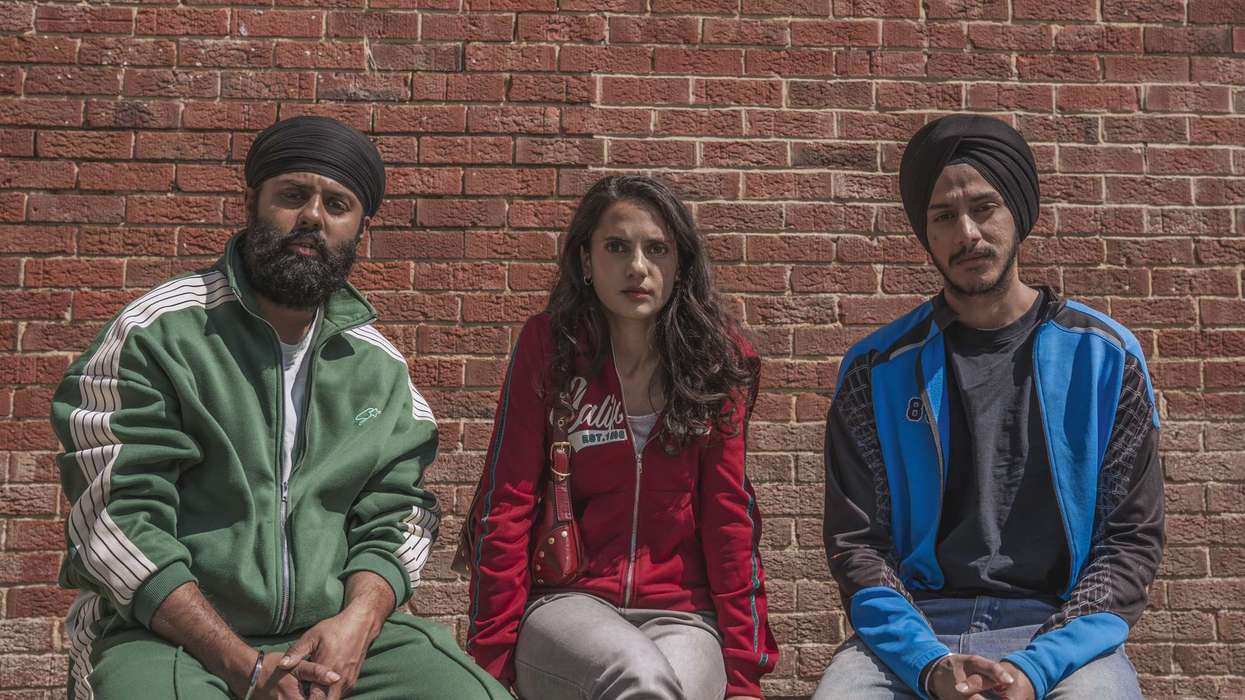

MY FIRST thought when I had the idea for Vengeance – a new, two-part drama based on real events for Channel 4 – was 'log kya kahenge?’ which translates into ‘what will people say?’
Most of us British Asians grow up with this anxiety. It shapes our lives; it hardly matters whether those gossips are real neighbours in our communities or figments of our fretful imagination. In our minds they are already there, waiting to judge, to condemn. As a fully grown woman, sitting in my home in south London in 2026, it’s still my first thought when I think about this disturbing case.
In Vengeance, the themes explored – young love, obsession, jealousy, the breakdown of traditional certainties about how men and women relate to each other, sexual assault, religious hypocrisy, the limitations of vigilante justice – are universal and resonate way beyond just Asian communities. But, somehow, the specificity of this story taking place among our people, within our community is the thing that most drew me to it. I knew these people. I recognised these attitudes. I’d grown up with them, but I had never seen it represented in dramatic form on British TV.
Golden boy Gagandip Singh was successful, ambitious, talented and, at 21, was already running a Sikh TV Channel. He had fallen madly in love with his friend Mundill Mahil, a clever, high achieving 19-year-old medical student, living in Brighton. One night he turned up, unannounced, to her home, where she was by herself, studying for an exam. The night ended with her accusing him of attempting to rape her.
Mundill, however, did not go to the police. Lots of girls don’t, for fear they will be blamed, that they were ‘asking for it’. After all, it had been her that had allowed him to stay the night. She was a nice girl from a traditional Sikh family. What was she thinking? What would her parents think, how could she face them if this turned into a police matter? What would the police do, anyway? Even now, criminal convictions for rape and sexual assault are at an alltime low. What kind of justice was there really going to be if she reported him? And, of course, no doubt in her mind was that nagging anxiety British Asian girls have – log kya kahenge.
As Amritdhari, a religious Sikh who had pledged to follow a strict spiritual path, Gagandip was a practitioner of the faith’s highest standards, including sexual restraint, no sex before marriage and treating women with the utmost respect. He was struck by remorse; how could he have done this? To the girl he loved. A girl he wanted to marry. Gagan was inconsolable. He had failed to live up to his own self-imposed demanding strictures, ones he had chosen to place on himself at this young age. He had failed to respect the woman he loved.
And, of course, he too had been steeped in that centuries old anxiety – log kya kahenge.
After Mundill’s accusation of attempted rape, haunted by what had happened and desperate to make things right, but inexperienced in all matters relating to women, he went about trying to right the wrong in the most clumsy, immature and ultimately obsessive way. Gagan bombarded Mundill with texts and calls and wouldn’t let her be. Mundill, already traumatised by the assault, and now by this relentless harassment, made a decision she would go on to regret for the rest of her life. She confided what Gagan had done to her to Harvinder ‘Ravi’ Shoker, her good friend and also formerly one of Gagan’s best friends. Gagan and Ravi’s formerly close friendship had been destroyed when both young men fell for Mundill.
Enraged on her behalf, and secretly in love with Mundill himself, Ravi sought the advice of a third man, the mysterious Sonny, and together, Mundill, Ravi and Sonny discussed the possibility of reminding Gagandip of the deep commitment he had made to his faith.
As Mundill described it, they wanted to talk to him, to give him ’a lesson in Sikh Values’. Mundill was persuaded to lure Gagan back to her student house in Brighton, where Sonny and Ravi would then take up the conversation. Male Punjabi pride demanded they act to defend the honour of one of ‘their women’. Otherwise, log kya kahenge?
The trap worked. Mundill made the call to Gagan. For months he had ignored Sonny and Ravi’s calls. But when the girl he still loved called months after he had himself stopped chasing her, he picked up. Gagan agreed to visit Mundill in Brighton. However, on the night itself, Sonny failed to show and Gagan was instead confronted by Ravi and a young man called Darren waiting in Mundill’s bedroom for him. As Mundill ran out of her room, Gagan was left alone with the two boys. In the chaos that ensued, all thoughts of a considered ‘lesson in respecting women’ were abandoned and Ravi and Darren ended up assaulting Gagan to the point of unconsciousness.
Outside, in the hallway, Mundill could hear Gagan’s cries for help. He called her name repeatedly. She didn’t attempt to save him. Indeed, nor did any of the other female medical students she shared the house with, and who were all there that night.
Not one lifted a finger to help Gagan. What had started as an innocent intention of teaching Gagandip ‘a lesson in respecting women’ – a conversation, a talking to – had turned into something that felt more akin to medieval justice.
Believing Gagan to be dead, Ravi and Darren wrapped Gagan’s unconscious body in a duvet, threw him into the boot of his sister’s Mercedes, drove him back to Blackheath and, thinking that he was dead, set fire to the car.
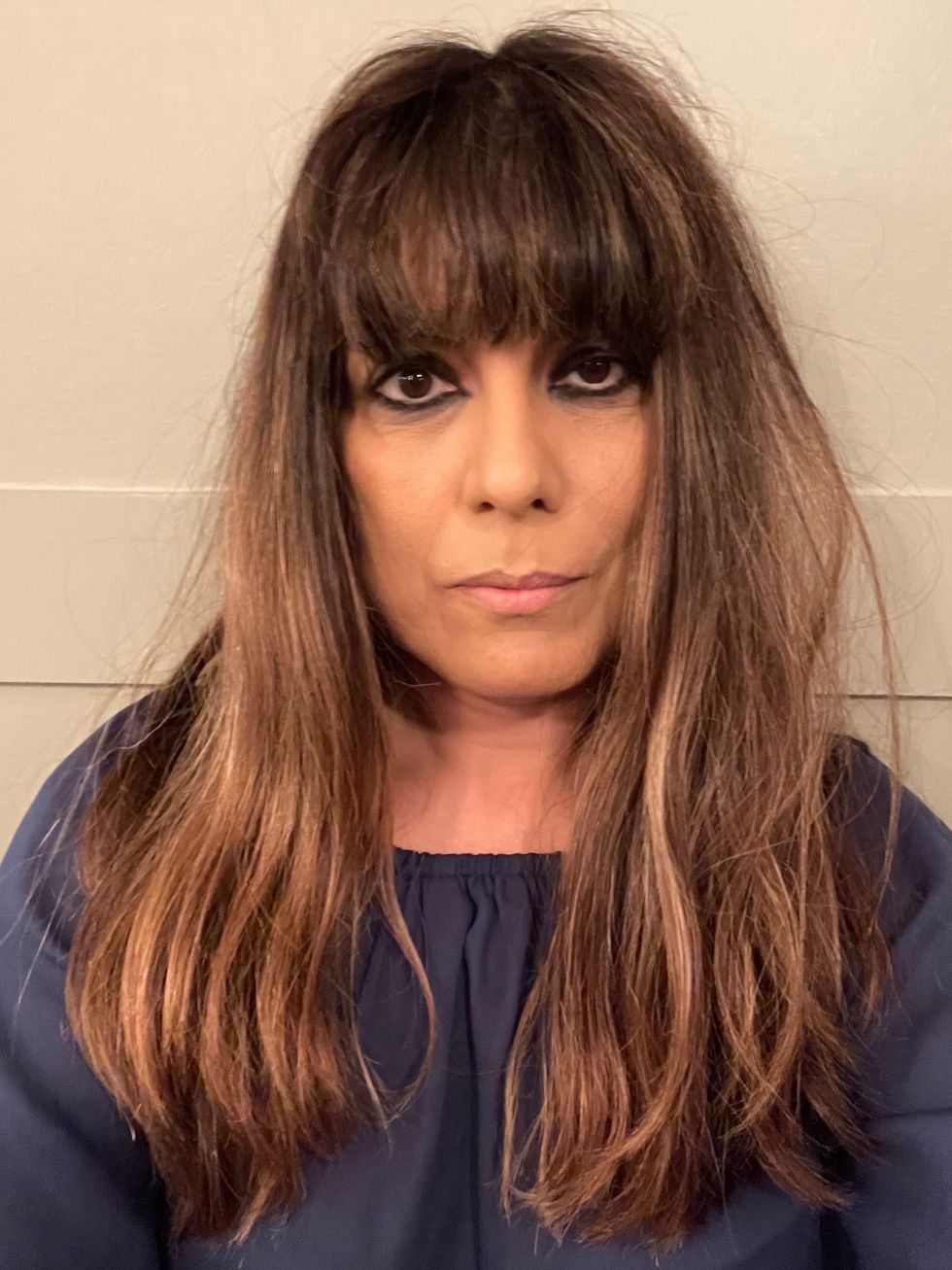 Aysha RafaeleEastern Eye
A post-mortem later revealed that Gagan had been burned alive.
When the case came to court, the media went into a frenzy and everyone obsessed over Mundill, not the victim Gagan, not the mysterious Sonny who seemed to have played a role in initially suggesting the meeting, not the young female students in the house who also ignored Gagan’s cries for help. Or even Ravi and Darren, who took a life and ruined their own. Just Mundill. She was described as a ‘beautiful Sikh virgin’, a ‘honey trap’, she alone was apparently ‘manipulative’, ‘vengeful’, seeking ‘retribution’ for what Gagan had done to her. She was described in the most vindictive language, with no regard for the fact that she too, had arguably, been a victim in this story. Over the three months of the trial, and for the all years since Gagan’s death, Mundill has felt the full force of log kya kahenge. She no longer had to imagine what will people say?. She knew and heard exactly how vicious the gossips within our own communities, the curtain twitchers, the ones who occupy the moral high ground can be. On social media, they called her everything under the sun.
My two-part factual drama is based on police interviews, court documents, original interviews, press coverage from the time and other published accounts. After poring over everything I could find, I’ve come to believe no one involved intended the tragic outcome.
Certainly not Mundill, nor Ravi or Darren. This is a tragic case of people taking it upon themselves to enact ‘justice’ – to try to right a perceived wrong – but these were young kids and things went horribly, terrifyingly wrong.
Gagan was a respected leader in the British Sikh community despite his young age. Thousands of people, from far and wide, attended his funeral. The manner of his death continues to raise questions, which remain pertinent. As the criminal justice system finds it increasingly difficult to deliver justice, is it ever right to take matters into your own hands? Does one wrong justify another? What role can forgiveness play at a time when the power of an eye for an eye seems to have such simplistic force?
Most of all, my own response to log kya kahenge is ‘phir kya? So what?’
Let us do ourselves, our young men and young women, a favour – by stopping worrying about what other people think and starting honest and open conversations. We should educate boys about what real respect for women looks like and against taking up vigilante justice. Let us throw off the age-old anxieties and face up to the difficult questions crimes such as this one reveal about our communities.
(The author is the writer and director of Vengeance, which will be shown on Channel 4 on May 24)