
Highlights
- Kiran Kaur, 53, was jailed in July for assisting an offender after removing the knife used in the December 2025 killing.
- New rules allow most prisoners serving fixed-term sentences of up to two and a half years to be released on licence after serving a third of their sentence.
- Kaur’s appeal against her three-year sentence is due to be heard on November 5.
- Digwa is also due to challenge his life sentence, while the government has sought a review of the minimum term as potentially too lenient.
KIRAN KAUR, the mother of a man jailed for murdering student Henry Nowak, could be released from prison early under changes to England’s sentencing rules, raising concerns about the impact on the victim’s family.
Kaur, 53, was sentenced to three years in prison in July for assisting an offender after removing the ceremonial knife her son, Vickrum Digwa, used to kill the 18-year-old in Southampton in December 2025.
Hampshire and Isle of Wight Police and crime commissioner Donna Jones said Kaur’s possible early release would be “a significant blow for Henry’s family”.
Speaking to BBC Radio 4’s Today programme, Jones questioned why the prospect of Kaur leaving prison had arisen so soon after her sentencing.
“She wasn’t even sentenced until July this year, which was just three months ago, and here we are now talking about her potential release,” she said.
Jones said she would write to justice secretary Alex Norris seeking “clarity” on the matter so she could continue supporting the family.
Under the Sentencing Act 2026, which came into force on October 1, most prisoners serving fixed-term sentences of up to two and a half years are eligible for automatic release on licence after serving one-third of their sentence, rather than half.
Kaur’s offence is not among those excluded from the changes. However, her three-year sentence is longer than the two-and-a-half-year threshold specified for the revised automatic release provision, meaning the new rule does not automatically establish that she qualifies for early release.
Her precise position will depend on the applicable release provisions and the treatment of her time already served.
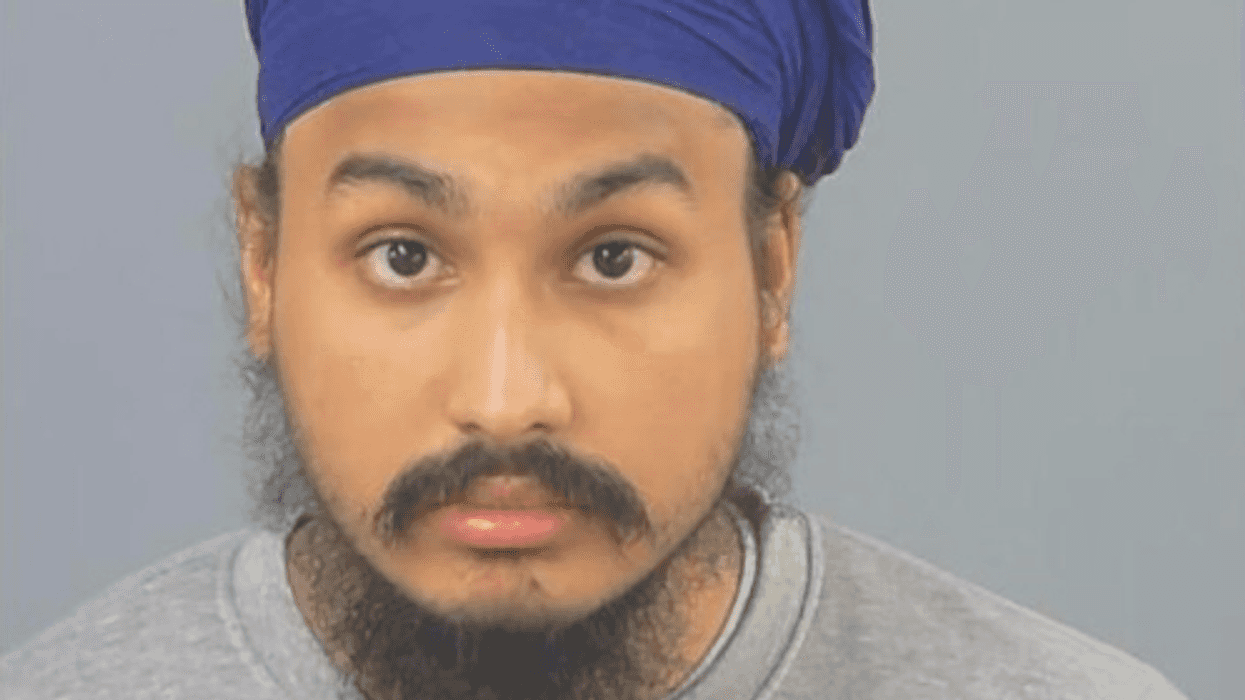 Vickrum Digwa Eastern Eye
She spent 221 days on remand before sentencing, a period the Ministry of Justice said was taken into account by the court. Kaur is also appealing against her sentence, with the case listed for November 5.
Kaur, who was described in court as an Indian national, could also face consideration for deportation. The government said it would “always seek to deport foreign criminals at the first opportunity”, although individual decisions depend on the circumstances and can be appealed.
Judge said Kaur helped conceal the weapon
Sentencing Kaur in July, Judge William Mousley KC said she had removed the knife to help her son avoid being caught.
Digwa had handed the weapon to his mother after the killing. Police later found it at the family home, along with more than 20 other weapons.
The judge said Kaur had placed the knife among a larger collection of ceremonial and other weapons in her son’s bedroom, helping to conceal its connection to the murder.
“A responsible parent would have challenged their son” and urged him to “do the right thing”, the judge said.
He acknowledged that Kaur was unlikely to reoffend and that her motive had been “mistakenly, to protect your son rather than for any personal gain”.
However, he said her actions were serious enough to warrant punishment and deterrence. Prosecutor Nicholas Lobbenberg described her role in removing the weapon as “crucial”.
Killer’s sentence also faces review
Digwa, 23, was jailed for life on June 1, with a minimum term of 21 years, for murdering Nowak. He had falsely claimed that the student racially abused him.
The government considers the sentence potentially too lenient. The case attracted widespread scrutiny after police body-worn camera footage showed officers handcuffing Nowak as he lay fatally wounded.
The student, who was studying finance and accounting, repeatedly told officers, “I can’t breathe”. The police force later apologised for handcuffing him, and the police watchdog launched an investigation into two officers over potential gross misconduct.
The government said its thoughts remained with Nowak’s family and friends, describing his death as “a horrific act of violence”.