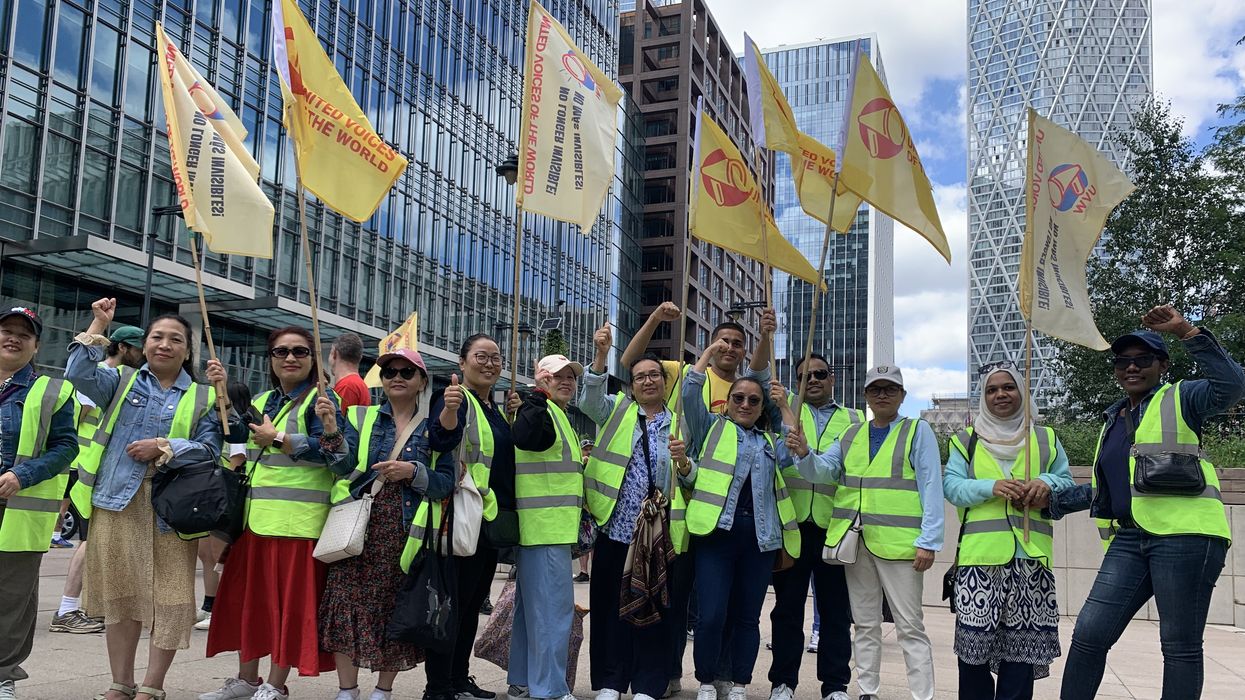

WORKERS at the Radisson Blu hotel in Canary Wharf have cancelled a planned six-week strike after reaching an agreement that met all their demands.
The group of housekeepers, most of whom are migrant women from Nepal and members of the United Voices of the World (UVW) union, were due to begin industrial action on Sunday (31). It would have been the longest hotel strike in the UK since 1979, a statement said.
The dispute involved staff employed through the outsourcing company WGC, which provides facilities services to several Radisson Blu hotels in London.
Following negotiations with UVW, WGC agreed to increase pay to the London Living Wage of £13.85 per hour, issue back-payments, reduce workloads to 14 rooms per day, and reinstate guaranteed 40-hour contracts.
In response, the workers voted unanimously to call off the strike. The decision follows earlier strike action on August 9, which was the first hotel workers’ strike in England in nearly five decades.
Doris Selembo, a housekeeper at Radisson Blu for over 30 years, said, “The whole team stood together and achieved this win. We are both excited and grateful — excited for the future and grateful because we are with UVW, and WGC are finally listening to us.”
UVW general secretary Petros Elia called the agreement a significant milestone. “This is the first victory in the hotel sector in England since 1979. Our women members have proven that when workers organise, stand together, and fight, they win. They have made history," Elia said.
The workers’ initial demands focused on secure contracts, fair pay, and manageable workloads, issues that the union and workers say had long been ignored.
The resolution brings an end to the dispute in a sector where outsourced workers are commonly employed under less secure terms and lower pay, the statement added.