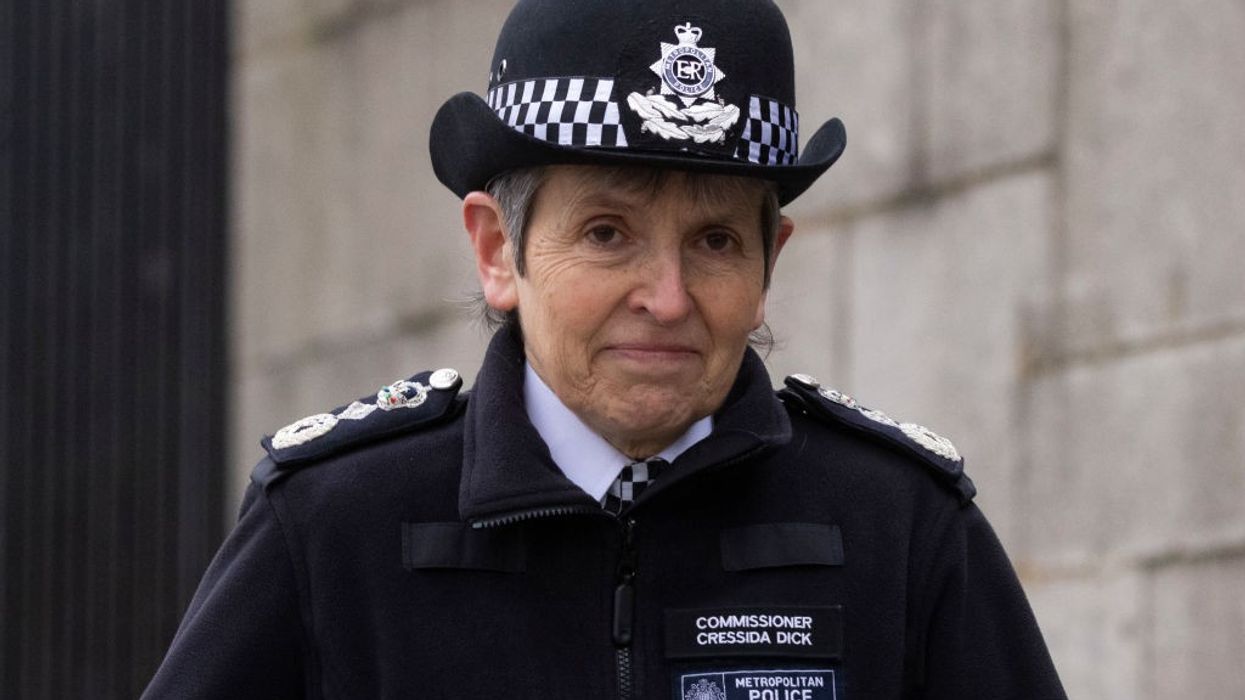

CRESSIDA DICK announced her resignation last night (10) after a string of scandals rocked London's Metropolitan Police, including racism, sexism and a serving officer murdering a young woman.
Dame Cressida, who became the first woman to head the force in 2017, said she had "no choice but to step aside" after London mayor Sadiq Khan said he no longer had confidence in her leadership.
"I say this with deep sadness and regret," the UK's most senior police officer said in a televised statement, wearing her uniform.
The Scotland Yard chief defended her role and the work of her service and thanked her fellow officers for the "extraordinary efforts you make each and every day."
Khan said on Thursday (10) he was "not satisfied with the commissioner's response", after a meeting last week where he insisted broad changes were needed to "root out the racism, sexism, homophobia, bullying, discrimination and misogyny" in the force.
Dame Cressida said she felt "huge sadness", but it was "clear that the mayor no longer has sufficient confidence in my leadership to continue". She had been set to stay as head of the service until 2024.
Her sudden announcement comes as her police force investigates the "partygate" scandal swirling around prime minister Boris Johnson over alleged parties held in breach of coronavirus restrictions.
Dame Cressida said she would stay on for a short while to "ensure the stability of the Met".
“Damaged confidence”
Johnson and the home secretary Priti Patel praised her achievements in tweets.
"I thank her for her role protecting the public and making our streets safer," Johnson said, while Patel said Dick served in "challenging times" and had shown "steadfast dedication to protecting our capital city and its people".
The 61-year-old had long faced calls for her resignation after high-profile scandals including the rape and murder of Sarah Everard, who was kidnapped by then-police officer Wayne Couzens in March 2021.
Dame Cressida has acknowledged that the case "brought shame" on the force.
Couzens snatched the 33-year-old marketing executive after falsely arresting her for breach of coronavirus restrictions. He has been sentenced to spend the rest of his life in jail.
The police chief also faced criticism over the response during a vigil for Everard in a London park, when police scuffled with the predominantly female crowd and physically restrained demonstrators, arresting four people.
Dame Cressida referred to "the murder of Sarah Everard" in her resignation statement, saying this and "many other awful cases recently have, I know, damaged confidence in this fantastic police service".
But the force "has turned its full attention to rebuilding public trust and confidence", she said, adding she was "very optimistic about the future for the Met and for London".
Khan said earlier this month he was "utterly disgusted" after an independent watchdog said London police had sent each other "shocking" racist, sexist and homophobic messages.
(AFP)