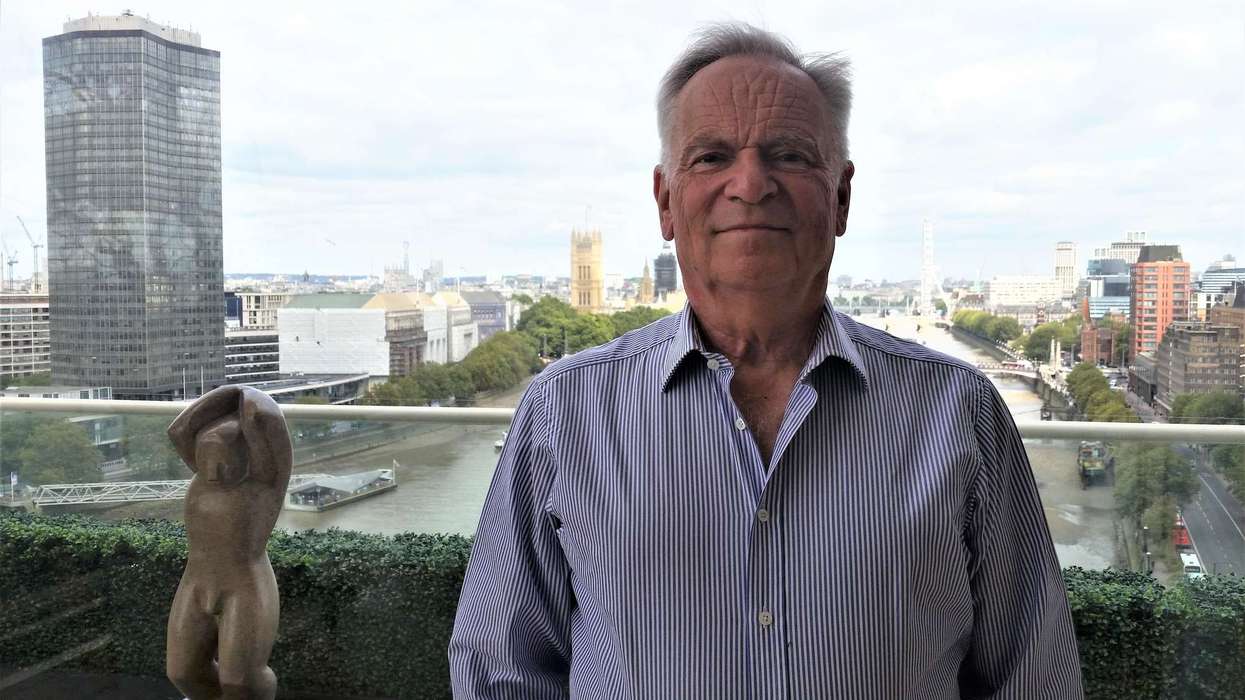

The author (Lord) Jeffrey Archer, who has an especially devoted following in India, died suddenly on Monday at his home in the UK at the age of 86.
He would have liked the fact that his end resembled one of the twists in his tales.
He passed away after he had spent Sunday promoting what he had declared was his very last novel, Adam & Eve.
This was formally published on Tuesday, October 6, by HarperCollins, who announced he died “suddenly and peacefully” at his home “between writing sessions”.
Kate Elton, the HarperCollins UK chief executive, said: “It has been one of the great privileges of my publishing life to have been Jeffrey Archer’s editor. He was the master storyteller and an editor’s dream — phenomenally hard-working, utterly committed to completing draft after draft to get every word as perfect as possible, and a true champion of the ‘team’ nature of great publishing.
“When he set out to write Adam & Eve, he told me from the very beginning that it would be his final novel — he was so excited about the scale of it and told me that if he could pull it off, it would equal anything he’d previously written, on which basis he couldn’t imagine embarking on any future novels. He did indeed pull it off — and he was utterly thrilled by the early reader reactions. We’re all devastated to have lost a writer who has brought joy to generations of readers — and a true friend.”
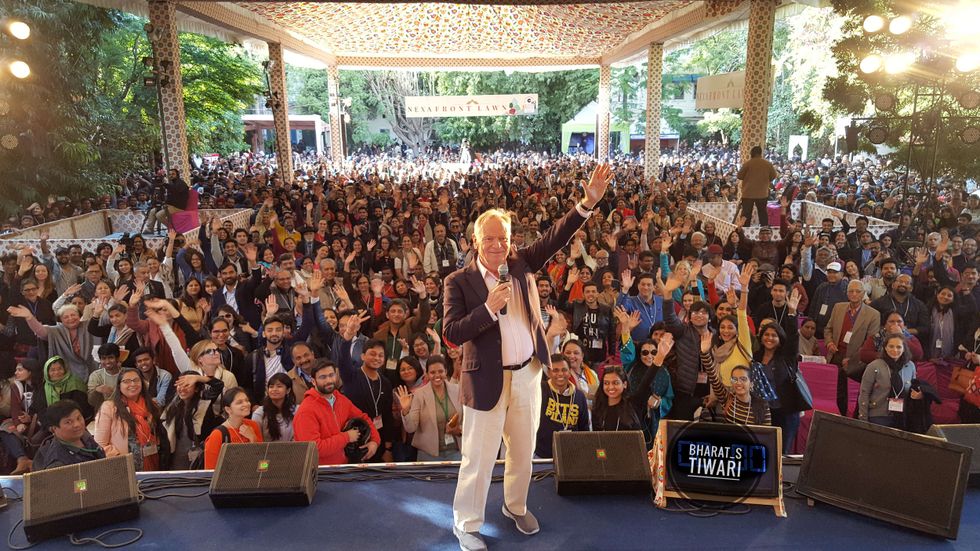 Jeffrey Archer at Jaipur Literary Festival in 2019Eastern Eye
The phrase “bestselling author” doesn’t do him justice. He was the ultimate story teller. He sold more than 300 million books in his five-decade writing career, including the Clifton Chronicles and Kane and Abel, and often set the novels in his home town of Wellington, Somerset. His books sold in 119 countries in 49 languages.
But he had a particularly soft spot for India, it became clear during my interviews with him.
In September 2019, for example, I went to see him at his penthouse suite overlooking the Thames with a view of the Palace of Westminster.
He reckoned he had visited “20 to 25 times over the years”.
He was taken aback to discover one young woman journalist in Kolkata knew his tales almost better than he did. But he did point out that his debut novel, Not a Penny More, Not a Penny Less, was published in 1975 when he was 35.
Put simply, Indians appeared to adore Archer and Archer adored India.
“They are very kind to me,” he summed up.
On his phone was a picture of the crowd he had attracted at the Jaipur Literary Festival earlier that year.
“7,500 people turned up to hear me in Jaipur.”
His wife, Dame Mary Archer, a distinguished scientist in her own right to whom he had then been married for 53 years, was moving around quietly in the background.
A couple of months previously, a group of senior Indian businessmen had hosted a lavish dinner for the Archers in London.
“Mary was shocked,” recounted Archer. “It was truly remarkable – every course was named after one of my books.”
On the menu, headed “A Tribute to Jeffrey Archer”, were such items as Mightier than the Sword (Lavash and Hummus), First Among Equals (Dragon Fruit Waldorf Salad), Nothing Ventured (Podi Hoppers Corn and Kuttu Roti), Only Time Will Tell (Slow-cooked Kali Dal) and Kane and Abel (Celebration Cake).
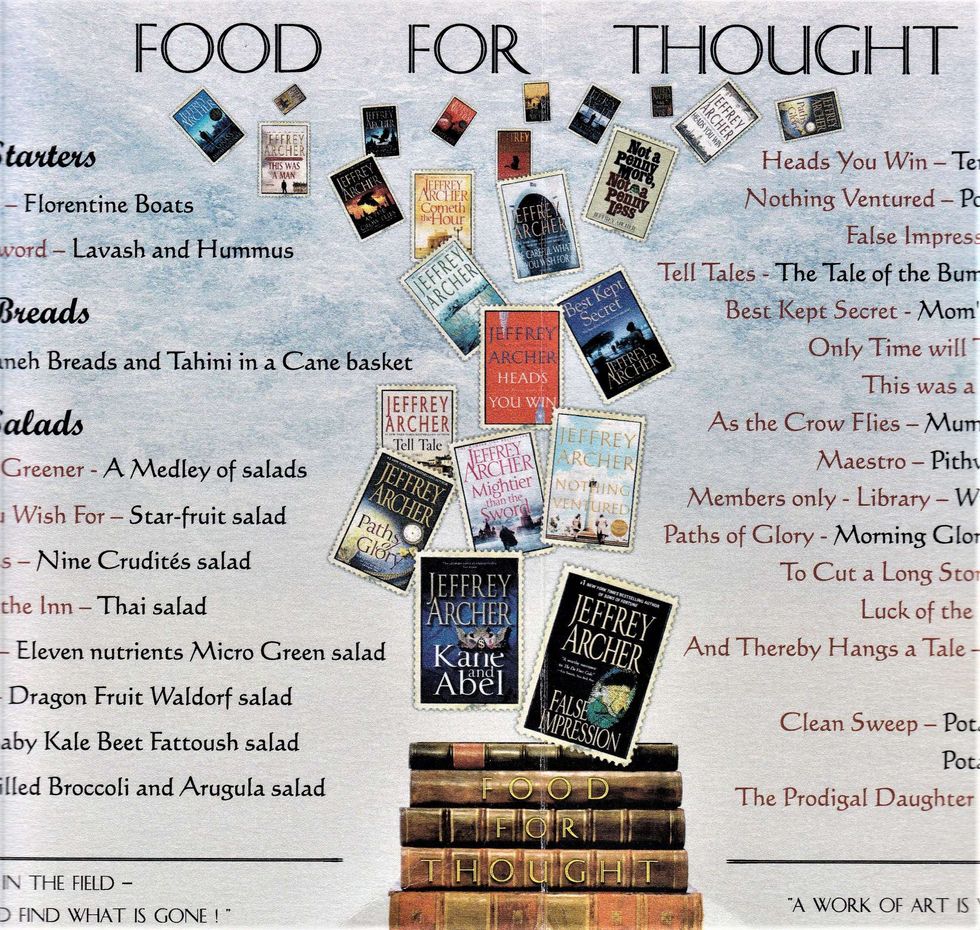 Jeffrey Archer part of the menuAmit Roy
Since most Indian businessmen probably don’t read anything other than their bank statements, clearly a researcher had been hard at work to make the menu a collectors’ item (Archer generously donated one of his three copies to Eastern Eye).
He added: “I am always teased that the other author Indians love is P G Wodehouse. And you would think we couldn’t be more different.”
He learnt that “several schools in India look at Not a Penny More, Not a Penny Less as a first novel and see the immaturity of someone writing a first novel. A headmistress told me recently that her school is studying the art of short storytelling because you have R K Narayan, one of the greatest story writers who has ever lived. I am a huge admirer and fan – wish I had met him before he died.”
In fact, if he were to be cast on a desert island and allowed to take a handful of books, R K Narayan’s short story collection, Malgudi Days, would be in the mix, along with Great Expectations by Charles Dickens and The Count of Monte Cristo by Alexandre Dumas.
He accepted that since his first novel came out in 1975, British society had changed beyond recognition and with it the standing of Indians.
“One has to be very careful what one says in this situation because we live in an age where prejudice is misunderstood but all I will say is the Indians work very hard, number one. And they are very bright, number two. And that is a good start. So, I am not surprised that Indians are doing well in this country. Everywhere I go – I was in Qatar recently – they seem to be running the place. I was in Dubai – they seem to be running the place.
 Jeffrey Archer signing a book Amit Roy
“I think you are the most aspirational race on earth, possibly other than the Chinese who are also very aspirational. And I write aspirational books”.
As for his fan base in India and the enthusiastic welcome he received whenever he was in India, he commented: “It’s a mystery.”
Perhaps “my love of India, (and) my love of cricket come through to the people both in the books and whenever I am on radio and television in India”.
He reckoned India should have won the ICC World Cup earlier that year – “you were the best team”.
His eyes lit up at the mention of Rahul Dravid. “Oh, yes. Beautiful stroke player.”
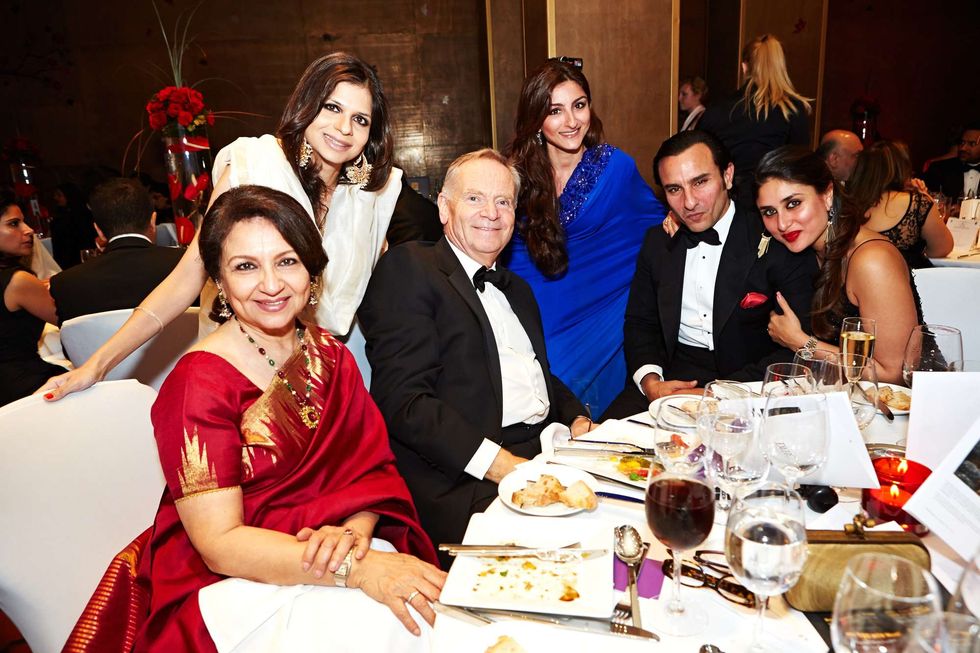 Jeffrey Archer with Sharmila Tagore and her family at an auction dinner in London in 2013Eastern Eye
He went on: “I always say that V V S Laxman and Rahul Dravid staying in all day against the Australians (at Eden Gardens in Kolkata in 2001 when India won after following on) was one of the great Test matches in history.”
He had met the then Indian skipper Virat Kohli three times.
“I heard him make a speech recently in your (Indian) high commission – and he is a very measured, sensible, intelligent man,” was his assessment. “I am a great admirer, not just of his batting, but of his competitive attitude and indeed the way he conducts himself. But this has been true of the Indians for many years.”
In this ultra elite group, he included Anil Kumble, Kapil Dev and Ravi Shastri.
And he retained warm memories of “the Nawab”, a reference to Mansur Ali Khan “Tiger” Pataudi.
“I was at Oxford with the Nawab who was a friend and remained a dear friend through to his death. He was a great man – and a great captain of India.”
He saw Tiger in action before his friend lost much of the vision in his right eye in a car accident. “That was very, very sad. I am amazed that he went on to captain his country and remained a world class cricketer.”
Always in demand as an auctioneer at Indian charity functions, the author officiated at a dinner at the May Fair Hotel in London in 2013 to raise funds for the Pataudi 2020 organisation which helps people with sight problems. The occasion was attended by his wife Sharmila Tagore, son and daughter Saif and Soha and daughter-in-law Kareena.
“The auctions I love – they are fun. And that was a particularly fun one because I was doing it in memory of someone I cared about.”
After many ups and downs in his life, Archer was glad he did not stay in politics or become mayor of London but made his mark as a “storyteller”. His style was deceptively simple. But he had the gift of being able to make the reader turn the page to find out what happened next.
He told me he wanted to take his new protagonist, Detective Constable William Warwick, a bright, young recruit to Scotland Yard’s art and antiquities squad in his latest novel, Nothing Ventured (Macmillan; £20), through to Metropolitan Police Commissioner over the course of eight novels.
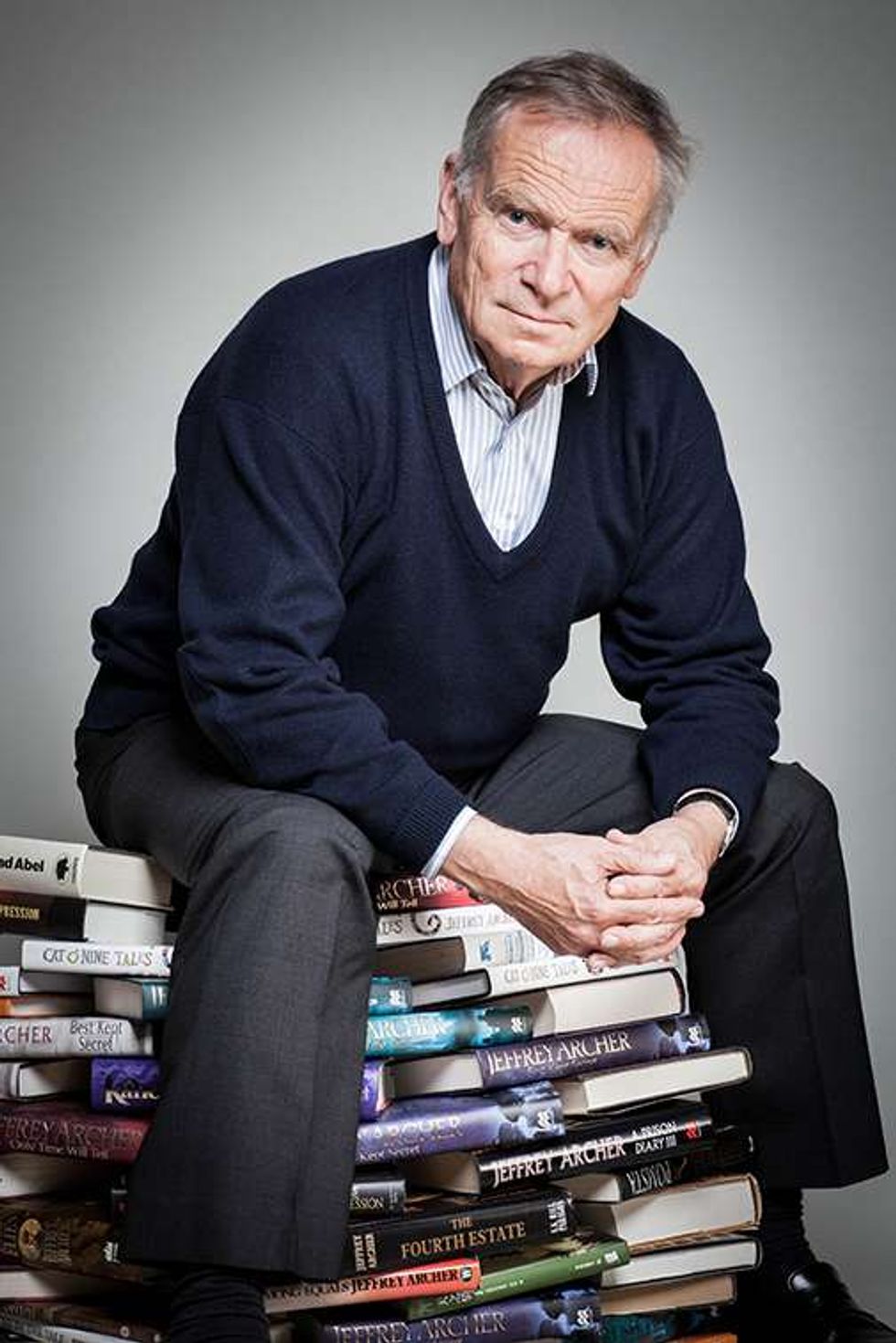 Jeffrey Archer Eastern Eye
We chatted about Nothing Ventured, in which Warwick makes his debut starting out in Scotland Yard’s art and antiquities squad.
One night while watching a suspect’s house from a car, said Archer, Warwick kept awake “by remembering the top ten Test batting averages of all times – Bradman 99.84, Pollock 60.97, Headley….”
Whether Warwick would get to the very top would depend on whether the author was around to complete the task, said Archer, who was due to turn 80 in 2020.
However, the narrative trajectory changed, and the series formally concluded with the final book in the series, End Game. The book tracked Warwick at the rank of Commander during the 2012 London Olympics, leaving him just short of the top job.
An editor had suggested I should get Jeffrey Archer to talk about Jofra Archer, then England’s exciting new fast bowler.
“Oh, yes,” responded the author, who was very knowledgeable about cricket. “He is clearly a great new talent and made the big decision whether he would play for the West Indies or for England. And luckily for us he chose England. Yes, very exciting indeed. As he is only 24 years old, we can hope to have him for 10 years.”
On a broader sociological point, no one made anything of the fact that Jofra was a black man playing for England and had become a national hero overnight.
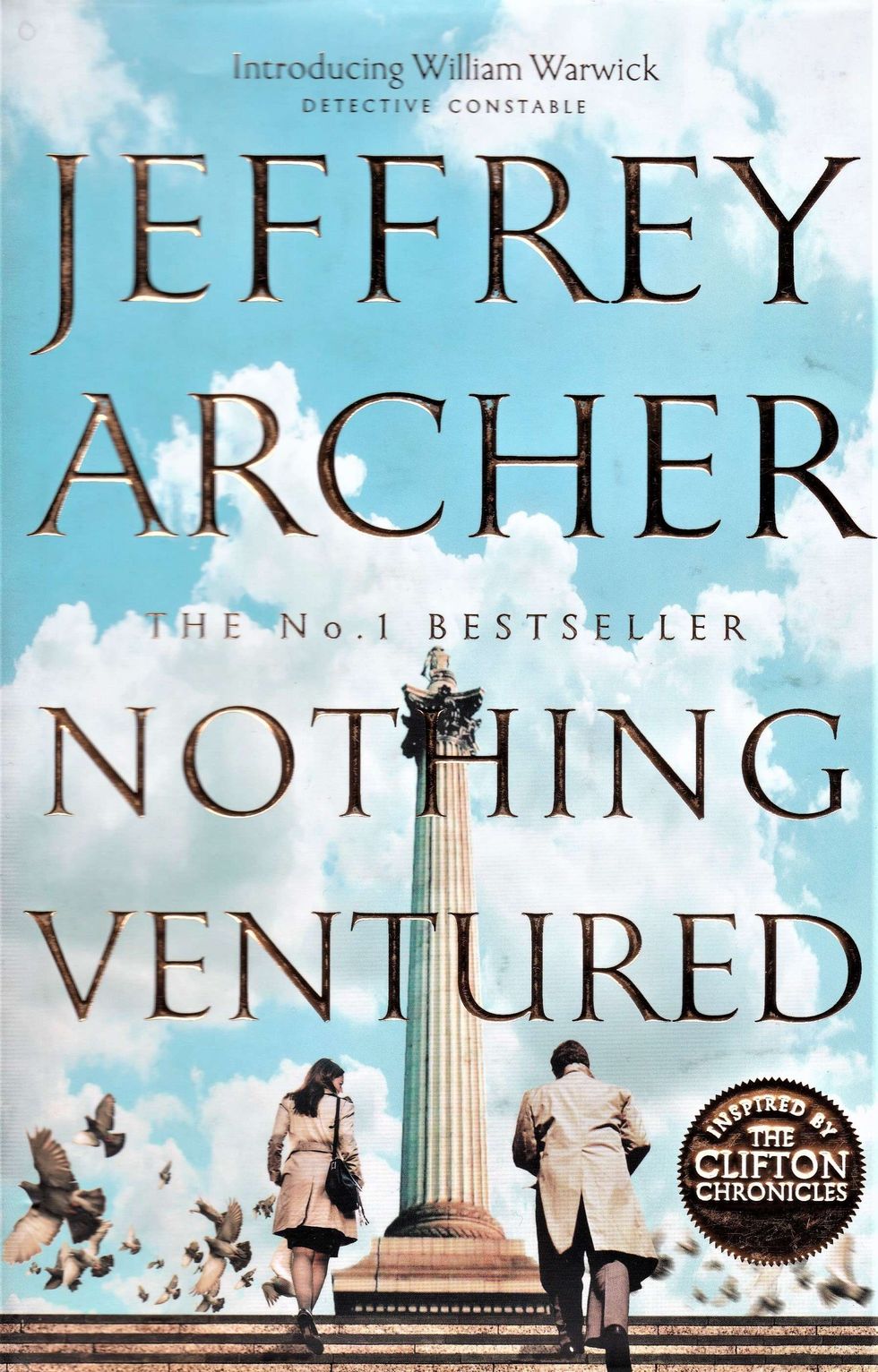 Cover of one of his booksEastern Eye
“Why should it?” asked Archer. “This is a natural evolution.”
Archer, himself once an athlete who ran the 400 metres, recalled: “When I ran for England and for Britain, we had no black men in the team. That has changed now. It has changed to the extent that I read in The Times the other day that in the Olympic Games there wasn’t a white man in the semi-final or the final. And that’s fine. That’s a change. We live with it.”
Did he think that diversity, represented by the likes of Jofra Archer, had brought strength to modern Britain?
“Very much,” enthused the author.
Archer, who was given a peerage in 1992, retired from the House of Lords in 2024.
He is survived by his wife Mary, to whom he was married for 60 years, two sons, James and William, and two granddaughters and three grandsons.


 Dr Miles Kempton delivering his talk on Darwin and the Galapagos Islands in the Yusuf Hamied lecture theatreAmit Roy
 Alumni of Christ's entering the Yusuf Hamied Centre for talk by Miles Kempton Amit Roy
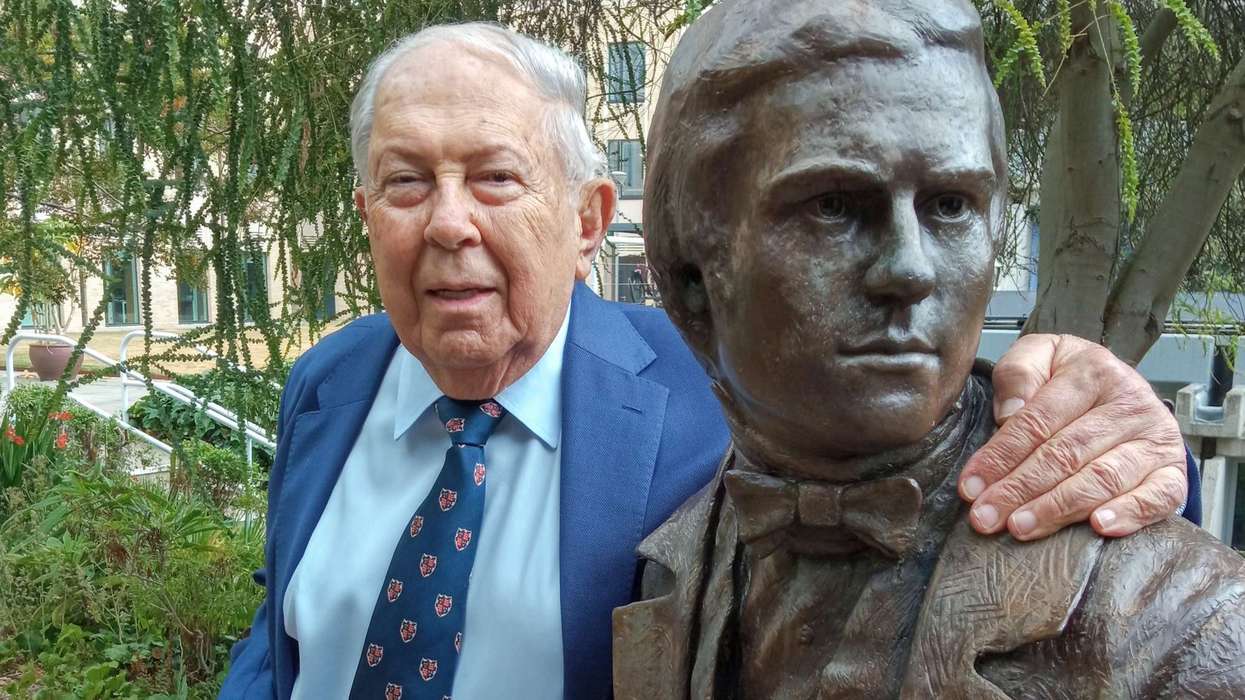
 (Seated left to right) Yusuf Hamied, Shankar Balasubramanian, Partha Dasgupta and Venkatraman Ramakrishnan (standing) with the statue of Young DarwinAmit Roy
 Darwin-Hamied Centre at Christ's. (left to right) Partha Dasgupta, Yusuf Hamied, Shankar Balasubramanian and Venketaraman Ramakrishnan Amit Roy
 Bikash Sinha with the bust of Jagadish Chandra Bose Amit Roy
 Simon McDonald (right) and Yusuf Hamied with the bust of Jagadish Chandra Bose Amit roy
 Charles Darwin's room at Christ's with table and chairsAmit Roy
 Charles Darwin's room at Christ's with wash basin Amit Roy
 Bust of Jagadish Chandra Bose Amit Roy
 Prince Philip unveiling the young Darwin statue in 2009 Christ's College
  Galapagos Sea Lion Amit Misra
  Galapagos Blue-footed-boobiesThomas-Hopmann
 Galapagos giant tortoise Galapagos Conservancy
  Galapagos giant tortoises Henri Leduc