
Highlights
- Northern exporters planning to enter the Indian market have increased tenfold this year, says Uma Kumaran.
- Scottish exports to India have reached £500 million.
- Britain and India have invested more than £400m in joint research over the past decade.
- Around 145,000 Indian students are studying in the UK, while nine British universities have approval to open campuses in India.
THE UK-India free trade agreement is creating new opportunities for businesses in both countries, with growing interest among exporters and increased cooperation in research and technology, foreign office minister Uma Kumaran has said.
Trade between the two countries is now worth almost £47 billion, and the FTA was opening the door wider for businesses, the minister added.
Her remarks were made at a reception celebrating India-UK relations at Lancaster House in London on Wednesday (18) evening.
"We are already seeing those benefits," said Kumaran, who is of Sri Lankan Tamil heritage.
She pointed to figures from Manchester Airport Group showing the number of northern exporters expecting to enter the Indian market had increased tenfold this year. Scottish exports to India, meanwhile, had reached £500 million.
"I will let you guess how much of that is down to the Scotch whisky industry," she said.
Kumaran also highlighted growing cooperation in science and technology, saying Britain and India had invested more than £400m in research over the past decade.
"From artificial intelligence to telecoms to climate and clean energy, we are working together to tackle our greatest challenges and build a cleaner future," she said.
Referring to the visit by the Prince and Princess of Wales to Mumbai for the Earthshot Prize this week, she said it had demonstrated what could be achieved when "bold ideas meet bold ambition".
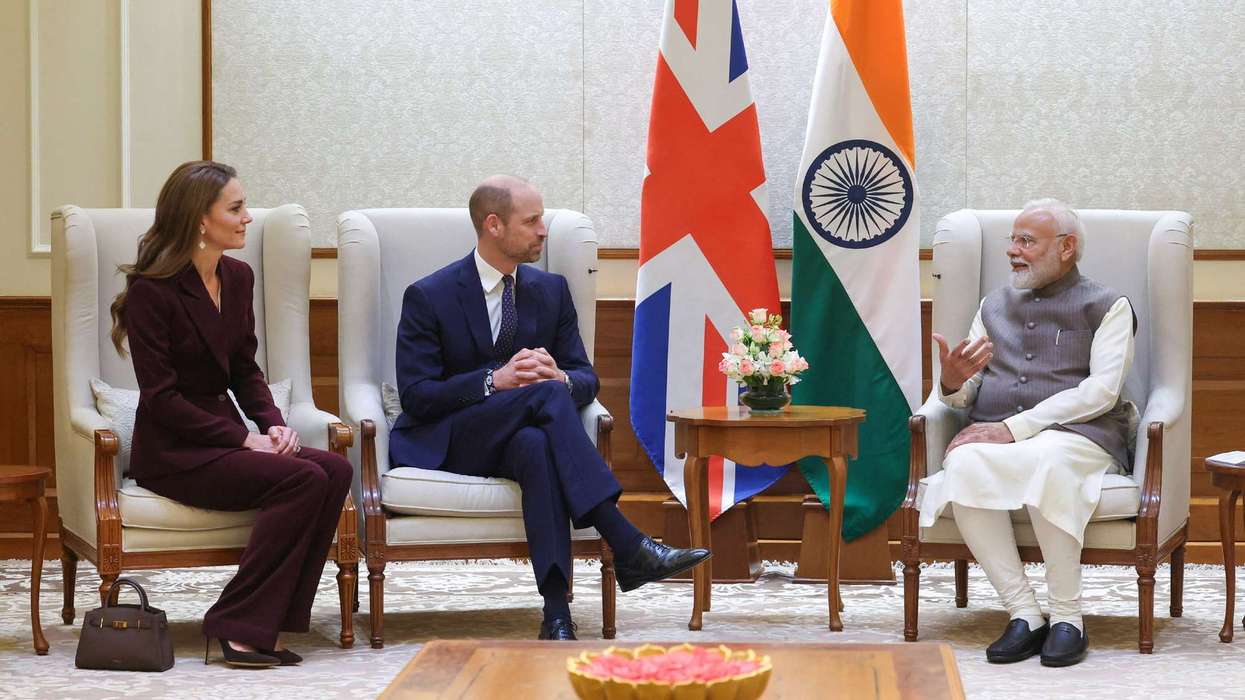
The royal couple, William and Catherine, were in Mumbai and Delhi, where they met prime minister Narendra Modi before heading back to the UK.
India has produced more Earthshot finalists than any other country, and Kumaran pointed to the role of innovation in tackling environmental challenges.
Indian diaspora a living bridge between two countries
She also noted the contribution of the Indian diaspora to Britain's political, economic and cultural life, describing the community as a living bridge between the two countries.
Sharing her personal connection with India, she said her family was ethnically Sri Lankan Tamil and recalled her childhood memories.
"I grew up spending summers in south India, in Chennai, playing in the gardens there and praying in the temples of Trivandrum. I spent my formative years travelling through Agra, Jaipur, Mumbai and Delhi. I have walked through Varanasi, and I have bathed in the River Ganges. I have cherished our stories of faith and culture across borders," she said.
As a first-time Labour MP in 2024, she recalled taking her oath in parliament on the Bhagvad Gita.
"For me, it brought together two parts of my life: my Hindu heritage and my duty to the country I am proud to serve," she said.
Kumaran also referred to the recent Diwali celebrations at Downing Street, saying she was proud to see the decorations with lamps and marigolds.
The minister spoke about wearing a marigold alongside her remembrance poppy to honour Indian Commonwealth forces who served alongside British troops.
"With every year that passes, we celebrate an old partnership built on history. But together, we are also writing a new chapter," she said.
Kumaran paid tribute to British Indians working in the NHS, in business, science, technology, education, media, arts and politics.
She also noted that around 145,000 Indian students were studying in Britain, while nine British universities had received approval to establish campuses in India."That should give us huge confidence about what lies ahead," she said.
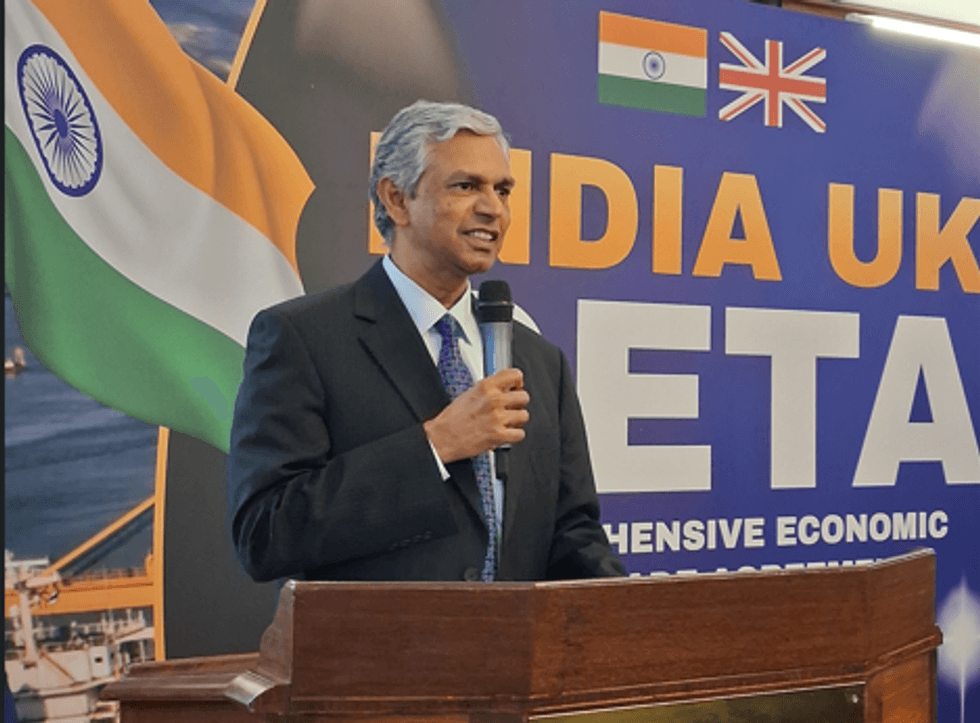 Indian High Commissioner Periasamy Kumaran addresses guests at India House Eastern Eye
India offers scale and talent, Britain brings expertise, says high commissioner
India’s high commissioner to the UK, Periasamy Kumaran, said the implementation of the Comprehensive Economic and Trade Agreement (CETA) marked a shift in the bilateral relationship, allowing both countries to focus on putting the agreement into practice.
"We can spend less time talking about the promise of an agreement and more time turning that promise into opportunity. That is something worth celebrating," he said.
The agreement came into force this summer on July 15, following years of negotiations.
Describing India's economic growth and expanding industrial capabilities, the high commissioner said the country was developing new businesses and strengthening its position in industries ranging from mobile phones and medicines to automobiles and clean energy.
He also highlighted the continuing importance of traditional sectors such as textiles, jewellery and agriculture.
"That is indeed India's strength: the ability to draw on its heritage while embracing the future," he said. Pointing to the complementary strengths of the two countries, he said India offered scale, talent and enterprise, while Britain brought expertise in research, engineering, finance and innovation.
"Together, we have much to offer and much to gain," he said.
Businesses urged to turn trade deal into lasting partnerships
Kumaran said ministerial visits, mayoral missions, business exchanges, parliamentary exchanges and royal visits had helped maintain momentum since the trade agreement came into force.
However, he said its success would ultimately depend on the partnerships and opportunities created by businesses and people.
"The true measure of this agreement will be what businesses and people make of it: the partnerships they form, the opportunities they seize and the jobs they create," he said. "Our task now is to turn an agreement between governments into opportunities for our people."
He urged British businesses to view India as a long-term partner, rather than simply a market for their products.
"India is not simply a market to sell to. It is a partner to build with: a partner in developing technology, strengthening supply chains and creating the industries of tomorrow," he said.
He also referred to the two countries' Vision 2035, the Technology Security Initiative and the defence industrial partnership roadmap, which cover cooperation in trade, investment, technology, defence, security, climate, clean energy, education and skills.
Stressing the need for businesses to act on the opportunities available, he said partnerships required confidence, imagination and commitment.
"Opportunity does not fulfil itself. It takes confidence to invest, imagination to collaborate, and commitment to turn a good conversation into a lasting partnership," he said.
Among those who attended were Lord Jitesh Gadhia, Lord Karan Bilimoria, Baggy Shanker MP, community representatives and business leaders.
The event concluded with a dance performance by the Bengal Heritage Foundation and Nritya Tales UK.