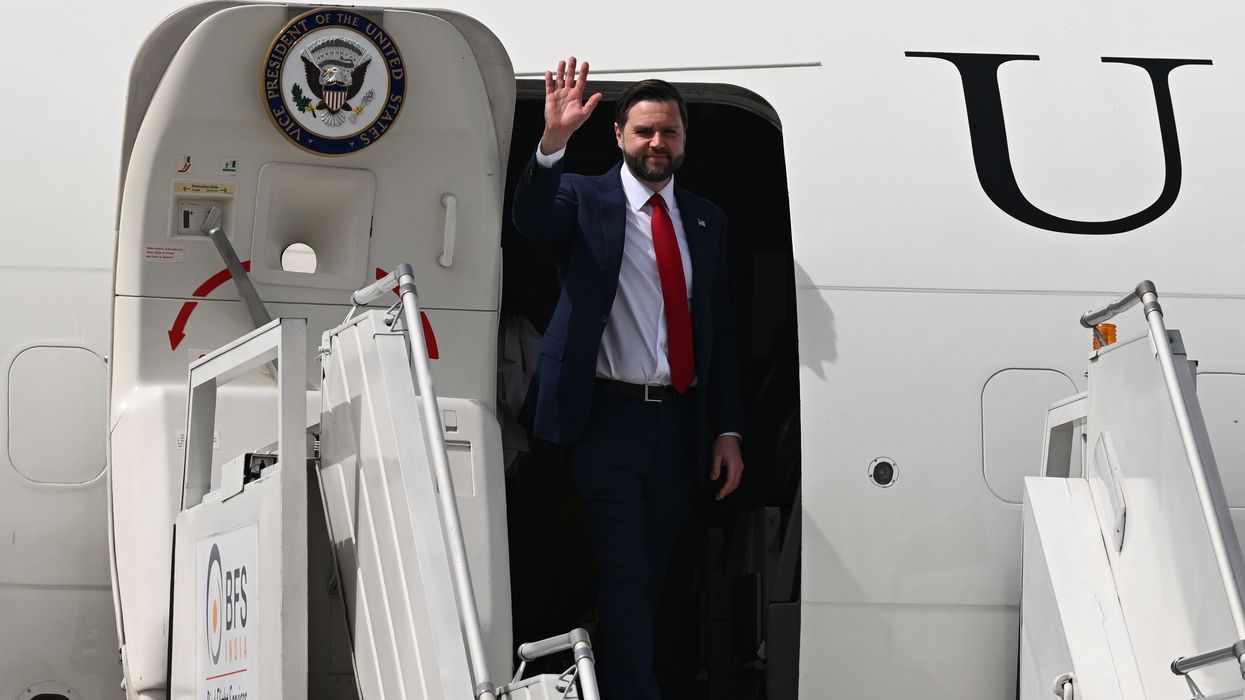

US VICE PRESIDENT JD Vance arrived in India on Monday for a four-day visit, during which he is scheduled to meet prime minister Narendra Modi. The visit comes as India looks to secure a trade deal with the US and avoid increased tariffs.
Vance's visit, which includes family engagements, will also see discussions with Modi. He is expected to review the progress made on issues agreed upon during Modi’s February meeting with US president Donald Trump in Washington, people familiar with the matter told Reuters.
The visit includes stops at the Taj Mahal and a wedding in Jaipur. Vance's wife, Usha, is the daughter of Indian immigrants.
He landed in New Delhi after visiting Rome, where he met Pope Francis in a private meeting on Easter Sunday.
Talks between Vance and Modi will likely focus on trade and defence cooperation. The two countries have discussed improving "fairness" in bilateral trade and expanding their defence ties.
India is open to reducing tariffs on more than half of its imports from the US, which were worth $41.8 billion in 2024, Reuters has reported. This is part of an effort to finalise a trade deal.
US president Trump has continued to criticise India on trade, calling it a "tariff abuser" and "tariff king".
“We are very positive that the visit will give a further boost to our bilateral ties,” said Indian foreign ministry spokesperson Randhir Jaiswal on Thursday.
In 2024, bilateral trade between the two countries reached $129 billion, with India enjoying a $45.7 billion surplus, according to US government trade data.
India hopes to reach an agreement within the 90-day pause on tariff hikes that Trump announced on April 9 for key trade partners, including India.
Vance’s visit is also seen as part of preparations for Trump’s expected visit to India later this year for the Quad leaders' summit, which includes Australia, Japan, India, and the US.
Harsh Pant, foreign policy head at the Observer Research Foundation in Delhi, said Vance’s visit comes at an important moment for trade relations.
“The fact that the US-China tensions are ramping up, and Vance in particular seems to have taken a very high profile role in American diplomacy, also means that the visit assumes an added layer of significance,” he said.
Vance is accompanied by officials from the US administration. No agreements are expected to be signed during this visit, people familiar with the matter said.
India and the US are working on a framework for defence partnership. A joint statement in February noted plans to procure and co-produce weapons including Javelin anti-tank guided missiles and Stryker infantry combat vehicles.
Talks on these procurements are expected to continue during a planned visit by US Defense Secretary Pete Hegseth to India in the coming months, people familiar with the matter said.
(With inputs from Reuters)




 The September 11 Memorial and Museum stands on the site of the former World Trade Centre in New York, where the twin towers were destroyed in the 2001 attacks Spencer Platt/Getty Images