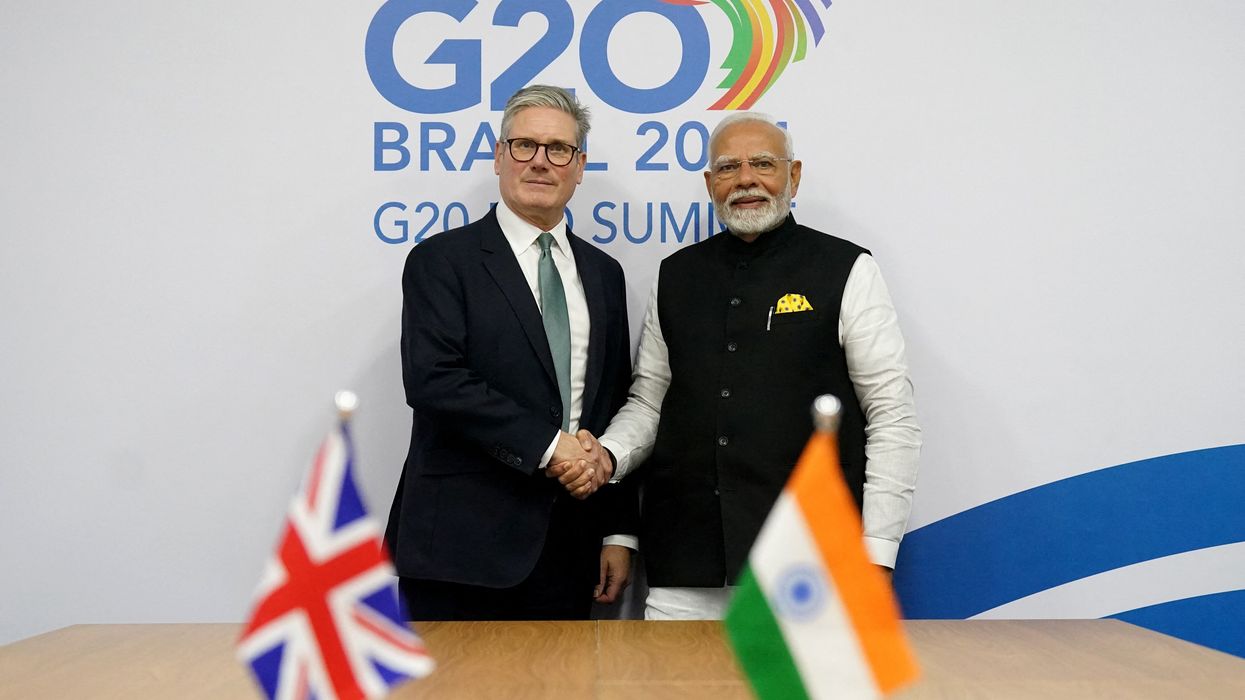

INDIA and the United Kingdom on Tuesday concluded a long-awaited free trade agreement after three years of negotiations. The deal, finalised in the context of past US tariff actions under president Donald Trump, is the most significant trade pact for the UK since it left the European Union.
The agreement between the world’s fifth and sixth largest economies aims to increase bilateral trade by £25.5 billion by 2040 through improved market access and eased trade restrictions.
"These landmark agreements will further deepen our comprehensive strategic partnership, and catalyse trade, investment, growth, job creation, and innovation in both our economies," Indian prime minister Narendra Modi said.
Delighted to speak with my friend PM @Keir_Starmer. In a historic milestone, India and the UK have successfully concluded an ambitious and mutually beneficial Free Trade Agreement, along with a Double Contribution Convention. These landmark agreements will further deepen our…
— Narendra Modi (@narendramodi) May 6, 2025
The pact lowers tariffs on a range of goods including whisky, advanced manufacturing components, and food items such as lamb, salmon, chocolates, and biscuits. It also sets quotas for automobile imports on both sides.
Both countries are also working on separate bilateral agreements with the United States to remove some of the tariffs introduced during Trump’s presidency, which had disrupted global trade. The UK-India deal gained urgency amid these developments.
ALSO READ: India accepts limited UK visa concessions to push trade deal
"We are now in a new era for trade and the economy. That means going further and faster to strengthen the UK's economy," prime minister Keir Starmer said.
"Strengthening our alliances and reducing trade barriers with economies around the world is part of our plan for change to deliver a stronger and more secure economy here at home."
The agreement opens up parts of India’s protected market, including the automobile sector, and is seen as a model for India’s approach to future trade discussions with the United States and the European Union.
Negotiations began in January 2022 and became symbolic of Britain’s post-Brexit trade ambitions. The talks faced several delays as the UK went through four prime ministers since then, and both countries held elections last year.
ALSO READ: UK, India announce £400m trade and investment deals
A Downing Street spokesperson said:
“The prime minister spoke to the prime minister of India Narendra Modi today.
“The leaders began by celebrating the landmark UK-India Free Trade Agreement announced today – a deal which will add billions to the UK economy, boost wages and deliver on this government’s Plan for Change.
Delighted to speak with my friend PM @Keir_Starmer. In a historic milestone, India and the UK have successfully concluded an ambitious and mutually beneficial Free Trade Agreement, along with a Double Contribution Convention. These landmark agreements will further deepen our…
— Narendra Modi (@narendramodi) May 6, 2025
“In a huge economic win for the UK, delivering for working people and British businesses, the prime minister underscored the need to go further and faster to get things done, to secure and renew our country.
“Through pragmatism and purpose, the leaders noted that this historic deal is the biggest the UK has done since leaving the EU, and the most ambitious India has ever done. Prime minister Modi also thanked the prime minister for his decisive leadership in getting the deal over the line.
“Turning to the terrorist attack in Jammu and Kashmir last month, the prime minister reiterated his deep condolences at the tragic and senseless loss of life.
“Finally, prime minister Modi extended an invitation to India, which the prime minister was pleased to accept and said he looked forward to visiting India at the earliest opportunity.
“They looked forward to speaking soon.”
Key elements of the UK-India trade deal:
- Bilateral trade: Currently at £42.6 billion, expected to grow by £25.5 billion annually from 2040.
- Market access: India to reduce import duties on whisky, medical devices, machinery, lamb, salmon, chocolate, soft drinks, biscuits, cosmetics, and aerospace products.
- Whisky tariffs: Cut from 150 per cent to 75 per cent, then down to 40 per cent by the 10th year.
- Automobiles: India to reduce tariffs to 10 per cent under a quota, from over 100 per cent.
- Tariff impact: India's tariff cuts expected to exceed £400 million based on 2022 data, with the value expected to more than double in 10 years.
- Trade ranking: India was the UK’s 11th largest trading partner in 2024.
- Post-Brexit milestone: UK described the deal as its most economically significant trade agreement since leaving the EU.