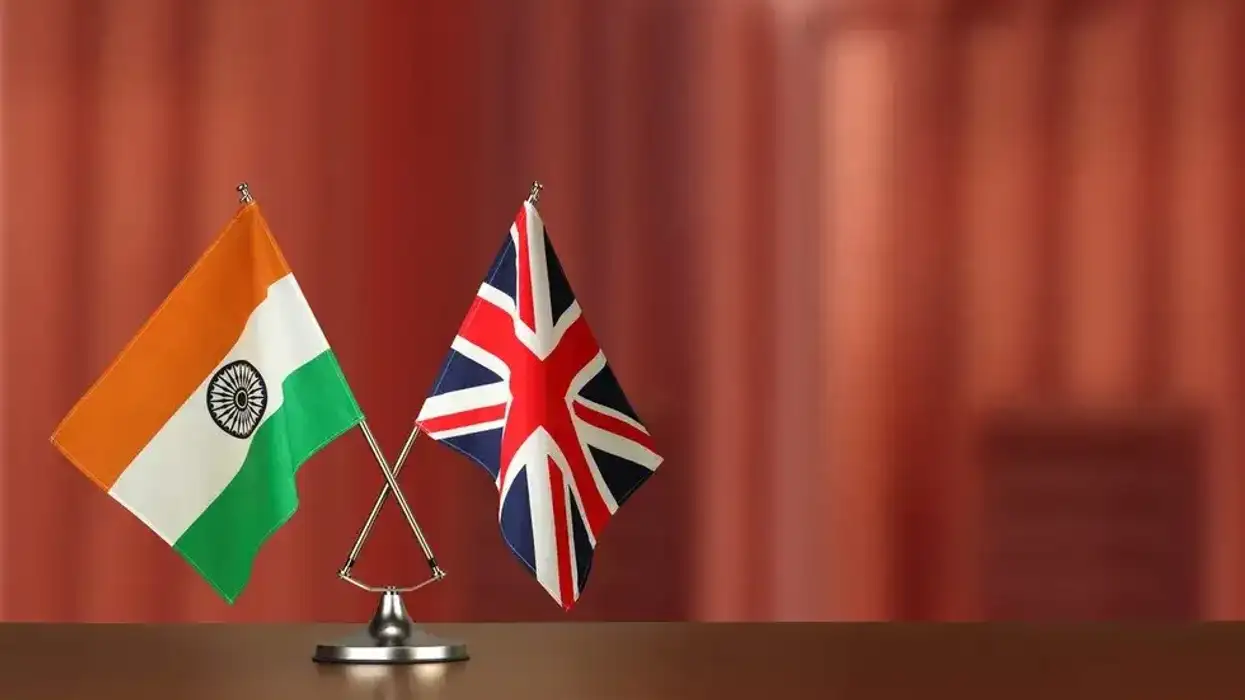

- More than 100 UK businesses will attend the Mumbai event on Tuesday (13).
- The trade agreement offers tariff reductions across a wide range of goods and services.
- Rolls-Royce and other major businesses will explore opportunities in manufacturing, technology, healthcare and other sectors.
The UK-India trade deal will take centre stage in Mumbai on Tuesday (13), as more than 100 British businesses join senior UK government figures and seven mayors from northern England for the first CETA Marketplace.
The event is designed to help businesses identify opportunities created by the Comprehensive Economic and Trade Agreement (CETA), which came into force on July 15. The agreement aims to make trade between the two countries easier by reducing tariffs and improving market access, with businesses now being encouraged to turn those changes into export contracts, investment and longer-term partnerships.
Hosted by Harjinder Kang, His Majesty’s Trade Commissioner for South Asia and British Deputy High Commissioner for South Asia, the Marketplace will bring UK companies into direct contact with Indian businesses, buyers and potential partners.
The focus will be on moving beyond the agreement’s headline commitments to practical commercial outcomes. For exporters, the opportunity will depend on whether lower trade barriers translate into competitive prices, new customers and sustainable demand in the Indian market.
Which industries could benefit from the UK-India trade deal?
The Marketplace will cover sectors including advanced manufacturing, clean technology, healthcare, fintech, education, consumer products and infrastructure. These industries span areas where UK businesses are seeking to expand their presence in India and where Indian buyers may benefit from access to specialist products, technology and expertise.
The trade agreement provides for tariff liberalisation on 90 per cent of UK goods exported to India, while 99 per cent of Indian goods exported to the UK benefit from duty-free or reduced-tariff access. The changes vary by product, with some reductions introduced immediately and others phased in over time.
Scottish salmon is among the British products gaining duty-free access to India, while tariffs on Scotch whisky and UK cars are being reduced under the agreement. The changes could make some UK exports more competitive, although the commercial impact will also depend on pricing, distribution and demand.
Rolls-Royce is supporting the Marketplace, alongside businesses including British Airways, Carbon Clean, Smith + Nephew, Interpolitan Money, Queen Elizabeth’s Global Schools in Gurugram, part of GEDU Global Education, Virgin Atlantic and Diageo India.
Sashi Mukundan, executive vice-president of Rolls-Royce India, said the agreement created greater opportunities for trade, investment and collaboration. He also pointed to the company’s more than 90-year relationship with India, particularly in aerospace and advanced manufacturing.
How much could the UK-India trade agreement be worth?
The UK government estimates that the agreement could increase bilateral trade by £25.5 billion annually in the long term. It also projects an annual increase of £4.8 billion in UK gross domestic product (GDP) and £5.1 billion in Indian GDP.
Those figures are forecasts rather than guaranteed outcomes. Their delivery will depend on how businesses use the agreement, how quickly new commercial relationships develop and whether companies can overcome the practical challenges of entering each other’s markets.
In a statement ahead of the Marketplace, Kang said: “The UK–India trade deal has opened an exciting new chapter in our economic partnership. The CETA Marketplace is about bringing that opportunity to life, connecting businesses directly with the products, expertise and partnerships that can drive growth. Our focus now is on turning this landmark agreement into tangible commercial outcomes for businesses in both countries.”
The Mumbai gathering is intended to help make that transition, bringing exporters and prospective buyers together to explore opportunities across multiple industries. The key measure of its impact will be whether those discussions lead to lasting business relationships, new investment and increased trade between the two countries.