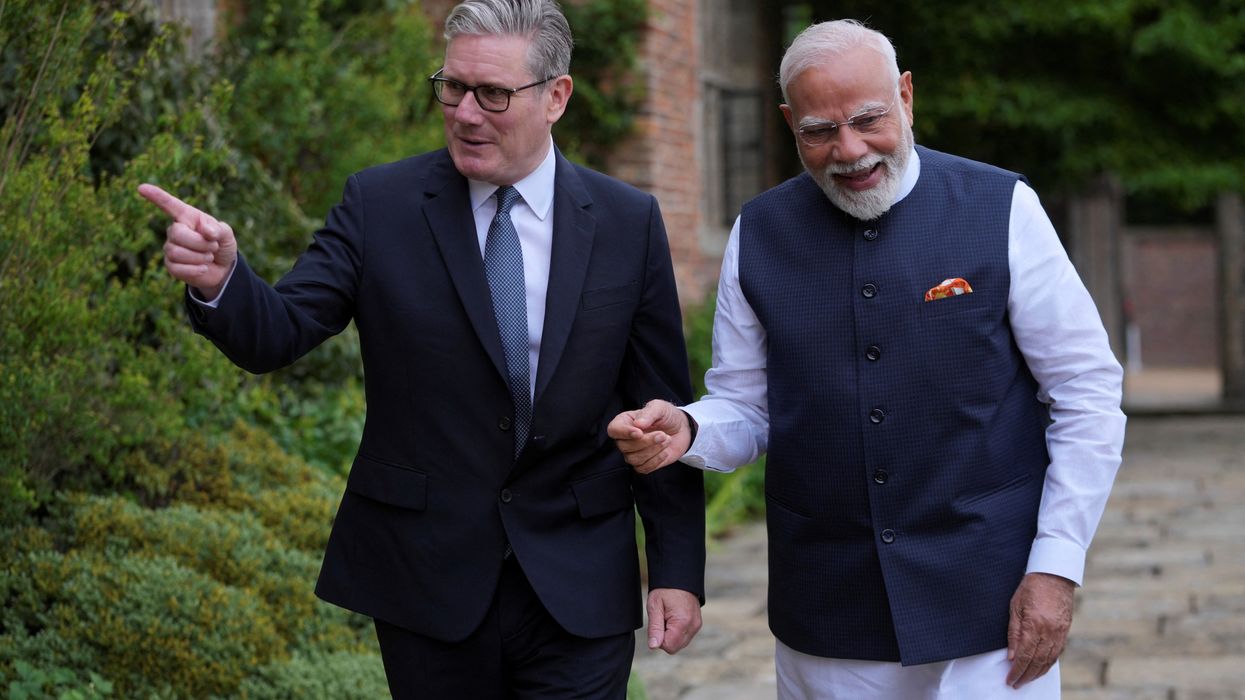
PRIME MINISTER Keir Starmer hosted his Indian counterpart Narendra Modi at Chequers, the official country residence of the British prime minister, on Thursday (24). The two leaders held a private meeting ahead of in-depth discussions.
The prime ministers witnessed the signing of the free trade agreementfree trade agreement (FTA) and unveiled the "UK-India Vision 2035," aimed at elevating bilateral cooperation to new heights.
Modi arrived in London on Wednesday (23) as part of a two-nation visit to the UK and the Maldives. The formalisation of the FTA is a major highlight of his two-day trip.
In May, India and the UK concluded the FTA, which is expected to benefit 99 per cent of Indian exports by removing tariffs and will simplify the export process for British companies dealing in whisky, cars, and other goods. The agreement is set to boost the overall trade relationship significantly.
- YouTube www.youtube.com
The FTA is set to provide significant benefits, as the deal will eliminate tariffs on approximately 99 per cent of tariff lines, covering nearly 100 per cent of the trade value, sources said. It will also simplify the export process for British firms dealing in whisky, cars, and other products destined for India, boosting the overall trade relationship.
Agriculture and allied sectors stand out as major beneficiaries, with Indian farmers gaining market access for high-value products such as vegetables, fruits, basmati rice, cereals, animal products, beverages, oilseeds, and dairy, the sources added.
The pact directly supports India’s ambitious target of achieving £80 billion in agricultural exports by 2030.
In key labour-intensive sectors, duties have been reduced to zero from previously high levels of up to 20 per cent on marine products, 12 per cent on textiles and clothing, 8 per cent on chemicals, and 10 per cent on base metals, the sources said.
Notably, in the processed food sector, tariffs on 99.7 per cent of product lines have been slashed from as high as 70 per cent to zero, providing a substantial boost to Indian exporters. The deal is expected to ensure comprehensive market access for Indian goods across all sectors, including agriculture.
- YouTube youtu.be
The pact offers a transformative opportunity for businesses across key industries such as agriculture, food processing, chemicals, pharmaceuticals, textiles, engineering goods, electronics, and marine products.
India currently exports approximately £29.3 billion worth of agricultural goods globally, while the UK imports around £30bn in the sector but sources only some £650m from India, illustrating strong potential for growth in high-value agricultural products.
- YouTube www.youtube.com
The UK is a premium market for niche Indian agricultural products such as tea, mangoes, grapes, spices, and marine products.
The India-UK FTA will enable Indian farmers to secure premium prices for these products in the UK market, delivering a ‘seismic shift’ by granting Indian agri-products parity with major EU exporters like Germany and the Netherlands, which currently enjoy zero tariffs, the sources concluded.
(with inputs from agencies)