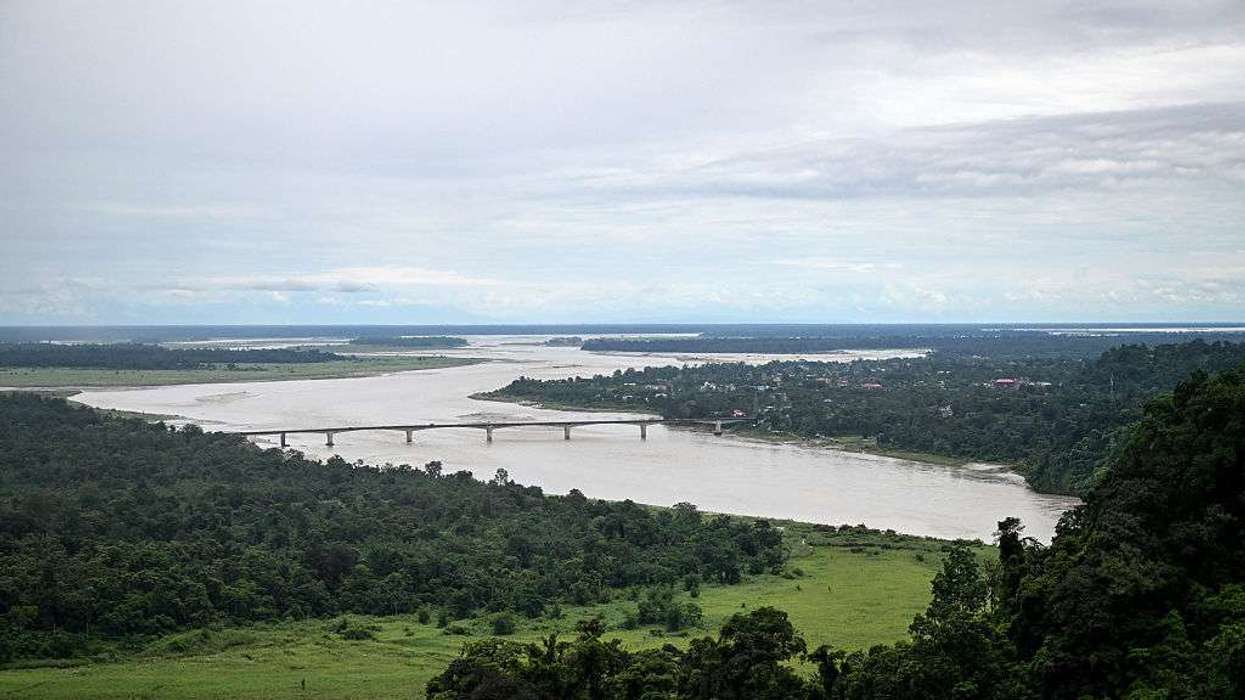

INDIAN protesters angry over a proposed Himalayan mega-dam, intended to counter an upstream Chinese hydropower project, have clashed with police and torched buildings, officials said.
The violence in northeastern Arunachal Pradesh state erupted late on Friday (23) during protests against the proposed 11,200-megawatt Siang Upper Multipurpose Project of state-run hydropower company NHPC, Chief minister Pema Khandu told reporters on Saturday (24).
"The mob destroyed a lot of properties, police station, the NHPC office was vandalised, several elected representatives' homes were ransacked," Khandu told reporters.
Around 40 police personnel were injured by stones thrown by protesters, who also vandalised the NHPC's offices. Police fired tear gas canisters to disperse the crowd.
Khandu urged opponents of the project to engage with the government.
"Question us, have dialogue with us, instead of violence," Khandu said.
India says the proposed dam is needed to counter China's $167-billion Yaxia project, a likely record-breaking hydropower scheme upstream in Tibet.
New Delhi fears the Chinese project could affect downstream water flows and says the proposed Indian dam would create a vast reservoir to store water and help maintain flows into the Brahmaputra River.
Beijing has said its project will have no "negative impact" downstream.
China claims Arunachal Pradesh as part of southern Tibet. India says the state is an integral part of its territory.
India's proposed dam, which would be its largest hydropower project by far, has drawn fierce opposition from local communities who fear losing their homes and land.
The project underscores tensions between the two most populous countries, which share a disputed Himalayan border patrolled by tens of thousands of troops.
India's foreign ministry said on Friday the two sides remained in regular contact to manage border tensions, after a top Indian border police official Shatrujeet Kapur reported "face offs" between Indian and Chinese forces.
"The situation in the India-China border areas gets disturbed from time to time when Chinese forces diverge from established patrolling patterns," foreign ministry spokesperson Randhir Jaiswal told reporters in New Delhi.
"Both sides continue to use existing diplomatic and military mechanisms to resolve outstanding issues and avoid misunderstanding and miscalculation."
(AFP)