
Highlights
- Navi Pillay, 85, was born in Durban to a family of Indian Tamil origin.
- She defended anti-apartheid activists, including Nelson Mandela and other political prisoners.
- As a judge in the Rwanda genocide tribunal, she helped establish that rape and sexual violence could constitute genocide.
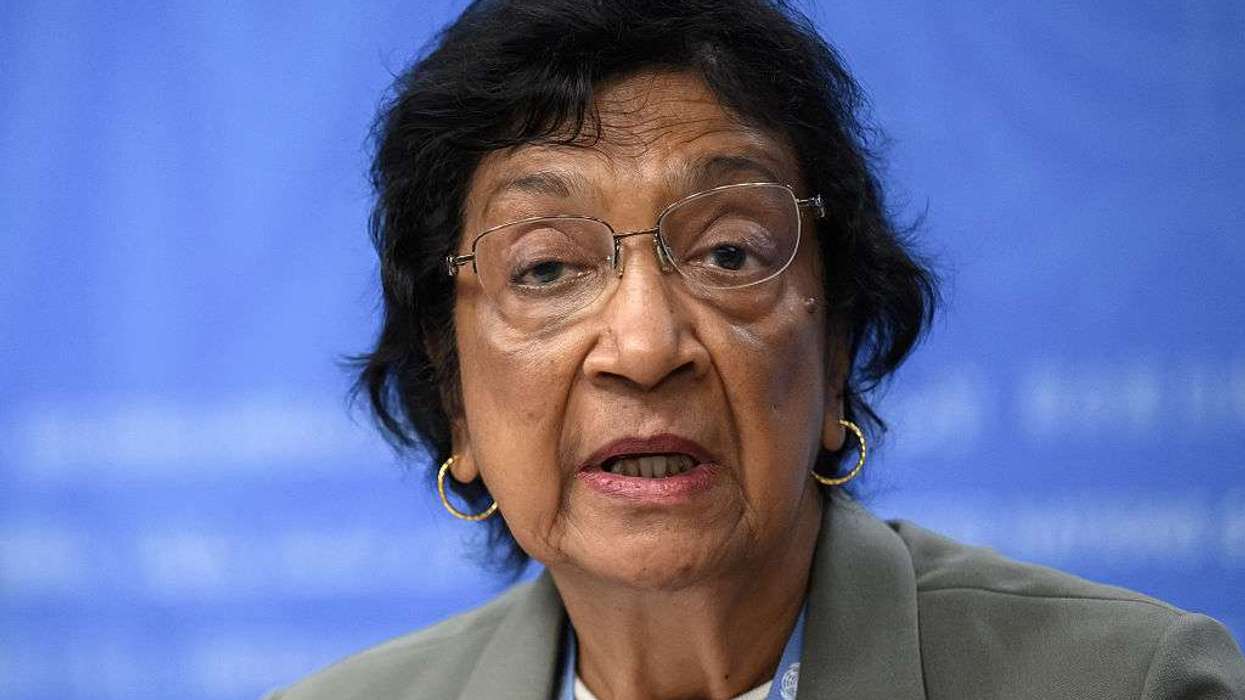
INDIAN-ORIGIN South African jurist Navanethem “Navi” Pillay has won the 2026 Nobel Peace Prize, recognising a career spanning the struggle against apartheid, international criminal justice and the defence of human rights.
Born in Durban on September 23, 1941, Pillay, 85, comes from a family of Tamil origin whose grandparents migrated from India to South Africa as indentured labourers in the 1890s.
She grew up in a poor neighbourhood during apartheid, when racial discrimination restricted the opportunities available to non-white South Africans. Her achievement of becoming one of the country's most prominent legal figures was shaped by her own experience of discrimination and her determination to challenge injustice through the law.
The Norwegian Nobel Committee announced the award on Friday, honouring her “for her efforts to promote peace and international law”.
It praised her for holding states and national leaders accountable, bringing hope to victims of violence and conflict, and maintaining what it described as a “firm moral compass” throughout her career.
The committee said her career had a common thread, from defending Mandela and others who opposed apartheid to serving as a judge in major international cases.
“Navi Pillay is one of the great defenders of international legal principles in our time,” it said, adding that her commitment to justice and human dignity offered hope to those seeking a more peaceful world.
The prize is worth 12 million Swedish crowns, approximately $1.2 million, and will be presented in Oslo on December 10, the anniversary of the death of Alfred Nobel, who established the awards.
From Durban to Harvard
Pillay's parents placed a strong emphasis on education despite their limited financial means. Her mother worked to ensure that her daughters received the same educational opportunities as their brothers.
Pillay studied at the University of Natal, earning a Bachelor of Arts degree in 1963 and a law degree in 1965. Financial support from the local Indian community helped her pursue her education.
She became a lawyer at a time when racial discrimination was entrenched in South African institutions. In 1967, she opened her own law practice in Natal, becoming the first woman to do so in the province and the first non-white woman to establish a legal practice there.
Pillay later recalled that racial prejudice had restricted her career opportunities. “No law firm would employ me because they said they could not have white employees taking instructions from a coloured person,” she said.
During her 28 years as a lawyer in South Africa, she represented anti-apartheid activists and challenged the treatment of political prisoners. In 1973, she helped secure the right of prisoners on Robben Island, including Nelson Mandela, to have access to lawyers.
She also challenged unlawful interrogation practices and exposed allegations of torture and poor prison conditions.
Pillay went on to study at Harvard Law School, earning a Master of Laws degree and a doctorate in law. She was the first South African to obtain a doctorate in law from the institution.
Landmark ruling on sexual violence
Pillay's international career gathered momentum in 1995, when she became the first non-white woman appointed to South Africa's High Court.
Later that year, she joined the International Criminal Tribunal for Rwanda, established to prosecute those responsible for crimes committed during the 1994 genocide.
She served as a judge and later became the tribunal's president.
One of the most significant cases during her tenure involved Jean-Paul Akayesu, a former Rwandan mayor convicted of genocide and crimes against humanity.
The tribunal's 1998 judgment established an important legal precedent by recognising that rape and sexual violence could constitute acts of genocide when committed with the required intent. It also helped establish that sexual violence could be prosecuted as a crime against humanity.
Pillay described the ruling as a turning point in the treatment of sexual violence during conflicts.
“From time immemorial, rape has been regarded as spoils of war. Now it will be considered a war crime,” she said.
The case became a landmark in international criminal law and helped strengthen the recognition of sexual violence as a serious international crime.
Pillay subsequently served as a judge at the International Criminal Court from 2003 to 2008.
Leading the UN human rights office
In September 2008, Pillay became the United Nations High Commissioner for Human Rights, a position she held until August 2014.
During her six years in the role, she advocated protections for vulnerable groups, including women and sexual minorities, and spoke out on human rights concerns in conflicts around the world.
She also helped establish Equality Now, an international organisation working to advance women's and girls' rights, and co-founded a support service for victims of domestic abuse.
Her career has not been without controversy. Pillay has faced criticism over her positions on Israel and the Palestinian territories.
She chaired the UN Independent International Commission of Inquiry on the Occupied Palestinian Territory until November 2025. In September that year, the commission concluded that Israel had committed genocide in Gaza. Israel rejected the report's findings.
(with inputs from agencies)