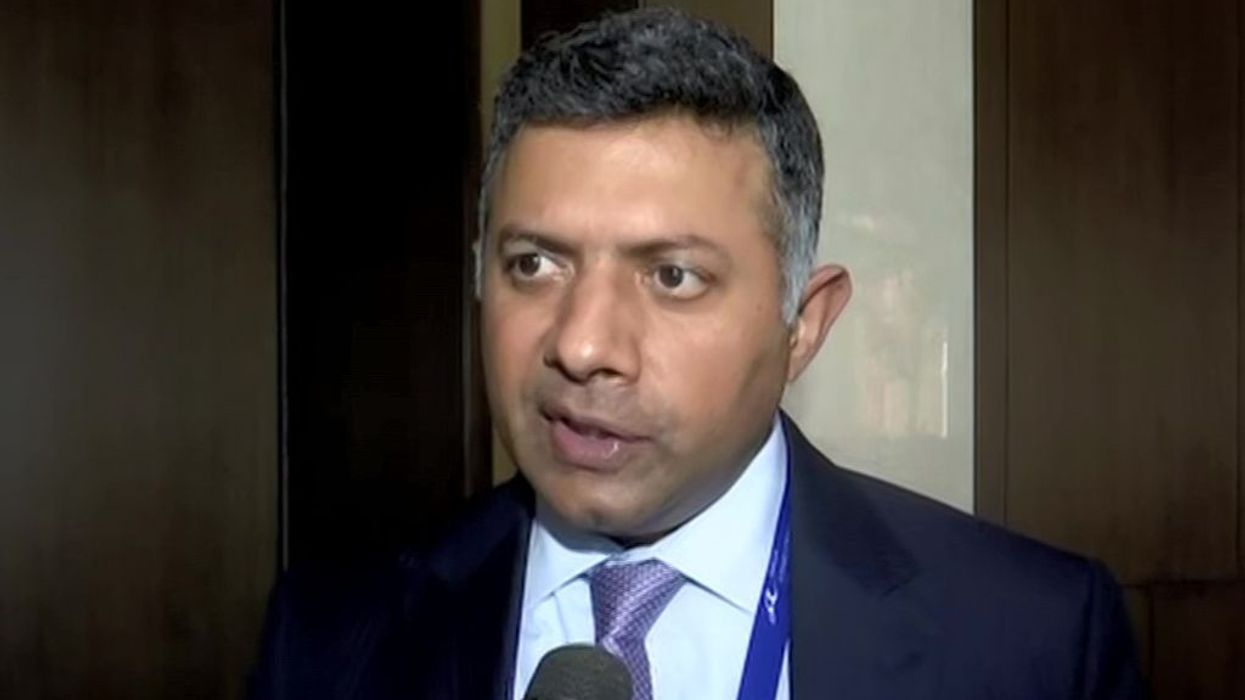

INDIAs high commissioner to the UK, Vikram Doraiswami, said India’s response to last month’s terrorist attacks in Pahalgam was limited, targeted and aimed only at terror infrastructure. He said Pakistan has instead chosen to escalate the situation rather than take an “off-ramp” to end the crisis.
Doraiswami gave interviews to several British media outlets on Thursday to outline India’s position on the current tensions with Pakistan. Speaking to Sky News, he said the international community should urge Pakistan to take the opportunity to de-escalate.
He also showed an image on air of US-designated terrorist Abdur Rauf leading prayers for those killed in India’s Operation Sindoor. This image was also shared during a briefing by India's foreign secretary Vikram Mistry in New Delhi.
ALSO READ: India says it repelled Pakistan drone, artillery attacks as tensions continue
“Everybody knows that for the last 30 years, Pakistan has used this (terrorism) as a means of sub-critical warfare against India,” Doraiswami said.
“If the international community really wants to be able to look at this and worry about it, the simple solution is to tell Pakistan it has an opportunity for an off-ramp. These are things that the world should have compelled Pakistan to do 30 years ago, and to compel them to implement their promises about taking down this infrastructure. It has not done so,” he said.
Asked whether India fears a further escalation in the region, Doraiswami said the “original escalation” came from Pakistan-backed terror groups who attacked and shot civilians in Pahalgam on April 22.
ALSO READ: India-Pakistan conflict: British parliament appeals for de-escalation
“Our response thereafter was precise, targeted, reasonable and moderate. It was focused principally and solely on terrorist infrastructure. We did not strike the Pakistani military establishment. We did not strike national infrastructure, and we made it abundantly clear… that the object of this exercise was clearly to avoid military escalation – a fact actually acknowledged in a left-handed way, of course, by the Pakistani side in terms of their own official statements which said that the airspace hadn't been violated,” he said.
“The logical solution would be, as we've said repeatedly, for Pakistan to take the opportunity of an off-ramp, which we have made abundantly clear, including this morning, that if Pakistan stops attacking our military facilities, the matter ends there, but it is for them to decide,” he said.
ALSO READ: What is Operation Sindoor, India's strikes in Pakistan?
The high commissioner was also asked about reports of Indian jets allegedly being shot down, which remain unverified.
“If it satisfies Pakistan's ego to say that they've done something, they could have used that as an off-ramp to move on. But clearly they chose not to and they've continued to escalate the matter,” he added.
(With inputs from agencies)