
Highlights
- A volcano erupted on Iceland’s Reykjanes peninsula early Wednesday morning
- This is the ninth eruption in the region since December 2023
- The main fissure is 1.5 miles long, with a second fissure measuring 500 metres
- Residents and tourists were evacuated due to toxic gas levels
- The eruption is not expected to impact international air travel
New eruption strikes Reykjanes peninsula
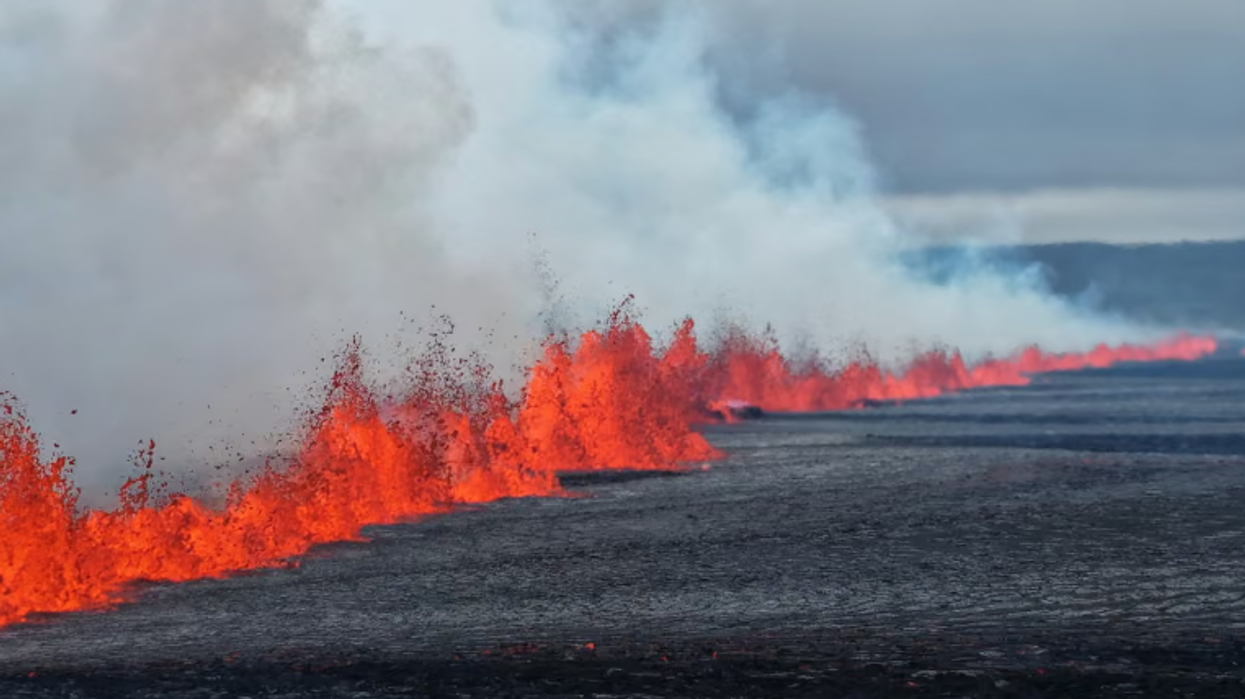
The Reykjanes peninsula in south-west Iceland experienced its ninth volcanic eruption since late 2023 early on Wednesday 17 July, 2025. According to the Icelandic Meteorological Office (IMO), the eruption began just before 4am local time (05:00 BST), with live footage showing lava emerging from a fissure in the ground.
The main fissure was reported to be approximately 1.5 miles (2.4 kilometres) in length, with a secondary fissure of about 500 metres opening nearby. This latest Iceland volcano eruption follows a series of seismic events that have repeatedly impacted the region in recent months.
Residents told to stay indoors due to gas threat
The IMO has advised residents to remain indoors due to the presence of elevated levels of toxic volcanic gas in the atmosphere. These gases pose potential respiratory health risks, particularly in populated areas near the eruption site.
The nearby town of Grindavík, a small fishing village, was evacuated, along with the popular Blue Lagoon geothermal spa, a major tourist attraction. Around 100 people were evacuated without incident, according to police commissioner Margrét Kristín Pálsdóttir, who confirmed that the evacuation was smooth and well-managed.
Authorities also reported that tourists were prevented from entering the affected area, due to safety concerns. Pálsdóttir acknowledged the interest of visitors but stressed the importance of public safety. “We understand that this is a fascinating event, especially for tourists who are not as accustomed to it as we are,” she said.
Volcanologists monitor impact
Benedikt Ófeigsson, a geophysicist with the IMO, told national broadcaster RUV that the eruption appears to be less intense than previous ones and is currently not threatening any major infrastructure. He noted that the situation is being closely monitored.
This latest eruption comes just three months after the last volcanic event in April. Interestingly, a risk assessment released by the IMO only a day prior had suggested that another eruption would be unlikely until the autumn.
The Reykjanes region had been dormant for eight centuries before a surge in volcanic activity began in March 2021. Experts have since indicated that the area may have entered a new period of geological activity, potentially lasting decades.
Community impact and historical context
The first eruption in this current phase occurred in late 2023, prompting the evacuation of almost all of Grindavík’s 4,000 residents. Since then, most homes in the town have been acquired by the Icelandic state, and many residents have relocated permanently.
Despite the disruption to local communities, officials say that the current eruption is not expected to affect international air travel. This stands in contrast to the 2010 eruption of Eyjafjallajökull, which disrupted global flights due to an ash cloud covering vast swathes of European airspace.
Iceland's volcanic profile
Iceland is one of the most volcanically active countries in the world. It sits on the Mid-Atlantic Ridge, the tectonic boundary between the Eurasian and North American plates. The island nation is home to 33 active volcanic systems, more than any other country in Europe.
The Reykjanes peninsula, in particular, has become a focal point of volcanic research, as scientists aim to understand the implications of the recent string of eruptions. Authorities continue to monitor seismic activity in the area closely, issuing alerts and evacuation orders when necessary.
Outlook
While Wednesday’s Iceland volcano eruption has not caused major damage, it is yet another reminder of the volatile nature of the Reykjanes peninsula. With experts predicting ongoing activity, both locals and tourists are being urged to remain vigilant and follow official guidance in the weeks ahead.