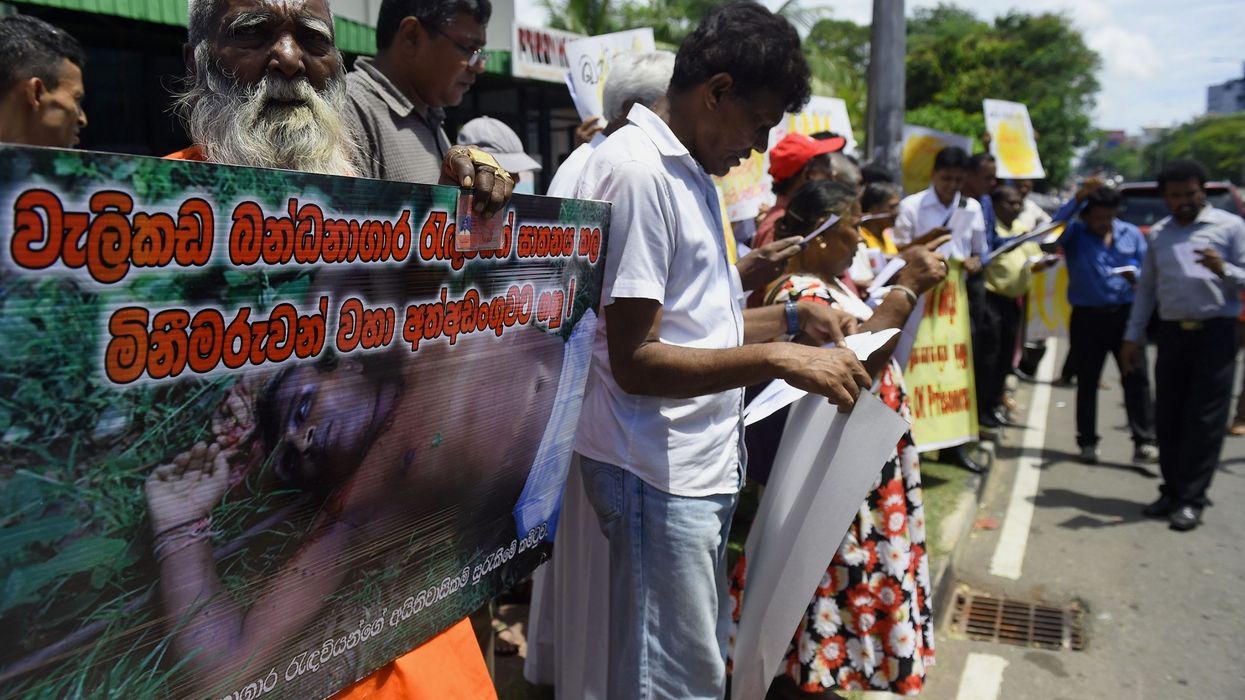
Research says disregard for women enables abuse as Patel vows justice for victims
MOST group-based offenders of child sexual exploitation (CSE) offences are white, a new government report has found.
Research published on Tuesday (15), showed that although there is an overrepresentation of Asian and black offenders in group-based CSE, most of the same studies show that the majority of offenders are white.
The Home Office paper concluded community and cultural factors were relevant to understanding and tackling offending. It recommended a need for a culturally sensitive approach to deterring, disrupting, and preventing offending.
It was “difficult” to draw conclusions about the ethnicity of offenders, the report said, citing poor data collection and limited existing research.
Initially ordered by former home secretary Sajid Javid in 2018, the review was prompted by high-profile cases of CSE and abuse in towns such as Rochdale, Telford and Rotherham.
Perpetrators of group-based CSE offences appeared to be predominately (but not exclusively) male and often under the age of 30, the research found. Some groups, however, involved much older perpetrators.
Offenders were found to be from a range of backgrounds – some were married middle-class professionals, while others had more “chaotic” lifestyles.
It was suggested that common motives for the crime included financial gain and a desire for sexual gratification. Disregard for women and girls may further enable the abuse, researchers said.
“The group dynamic can have a role in creating an environment in which offenders believe they can act with impunity, in exacerbating disregard for victims, and in drawing others into offending behaviour,”
it added.
Home secretary Priti Patel said she was “dedicated to giving victims a voice and securing justice for them from these abhorrent crimes”.
“Victims and survivors of these abhorrent crimes have told me that how they were let down by the state in the name of political correctness,” Patel said.
“What happened to these children remains one of the biggest stains on our country’s conscience."
She added: “I am determined to ensure the government, law enforcement and other partners better understand any community and cultural factors relevant to tackling offending – helping us to safeguard children from abuse, deliver justice for victims and survivors, and restore the public’s confidence in the criminal justice system’s ability to confront these repulsive crimes.”
In response to the paper, Sarah Champion, the Labour MP for Rotherham, said the report “raised more questions than it answers”.
Champion, who was criticised for an opinion piece in 2017 which claimed that Britain had a problem with Asian men exploiting white girls, said the government needed to focus on prevention and early intervention.
“They need to closely monitor the effectiveness of local safeguarding partnerships, rather than seemingly taking this horrendous crime as inevitable,” Champion said.
“Going forwards, I want to see a nationally recognised and approved set of triggers that, once met, require local authorities to provide support for children showing signs of harm, rather than the current postcode lottery when it comes to help.”
In February, the government initially refused to publish the findings, claiming it was “not in the public interest”.
The refusal triggered a government petition, signed by more than 125,000 people, which demanded the “release of the official research on grooming gangs undertaken by the government in full”.
In October, Patel vowed to deport grooming gang members of dual nationality, asserting that the Conservatives were living up to the “party of law and order” tag.





 Raageshwari LoombaMahesh Liloriya
 Raageshwari LoombaMahesh Liloriya
 WinnersMahesh Liloriya