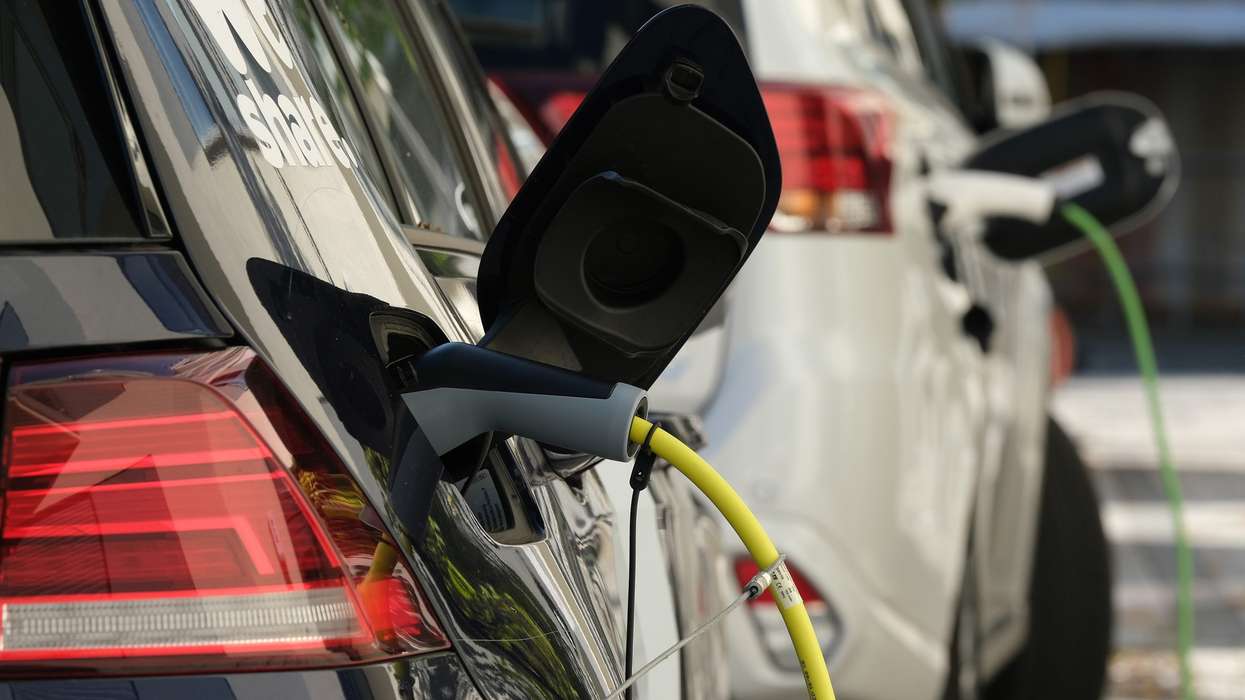

- Qualifying under-pavement EV charging installations no longer require planning permission, potentially saving drivers up to £300.
- Drivers without driveways could charge their cars at domestic electricity rates, with the government saying home charging can cost as little as 2p per mile.
- The government is consulting on further changes to make it easier for tenants and leaseholders to install chargers and to improve charging provision in new buildings.
Electric car drivers who park on the street could save up to £300 on home charger installation under new government rules designed to make charging cheaper and easier.
From today (21), drivers no longer need planning permission for qualifying permanent cables installed beneath pavements to connect their homes to parked electric vehicles. The change is intended to reduce installation costs and remove a barrier for households without driveways.
The government said cross-pavement charging could allow drivers to access cheaper domestic electricity, with potential savings of up to £1,750 on running costs. Home charging could cost as little as 2p per mile, although actual costs will depend on electricity tariffs, vehicle efficiency and charging patterns.
The announcement comes as electric car sales continue to grow. Nearly 100,000 battery electric cars were sold in the UK in September 2026, a 36 per cent increase on the same month a year earlier, according to figures cited by the government. More than 190,000 drivers have also benefited from the Electric Car Grant, which offers eligible buyers up to £3,750 off a new electric vehicle.
Buses and Local Transport Minister Simon Lightwood said the planning change would save drivers money by cutting unnecessary red tape.
Why the change matters for drivers without driveways
Around 40 per cent of UK properties are said to have no driveway, leaving many households reliant on public charging points or other arrangements.
Vicky Edmonds, chief executive of EVA England, reportedly said removing planning permission requirements could make electric car ownership more accessible for people who park on the street. The organisation's research found that 60 per cent of petrol and diesel drivers without off-street parking would never consider an electric vehicle.
However, the change does not guarantee that drivers will be able to charge outside their homes. They still need a suitable installation and a parking space within reach of the charging cable. Local authorities and landlords will also play a role in how easily these arrangements can be accessed.
The RAC welcomed the move as a step towards fairer charging, while cautioning that drivers without driveways cannot be guaranteed a parking space directly outside their homes.
What else is the government considering?
The government has launched consultations on further measures to improve access to home charging.
One proposal would provide tenants and leaseholders with clearer and more consistent guidance on applying to install a charge point. Ministers are also considering requirements that would make it harder for landlords and freeholders to refuse applications.
Separate proposals could update building regulations to require charge points in new and refurbished covered car parks, helping ensure charging facilities are included as buildings are developed or upgraded.
The planning permission change is now in effect for qualifying installations, while the wider proposals remain under consultation.






 Siddhashram PM's letterEastern Eye


