
Highlights
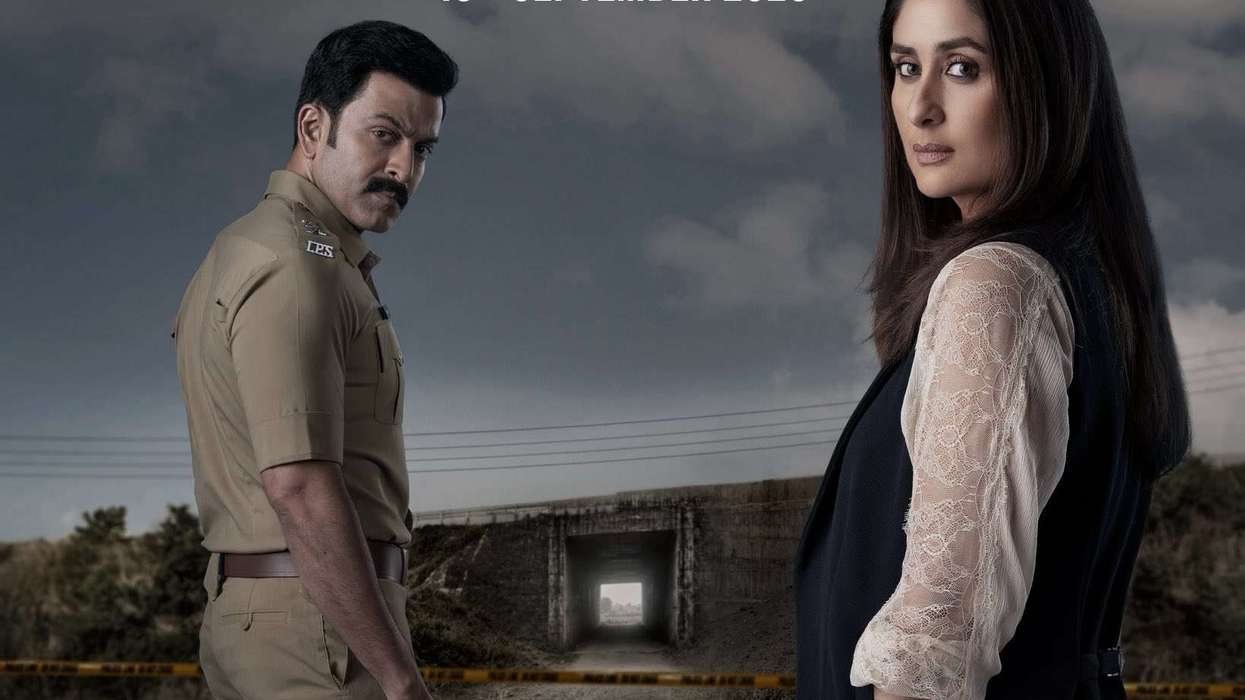
- Kareena Kapoor Khan and Prithviraj Sukumaran play two police officers with very different ideas of justice
- Meghna Gulzar turns a controversial encounter into a wider examination of law, conscience and accountability
- Kshitee Jog delivers one of the film's most affecting performances as a grieving mother
Meghna Gulzar's Daayra does not make it easy to decide where justice begins and where it crosses a line. Starring Kareena Kapoor Khan and Prithviraj Sukumaran, the investigative drama centres on a police encounter that is initially celebrated as swift justice, before asking what happens when those enforcing the law decide that following it is no longer enough.
The film's central conflict comes through DCP Ajooni Kohli (Kareena), an Internal Vigilance officer investigating the encounter, and DCP Raman Kumar (Prithviraj), the officer behind it. They are both convinced they are pursuing justice, but their understanding of what that means could not be more different.
Two officers, two ideas of justice
One of the film's most telling exchanges comes when Ajooni says, "Law ka ek daayra hai, jismein main kaam karti hoon." Raman's response is simple: "Aur main nahin."
That exchange captures what Daayra is really interested in. Ajooni believes justice must remain within the boundaries of the law, even when the system is frustratingly slow. Raman, on the other hand, has little faith in waiting for a system that he believes has already failed its victims.
It is a familiar moral dilemma, but Gulzar gives it a grounded setting rather than turning it into a conventional courtroom drama or revenge thriller. The film does not simply present Ajooni as the good cop and Raman as the bad one. Both believe they are pursuing justice, with their disagreement centred on what justice should look like when the law and conscience pull in different directions.
Kareena is well cast as Ajooni, playing her as calm, professional and unwilling to waste time. Her dry sense of humour, particularly while questioning fellow policemen, adds personality without taking away from her seriousness as an investigator.
Ajooni's approach is also refreshingly evidence-led. She does not investigate her colleagues emotionally, making it clear that her focus is the incident itself. "Mai mere colleagues ko nahi, sirf incident ko investigate karti hun. Law has to do its duty," she says.
There is potentially another layer to the character through her father (Kanwaljit Singh), a retired judge who was shot on court premises. The detail could have added depth to her relationship with the judiciary and her understanding of justice, but the film does not explore that thread as fully as it could have.
Prithviraj gives Raman a strong sense of authority without turning him into a caricature of a ruthless policeman. He is disciplined and methodical, but also carries anger towards a system he believes repeatedly fails victims.
When the system fails
The encounter is only the final chapter. The real story begins when Ragini Poojari goes missing and her family struggles to get an FIR filed, being sent from one police station to another.
There are forms, delays and officials who fail to understand the urgency. CCTV footage has a gap, accounts do not match and crucial hours remain unexplained. By the time Ragini's body is found, the system has already failed her family several times.
These are among the film's most uncomfortable moments because they feel frighteningly ordinary. Rather than relying on courtroom theatrics, Daayra follows Ajooni as she goes back through those missing hours and tries to establish what really happened.
The investigation gradually makes the official version of the encounter more complicated. Raman's interaction with Ragini's mother becomes an important turning point, as her helplessness and fear that justice could take years affect his understanding of the case.
This is where the film makes Raman's position emotionally persuasive without presenting his actions as unquestionably heroic. Daayra understands why someone who has lost faith in the system might feel that waiting for it to work is itself another form of injustice.
A strong cast carries the moral dilemma
The conflict between Kareena and Prithviraj is the film's greatest strength. Neither performance reduces the characters to simple positions, allowing the central debate to remain uncomfortable rather than becoming a straightforward battle between right and wrong.
The supporting performances add considerably to that experience. Kshitee Jog, as Ragini's mother, is particularly impressive. She has relatively little screen time but makes every moment count. Her grief, anger and helplessness never feel exaggerated.
Her attempts to get an FIR filed and her frustration at being passed from one police station to another give the film some of its most deeply human moments.
Ultimately, Daayra is most effective when it focuses on that human cost. Its central question is not simply whether the encounter was justified, but what happens when people stop believing that justice will arrive through the system designed to deliver it.
The film does not offer an easy answer, and that is precisely what makes its conflict linger after the investigation is over.