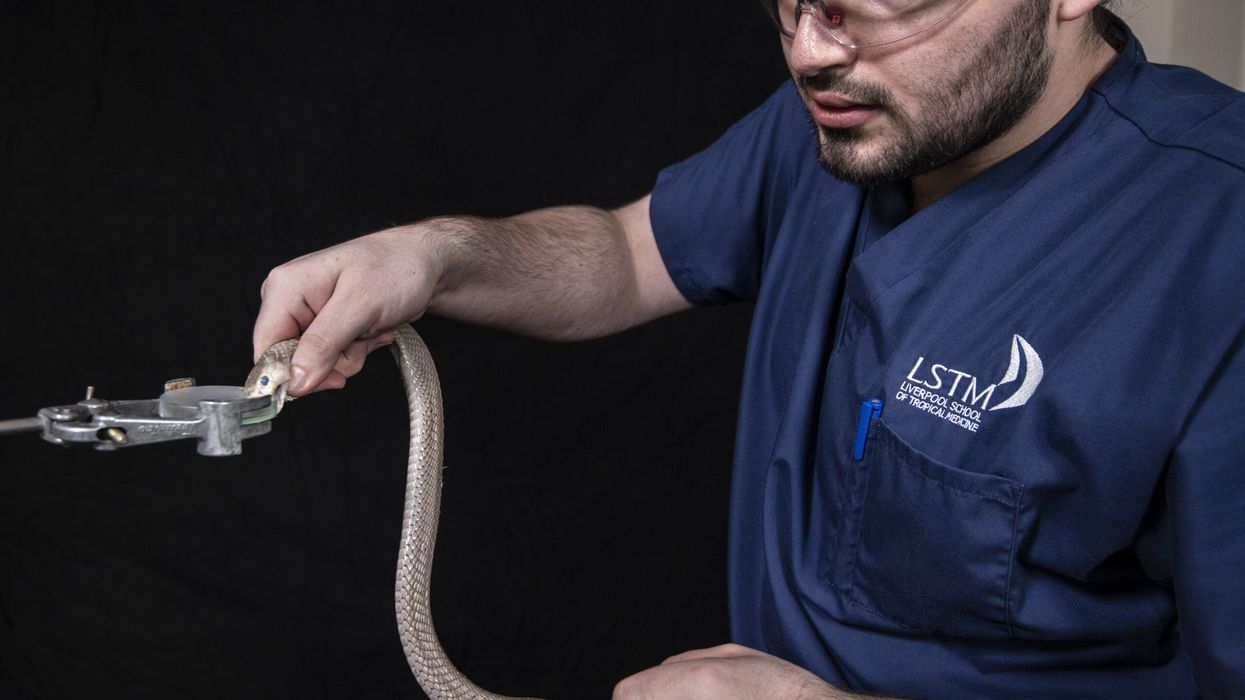

SCIENTISTS have discovered that the common blood thinner heparin can be repurposed as an inexpensive antidote for cobra venom.
Researchers at the Liverpool School of Tropical Medicine and the University of Sydney believe that this breakthrough could save thousands of lives and prevent serious injuries caused by cobra bites each year.
Cobras are responsible for thousands of deaths annually and cause severe necrosis, or tissue death, in many more victims, often leading to amputations. Current antivenom treatments are costly and do not effectively address the necrosis at the bite site.
“Our discovery could drastically reduce the terrible injuries from necrosis caused by cobra bites – and it might also slow the venom, which could improve survival rates,” said Prof Greg Neely, a corresponding author of the study from the Charles Perkins Centre and Faculty of Science at the University of Sydney.
Using CRISPR gene-editing, an international team of scientists from Australia, Canada, Costa Rica, and the UK repurposed the blood thinner heparin to block necrosis caused by cobra venom. Their findings are featured in Science Translational Medicine.
PhD student and lead author, Tian Du, from the University of Sydney, said: “Heparin is inexpensive, ubiquitous and a World Health Organization-listed Essential Medicine. After successful human trials, it could be rolled out relatively quickly to become a cheap, safe and effective drug for treating cobra bites.”
According to a statement, researchers identified human genes that cobra venom targets to cause tissue necrosis. They discovered that venom binds to enzymes involved in producing heparan and heparin, molecules found in human and animal cells.
Leveraging this, the team developed an antidote that uses heparinoid drugs as "decoys" to bind and neutralize venom toxins, effectively stopping necrosis in human cells and mice. Unlike traditional 19th-century antivenoms, this approach offers a modern solution for treating cobra bites.
Joint corresponding author, Prof Nicholas Casewell, head of the Centre for Snakebite Research and Interventions at Liverpool School of Tropical Medicine, said: “Snakebites remain the deadliest of the neglected tropical diseases, with its burden landing overwhelmingly on rural communities in low- and middle-income countries.
“Our findings are exciting because current antivenoms are largely ineffective against severe local envenoming, which involves painful progressive swelling, blistering and/or tissue necrosis around the bite site. This can lead to loss of limb function, amputation and lifelong disability.”
Snakebites kill up to 138,000 people a year, with 400,000 more experiencing long-term consequences of the bite. While the number affected by cobras is unclear, in some parts of India and Africa, cobra species account for most snakebite incidents.
The WHO has identified snakebite as a priority in its programme for tackling neglected tropical diseases.