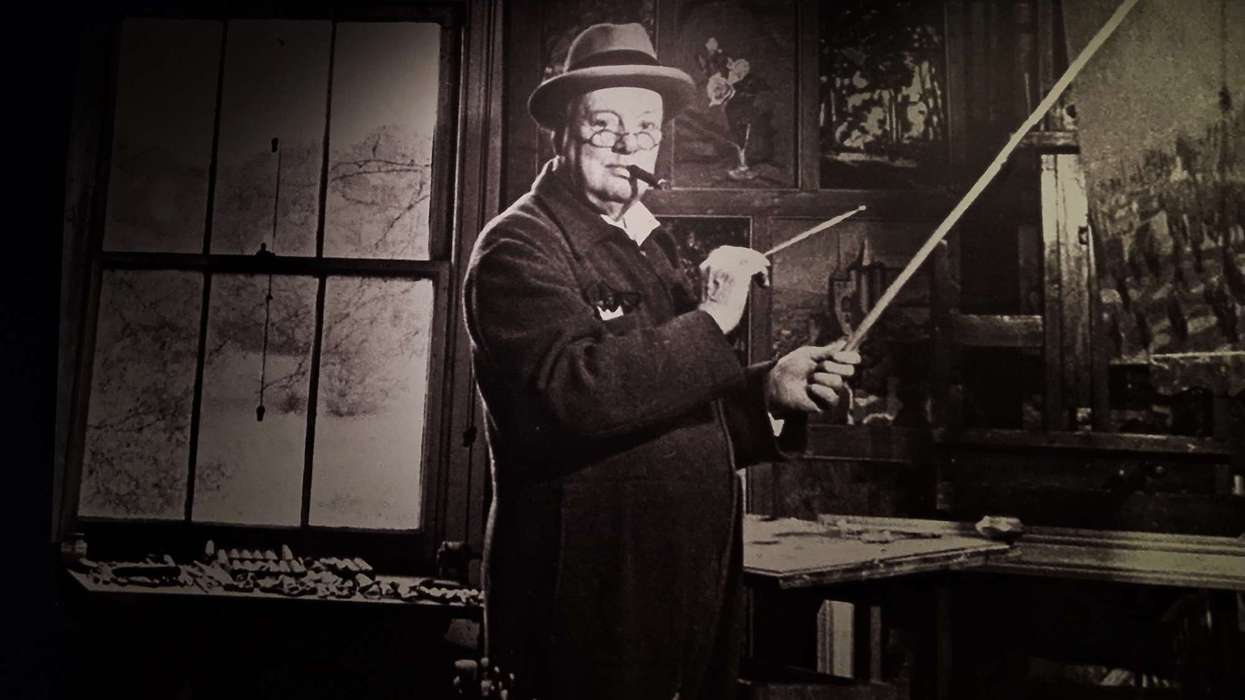

There were many aspects to Sir Winston Churchill’s character. To the older generation, he remains the great wartime leader who rescued Britain in its darkest hour. But in recent years, the focus has shifted to some of his extreme political views.
Why did he call Mahatma Gandhi a “naked fakir”? Why was he so implacably opposed to Indian independence? To what extent was he culpable for the death by starvation of two to three million people who perished during the Bengal Famine of 1943 when he was the prime minister of Britain? And why was his statue in Parliament Square daubed he “was a racist” during the Black Lives Matter protests of 2020?
But British Asians, who wish to take part in the Churchill debate, also ought to be aware he was touched by genius. To be sure, he could paint pictures with words, which is why he (unlike Trump) got the Nobel Prize for Literature in 1953.
He was also a gifted artist. A brilliant exhibition of some 50 of his paintings from the more than 500 that he did are on display until November 29, 2026, at the Wallace Collection (near Bond Street) in an exhibition called, Churchill: The Painter.
He was more than a gifted amateur. Pablo Picasso saw Churchill’s painting La Dragonnière, Cap Martin (a landscape depicting a red brick Riviera villa and olive trees) at a Paris exhibition in 1945, and was impressed enough to remark: “If that man were a painter by profession, he would have no trouble earning a good living.”
But Churchill was engagingly modest about his talents. He first showed his paintings at the Royal Academy of Arts Summer Exhibition in 1947. He submitted two works under the pseudonym “David Winter” to avoid receiving special treatment, and both were successfully accepted by the selection committee before his true identity was revealed. He was also very generous and gave away 73 of his painting to 53 people outside of immediate family.
Churchill became quite adept at doing landscapes, which he did at Chartwell, his home in Kent, Blenheim Palace, where he was born on November 30, 1874, and the Cote d’Azur in France. He loved bright colours and developed a passion for Morocco. Examples are Near Marrakech (about 1948) and The Todhra Gorge (1951).
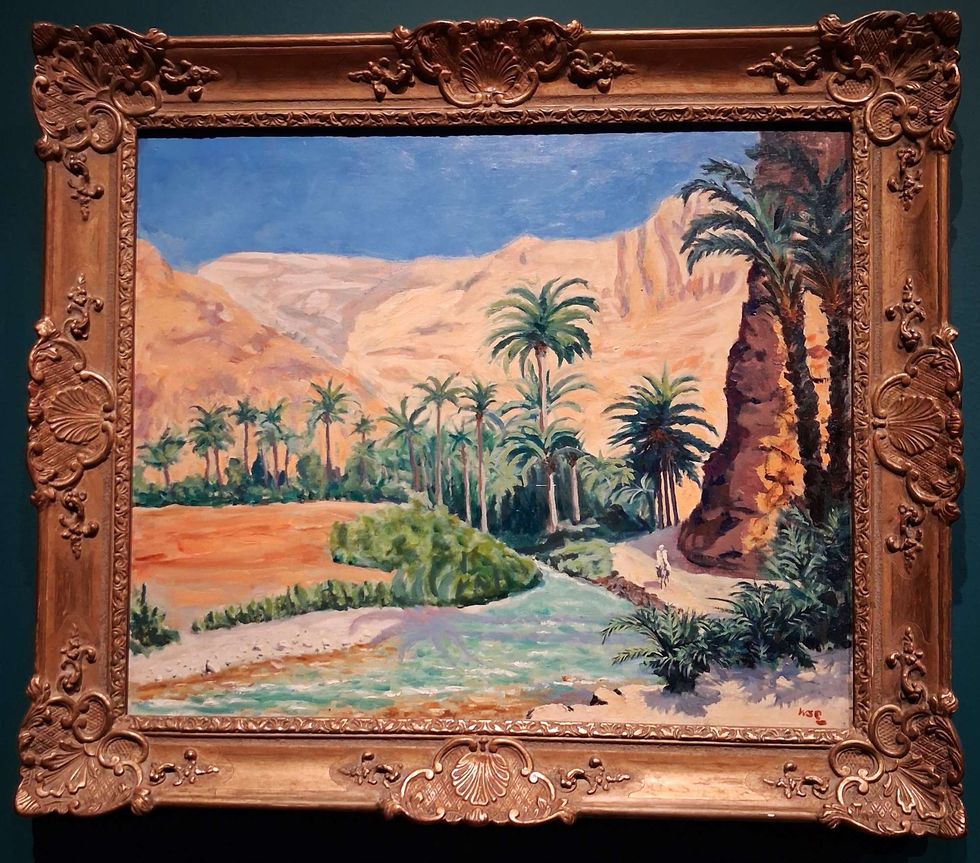 Near MarrakechAmit Roy
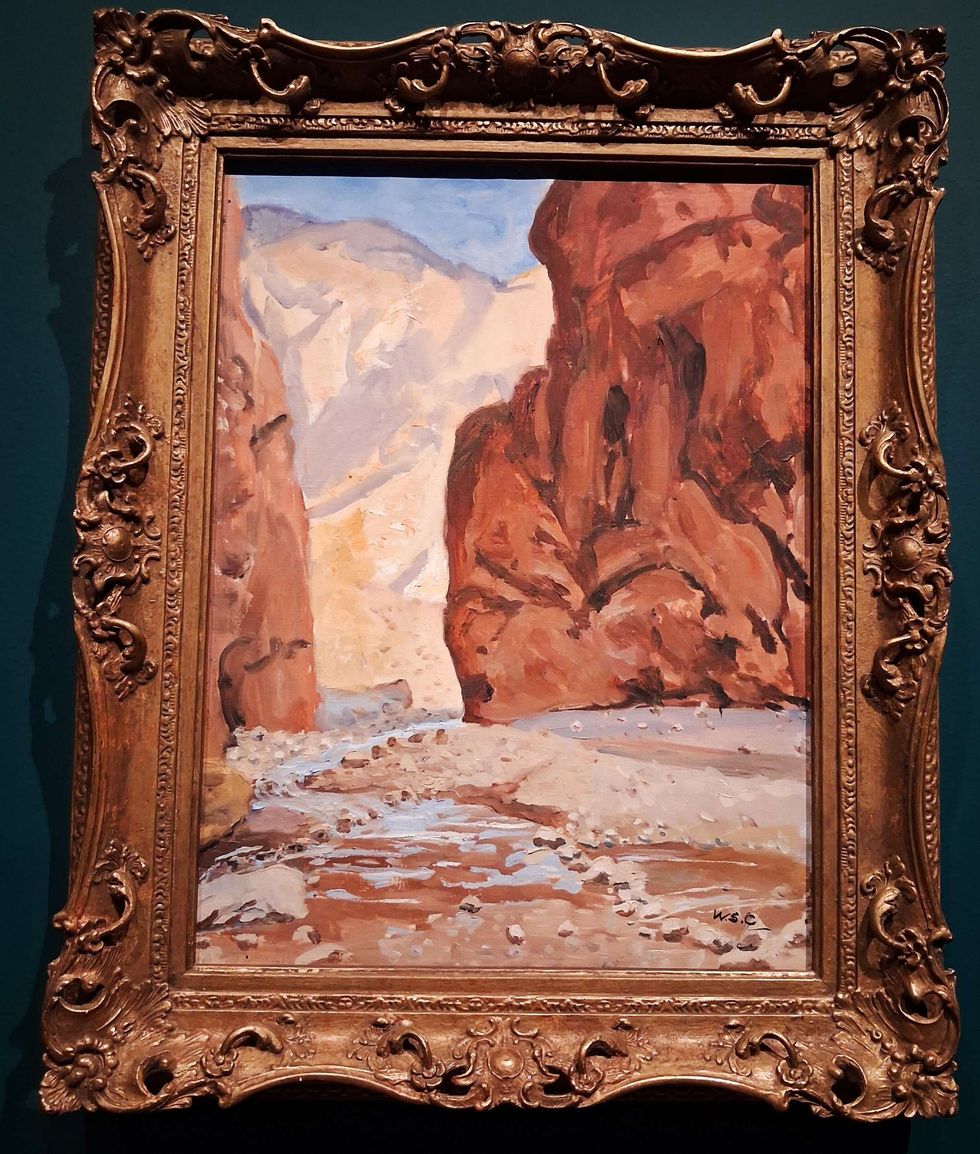 The Todhra Gorge Amit Roy
He didn’t start painting until he was 40 so there are no paintings of India. He was 21 when he arrived in British India in October 1896. He served as a young cavalry officer with the 4th Queen’s Own Hussars and stayed there until 1898, leaving at age 23. Judging from his reaction to Morocco, it is likely he would have been inspired by India, especially the vivid desert colours of Rajasthan.
Painting was a form of therapy for him, especially when he was out of office with no apparent prospect of a return. But it quickly became his principal pastime.
Churchill (1874-1965) was prime minister during the Second World War from 1940-45 and also from 1951-55. Painting was of crucial importance in helping him cope with the anguish caused by the failure of the Dardanelles and Gallipoli Campaigns during World War I, for which he was initially held responsible. In May 1915, he lost his position as First Lord of the Admiralty and was demoted. According to his wife Clementine, “When he left the Admiralty he thought he was finished.”
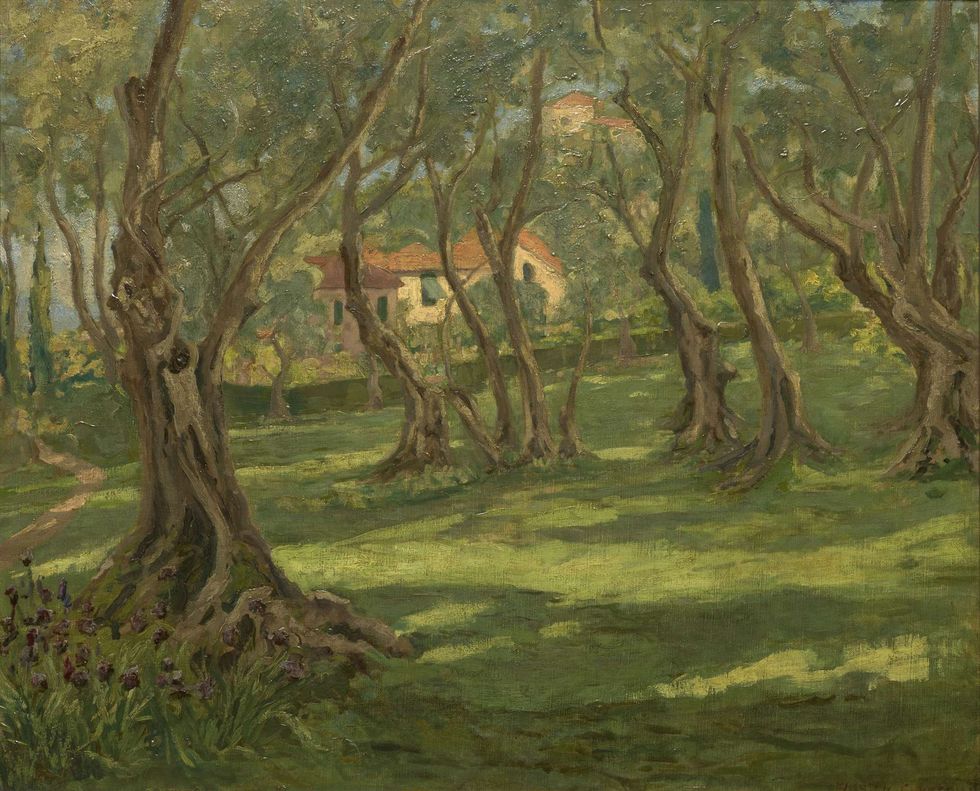 La DragonnièrePrivate Collection © Churchill Heritage Ltd_Photograph by Howard Agriesti
In 1921 and 1922, Churchill wrote two essays for The Strand Magazine in which he described how he had taken up painting as a form of therapy to heal from the Gallipoli disaster, and urged his readers to pick up the paintbrush themselves. In 1948, these essays were blended with another Churchill article entitled Hobbies and republished as Painting as a Pastime, which became a bestseller on both sides of the Atlantic.
Hilary McGrady, director general of the National Trust, said at its summer reception in June this year: “Churchill was a massive fan of nature, of course, and he painted every day. He was out painting, particularly at Chartwell, and this year we have lent 15 of his paintings to the Wallace Collection. If you have a chance, go and see it because it really is beautiful to see those paintings in a different context in an exhibition that celebrates a side of Churchill that not that many people know about. It is really worth going to see.”
British Asians will find the exhibition a bit of an eye opener. Churchill took tips from two celebrated painters of the day, Walter Sickert and William Nicholson.
The Goldfish Pool at Chartwell, oil on canvas (1932), shows Churchill was clearly influenced by the French impressionists. Perhaps with Claude Monet’s famous studies of waterlilies in his garden at Giverny in mind, Churchill brought to life his beloved goldfish pond that he had built at Chartwell. “Ripples draw attention to the surface of the water, which reflects the lush green of the overhanging foliage. He would bring his grandchildren to feed the goldfish as their Sunday ritual, and he spent many hours in solitude painting it.”
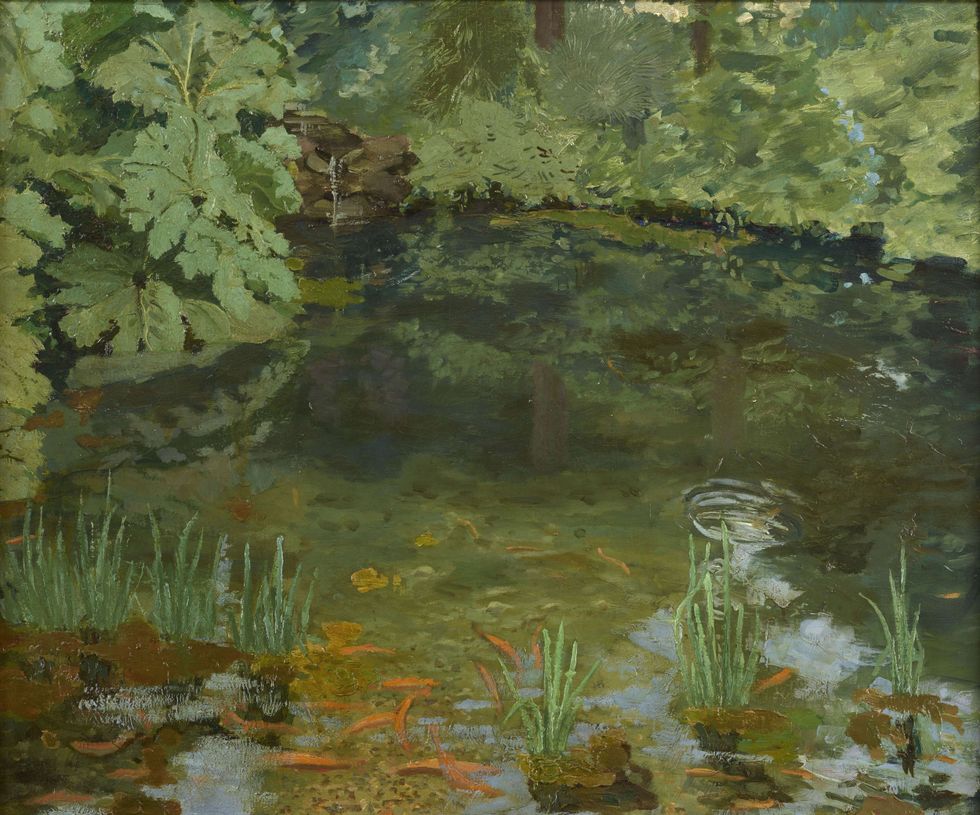 The Goldfish Pool at Chartwell Private Collection © Churchill Heritage Ltd Matthew Hollow Photo
Churchill said that Tower of the Koutoubia Mosque, oil on canvas (1943), was the only painting he attempted during World War II, as a gift for President Roosevelt. They had attended the 10-day Casablanca Conference in January 1943 and at Churchill’s suggestion, travelled together to Marrakech to watch the sun set over the city and the Atlas Mountains. The following day, Churchill stayed on after Roosevelt’s departure to commit the view they had seen together to canvas. He sent the painting to Roosevelt as a gift for his birthday. This is the first example of Churchill using painting as soft power, especially significant considering that he had persuaded Roosevelt to agree to open a second front in Italy rather than a cross-Channel invasion of mainland Europe.
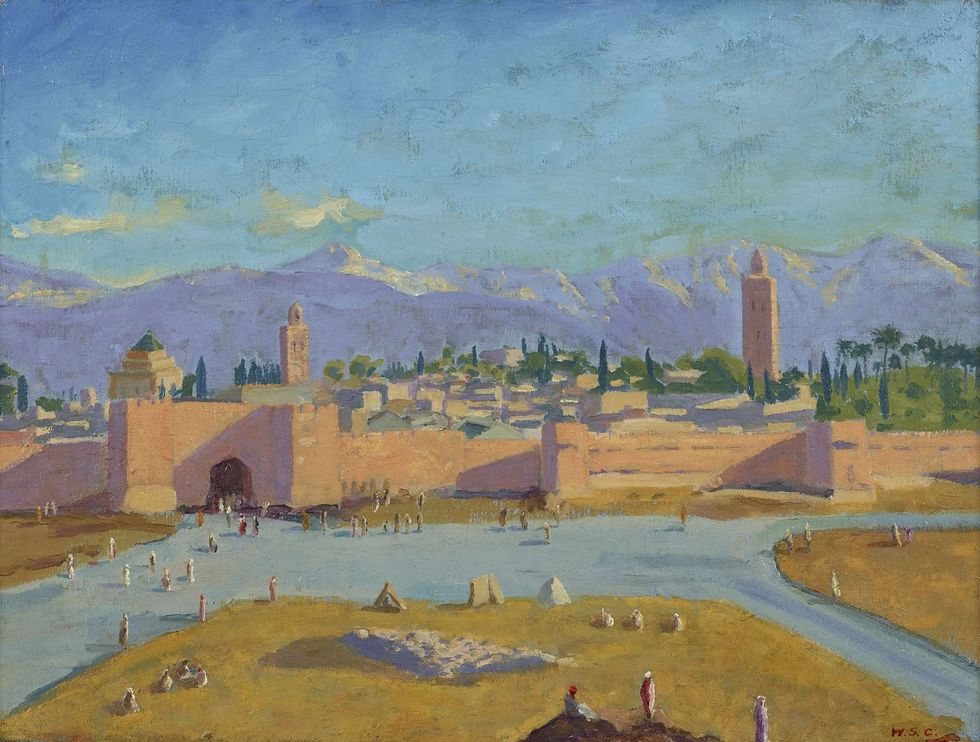 The Tower of the Koutoubia MosquePrivate Collection © Churchill Heritage Ltd_Image courtesy The Churchill Heritage Ltd
Cap d’Ail, Alpes-Maritimes, from La Capponcina, oil on canvas (1952), is one of the few that Churchill had time to paint during his second term as prime minister. This was the home of the newspaper magnate Lord Beaverbrook. “The precipitously angled pines give drama to this unmistakably Mediterranean scene.!
In 1960 Churchill submitted it to the Royal Academy as his diploma work. The painting had been a favourite of the Hanging Committee, who had displayed it at the Summer Exhibition of 1953.”
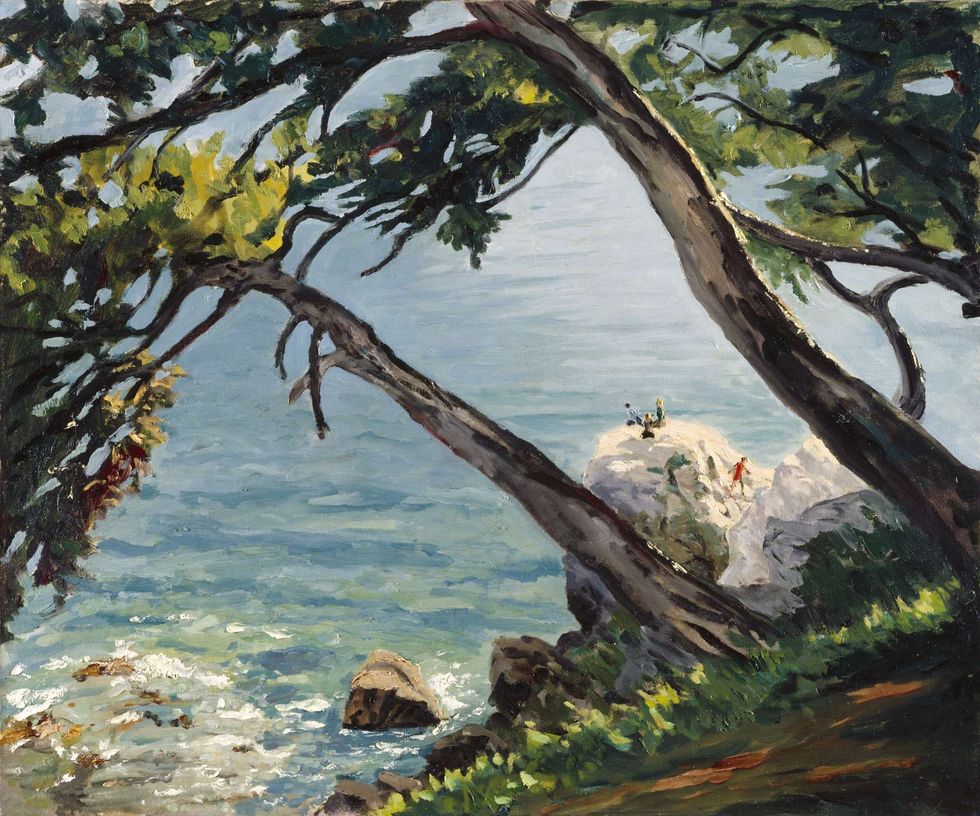 Cap d’Ail, Alpes-MaritimesRoyal Academy of Arts, London © Churchill Heritage Ltd Photo ©Royal
Dr Lucy Davis, Curator of Paintings and co-curator of the exhibition, said: “Churchill approached painting with an intensity that mirrored his political life, though he turned to the canvas for very different reasons. What emerges is a painter who begins cautiously, inspired by Lavery and Nicholson, and who ends up forging a surprisingly bold visual language of his own. This exhibition lets visitors see the private creative dynamics behind the public figure.”
Dr Xavier Bray, Director of the Wallace Collection and co-curator of the exhibition, added: “Churchill’s paintings reveal a personality that is more joyful and more intimate than the statesman we think we know. The Wallace Collection played a quiet, but significant, role in the Churchills’ wartime story, and we are proud to offer this deeper portrait of the great wartime leader. It is a reminder that creativity can be both a personal solace and cultural force, and that even a figure as monumental as Churchill found renewal in front of a canvas.”
The exhibition catalogue has essays by leading art historians and Churchill experts.
In the foreword, Bray writes: “Art permeated all areas of Winston Churchill’s life. In many ways it was the source of his boundless creative energy. His stirring wartime speeches were full of powerful visual metaphors. His story as a painter is also one that we can all relate to. He turned to painting during a particularly difficult period of his life, as an outlet for stress, and very soon he wanted to share his joy with the rest of the world.
“In his writings, he urged everyone to try it, and to discover all the benefits that he derived from it: once you are a painter, ‘the whole world is open with all its treasures. The simplest objects have their beauty.’ He found no other hobby so utterly absorbing and transformative: ‘Painting is complete as a distraction. I know of nothing which, without exhausting the body, more entirely absorbs the mind. Whatever the worries of the hour or the threats of the future, once the picture has begun to flow along, there is no room for them in the mental screen. They pass out into shadow and darkness. All one’s mental light, such as it is, becomes concentrated on the task.’ ”
Bray adds: “While he was modest about his skills (he described his paintings as ‘daubs’), choosing to exhibit his paintings anonymously both at a commercial gallery in Paris in 1921 and at an amateur painting exhibition in 1925, he nevertheless sought out the leading practitioners of the day – Sir John Lavery, Walter Sickert and Sir William Nicholson, among others – to help him to observe more carefully and to refine his technique.
“He also put it at the centre of his world: recognising the potential of his creations to please, he presented them as gifts to his close friends and family, and later used them as a form of ‘soft power’ – diplomatic gifts to political allies, including three consecutive American presidents: Franklin D. Roosevelt, Harry S. Truman and Dwight D. Eisenhower.
“Public recognition for his art came following the Allied victory in 1945, when Churchill was the West’s most feted leader. In 1948, he was elected an Honorary Academician Extraordinary by the Royal Academy of Arts, after he had two of his paintings (hung under the pseudonym David Winter) accepted into the Summer Exhibition of 1947. He was the first and only amateur artist to receive this recognition from the Royal Academy. His retrospective, Winston Churchill the Painter, toured the United States and Canada in 1958, where it was seen by nearly 650,000 North American visitors before proceeding to Australia and New Zealand. When it opened on an enlarged scale at the Royal Academy in London in 1959, it was a blockbuster success, and greatly elevated the status of his painting.
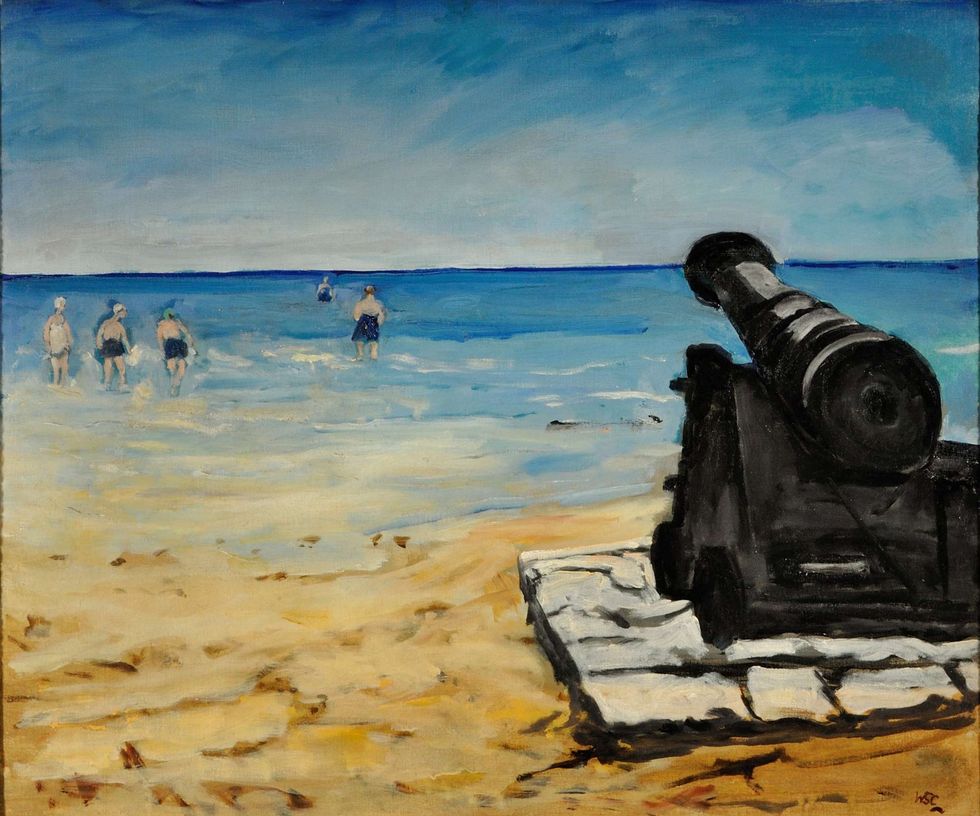 The Beach at Walmer America's National Churchill Museum at Westminster College, Fulton, Missouri © Churchill Heritage Ltd
“Churchill was clearly delighted by this overwhelmingly positive response. Since then, there has been no exhibition of his paintings at a national museum, despite their mounting value on the art market.
“He said: ‘When I get to heaven I mean to spend a considerable portion of my first million years in painting, and so get to the bottom of the subject. But then I shall require a still gayer palette than I get here below. I expect orange and vermilion will be the darkest, dullest colours upon it, and beyond them will be a whole range of wonderful new colours which will delight the celestial eye.’
“The National Trust has also played a crucial role in the realisation of this project. It has lent the lion’s share of our loans, including twelve from the significant collection of paintings by Churchill housed at Chartwell, along with Churchill’s travel easel.”
There is an essay by Allen Packwood, director of the Churchill Archives Centre at Churchill College, Cambridge, in which he says: “Some of the earliest documents in Churchill’s personal papers contain tantalising glimpses that his artistic talent was there, but lying dormant prior to 1915 – the year he took up his paintbrush.
Thus, we find him writing from Marrakech in Morocco in December 1935, a place that would quickly become one of his favourite painting haunts, describing to Clementine how ‘the light at dawn and sunset upon the snows, even at sixty miles distance, is as good as any snowscape I have ever seen’.
For him, painting was an antidote to politics, a pleasure and a resource, though, as these essays show, it was also something he took seriously, studied and immersed himself in, and which, by the end of his life, was inextricably linked to his public persona, his paintings becoming highly prize diplomatic gifts, and their exhibitions overseas major statements of British ‘soft power’. Consequently, painting pervades all aspects of his archive, as it did all aspects of his life.”
This point is developed by Churchill’s biographer, (Lord) Andrew Roberts, who says: “Winston Churchill was a munificently generous painter, who gave away no fewer than seventy-three of the well over 500 pictures he made, to a total of fifty-three people outside his immediate family. One small but significant group of recipients were powerful people who had been, or were to be, helpful to his domestic political career. Press barons, government whips, cabinet colleagues, peers – many received paintings over the years.
“Yet there was also a smaller and more select group of even more powerful people with whom Churchill recognised that warm personal relations would be hugely beneficial for the United Kingdom as well as for himself. He unmistakably employed painting-giving as a form of ‘soft power’, particularly with Americans who could affect the future of what he himself in his ‘Iron Curtain’ speech of arch 1946 dubbed the ‘Special Relationship’.
“Churchill gave paintings to servants and professional advisors, to cousins, many to friends, some to holiday hosts, a few to admired generals, some to his private secretaries, a few to aristocrats and supportive newspaper proprietors, three to institutions – the Royal Scots Fusiliers, the Government Whips’ Office and the Royal Academy – and some to international statesmen.
“These groups overlapped, of course: Lord Beaverbrook received the largest number outside the immediate family (four), and he counted as a friend, holiday host, political ally and supportive newspaper baron.
“Churchill only once sold a painting, to his great friend Lady (Jean) Hamilton when he was utterly broke, as a way of raising emergency funds. Otherwise he earned his living by his pen rather than his paintbrush (Surprisingly, although he loved the House of Commons and the Palace of Westminster, he never painted them.)”
There is also an important contribution by the catalogue’s editor and co-curator, Lucy Davis, who points out: “It was not until the relatively late age of forty that Winston Churchill took up painting. As he explained in his essay Painting as a Pastime I (1921), towards the end of May 1915 he had been forced to resign his post as First Lord of the Admiralty following the failure of the Dardanelles campaign, for which he was initially held responsible. After a period of relentless executive activity at the Admiralty, he was suddenly confined to an advisory role that left him a mere observer of the terrible sequence of events: ‘I had long hours of utterly unwonted leisure in which to contemplate the frightful unfolding of the war. At that moment when every fibre of my being was inflamed to action, I was forced to remain a spectator of the tragedy, placed cruelly in a front seat. And then it was that the Muse of Painting came to my rescue – out of charity and out of chivalry…’
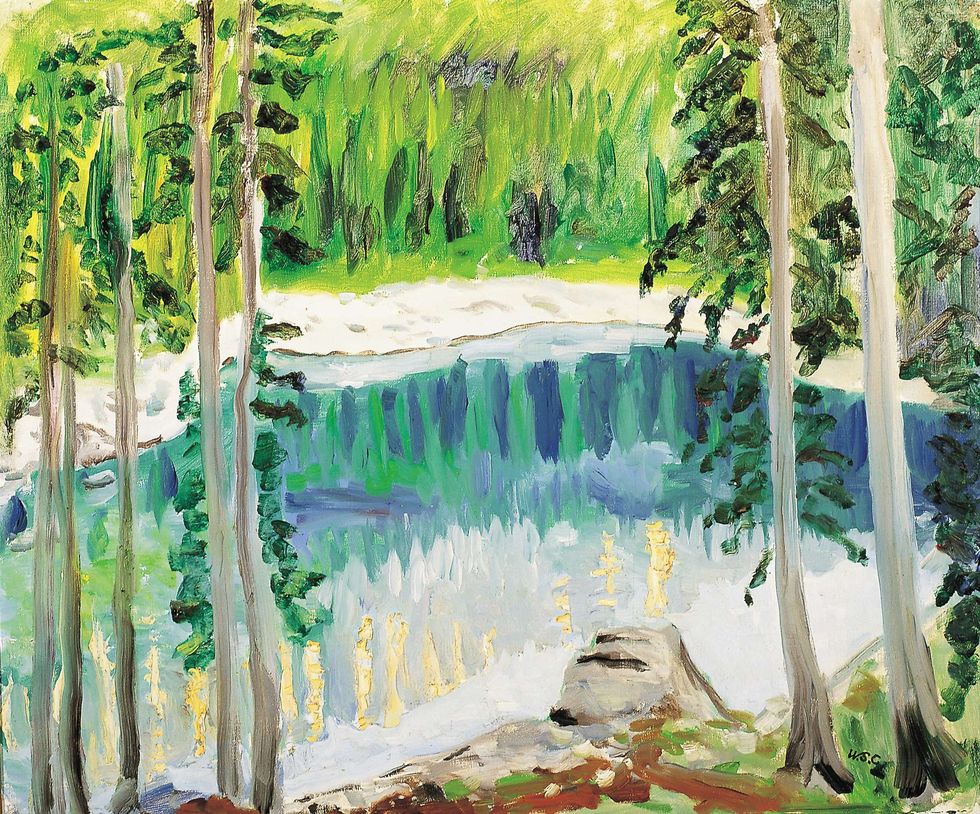 Sketch of Lake Carezza, or ‘The Twenty-Minute Sketch'National Trust, Chartwell © Churchill Herita
“Painting was to become a passionate hobby, the therapeutic benefits of which he discussed at length in his essays on the subject. Although he was generally modest about his pictures, which he often referred to as ‘daubs,’ he was nevertheless deeply committed to painting and sought the advice of some of the most successful artists of his day.
“Churchill fiercely defended freedom of artistic expression as key to a democratic society. In his speech at the Royal Academy Banquet in April of the following year, he made the point more forcefully, in the presence of Prime Minister Neville Chamberlain, whose government was pursuing a policy of appeasement with the Nazi Party. ‘In this hard material age of brutal force, we ought indeed to cherish the arts’ and protect artists from persecution.’
“At the heart of the French Riviera, famous for its climate and picturesque setting, Cannes inspired Churchill to create some of his best paintings. He was particularly drawn to the harbour and the study of light and reflections on the water. Much like the Impressionist painters, he returned at different times of day to observe the changing light effects.
“Churchill, who liked to escape the grey dark British winters for the warmth and light of the Mediterranean, was drawn further afield by the bright sunlight and vibrant colours of Morocco. Marrakech, the ‘red city’, fascinated him most. He described his paintings of Marrakech as ‘a cut above everything I have done so far’. His favourite views included the panorama of the city as seen from the balconies and roofs of the Mamounia Hotel and the Villa Taylor, and its gates, mosques and markets. Although not usually a figure painter, he also seemed to delight in painting the people of Marrakech going about their daily lives in the streets and markets. He made six visits to Marrakech from 1935 to 1959, always in the winter, usually over Christmas and the New Year.”
Churchill: The Painter is at the Wallace Collection, Hertford House, Manchester Square, London W1U 3BN until 29 November 2026




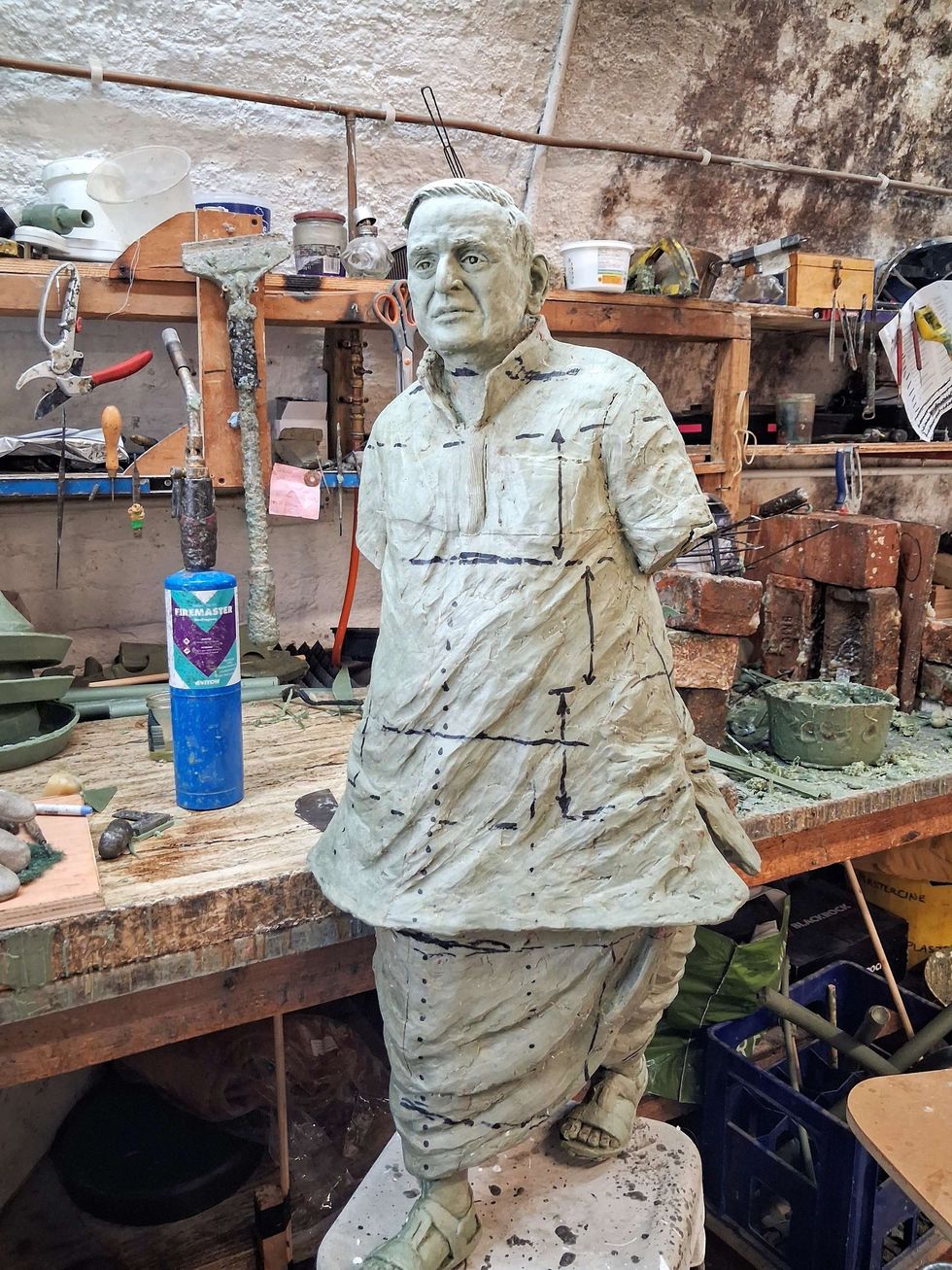 Maquette being finessed Eastern Eye
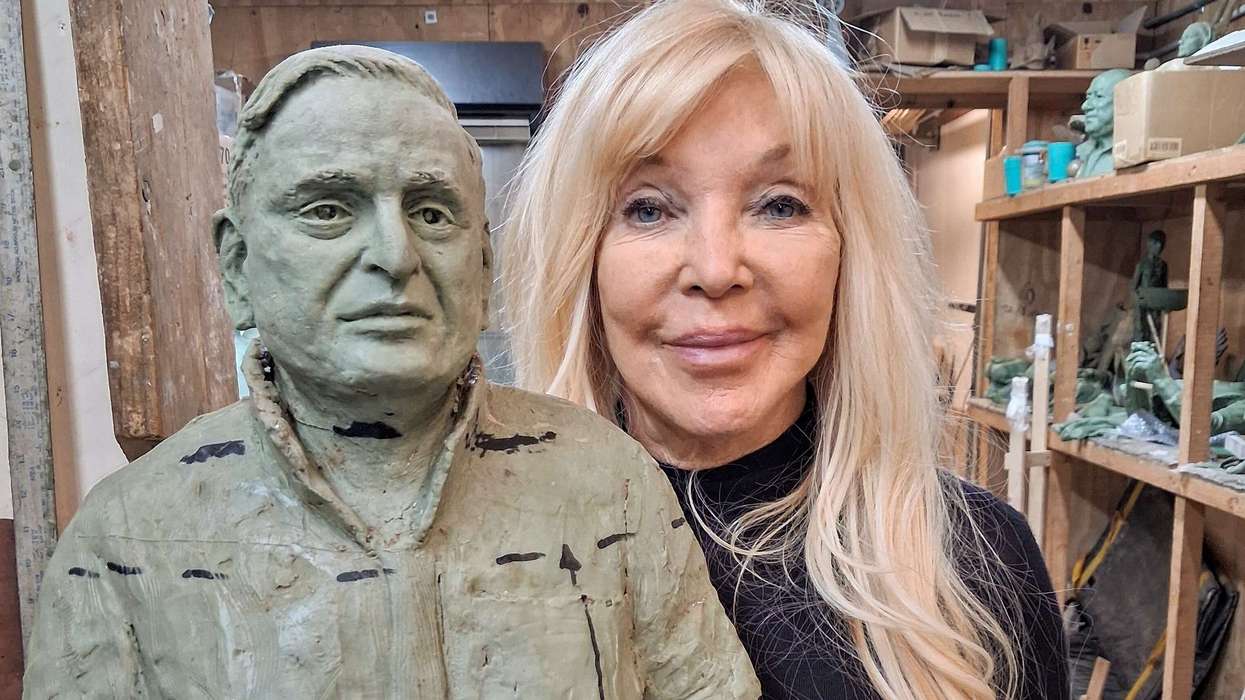
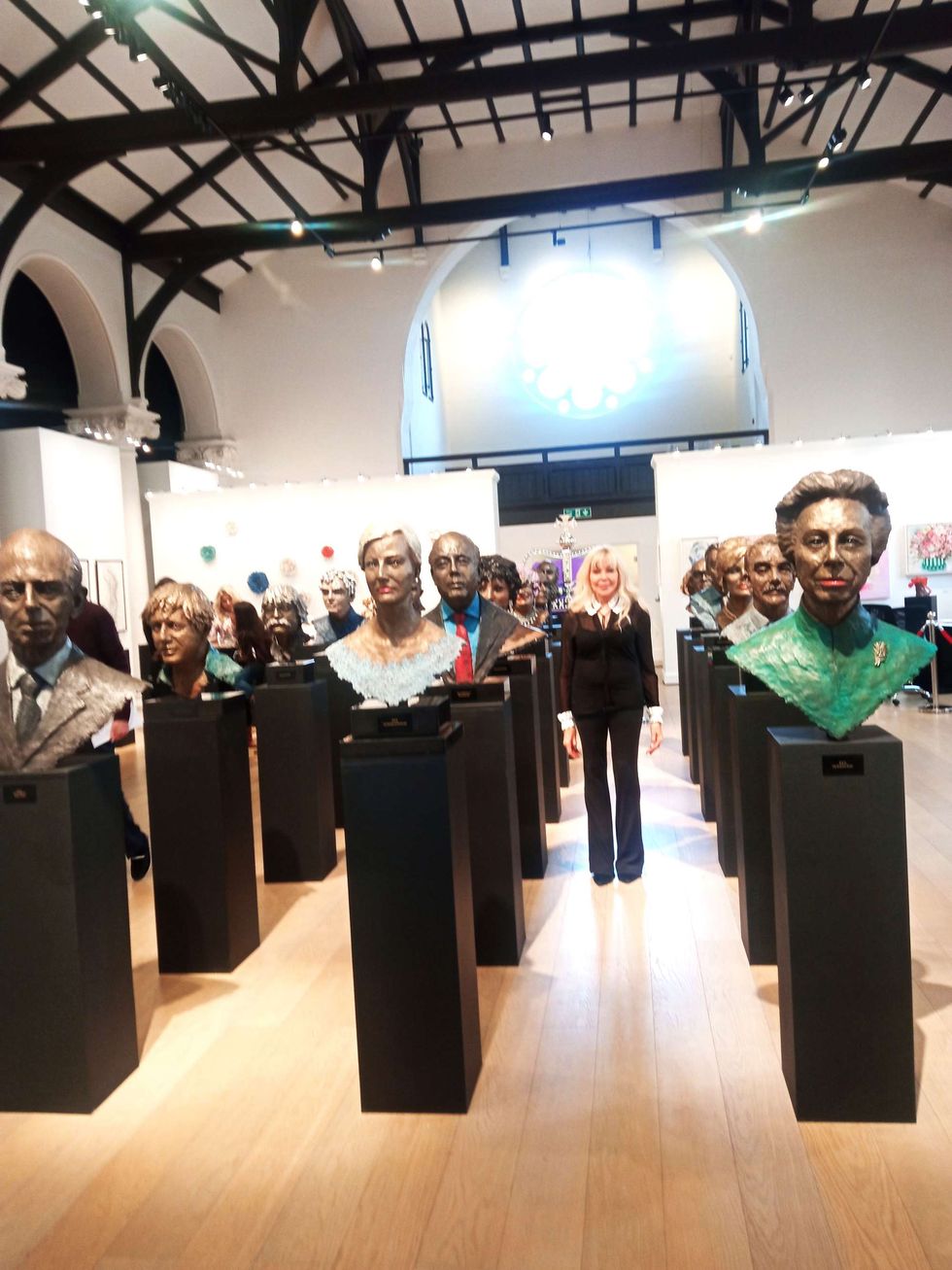 Frances Segelman standing among the many busts of royals and celebrities she has done Eastern Eye
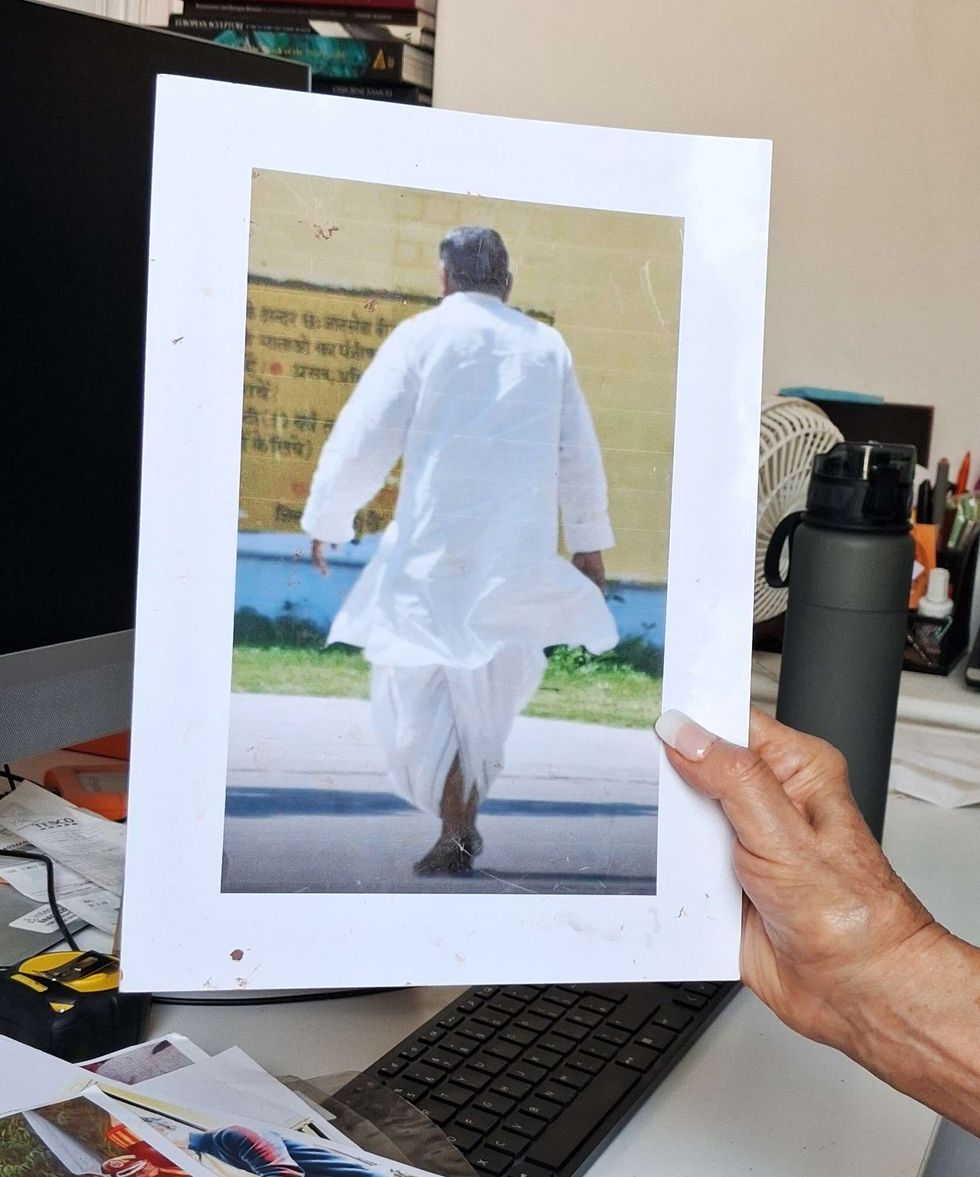 Photograph of Mulayam Singh Yadav from the back Eastern Eye
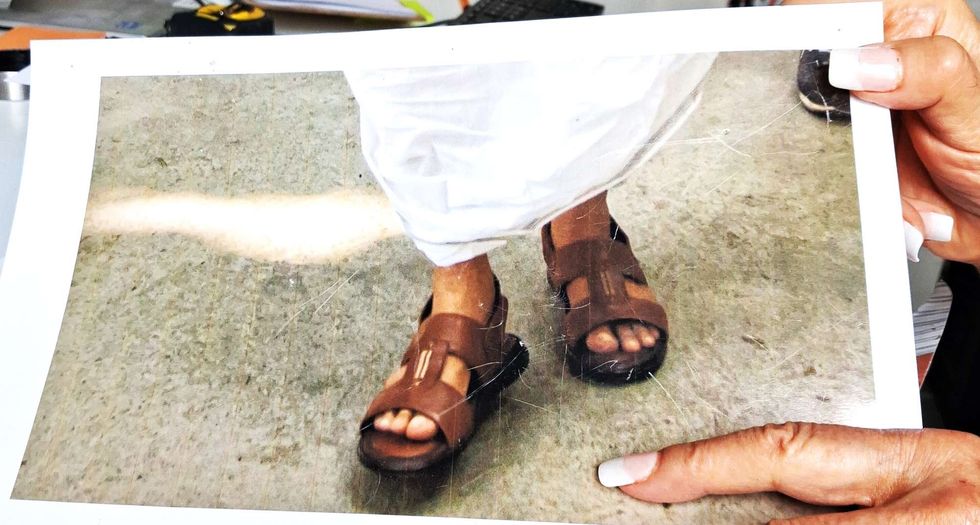 Photograph of Mulayam Singh Yadav wearing sandalsEastern Eye
 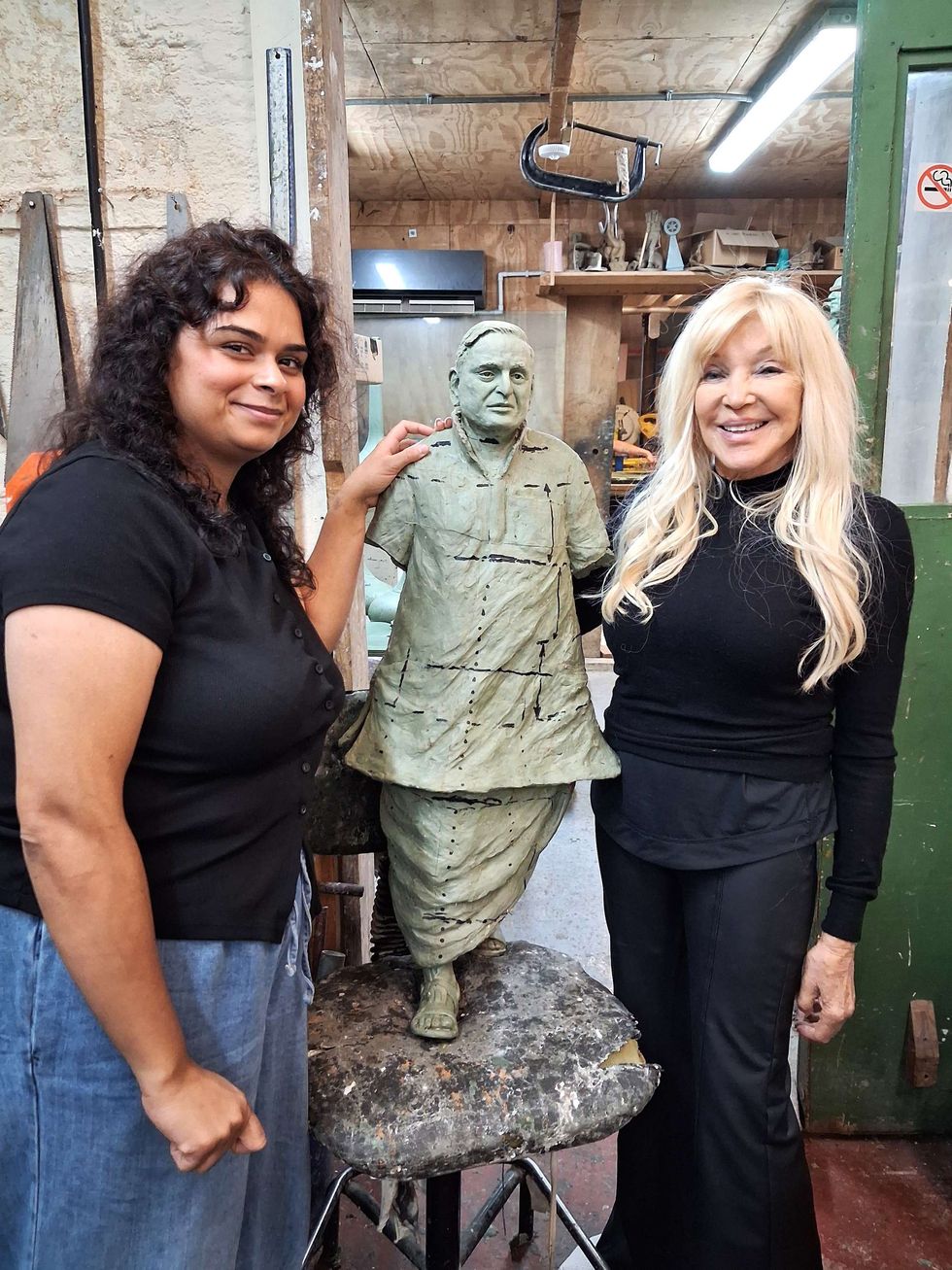 (From left) Nushra Bhoyroo and Frances Segelman with maquette of Mulayam Singh Yadav Eastern Eye
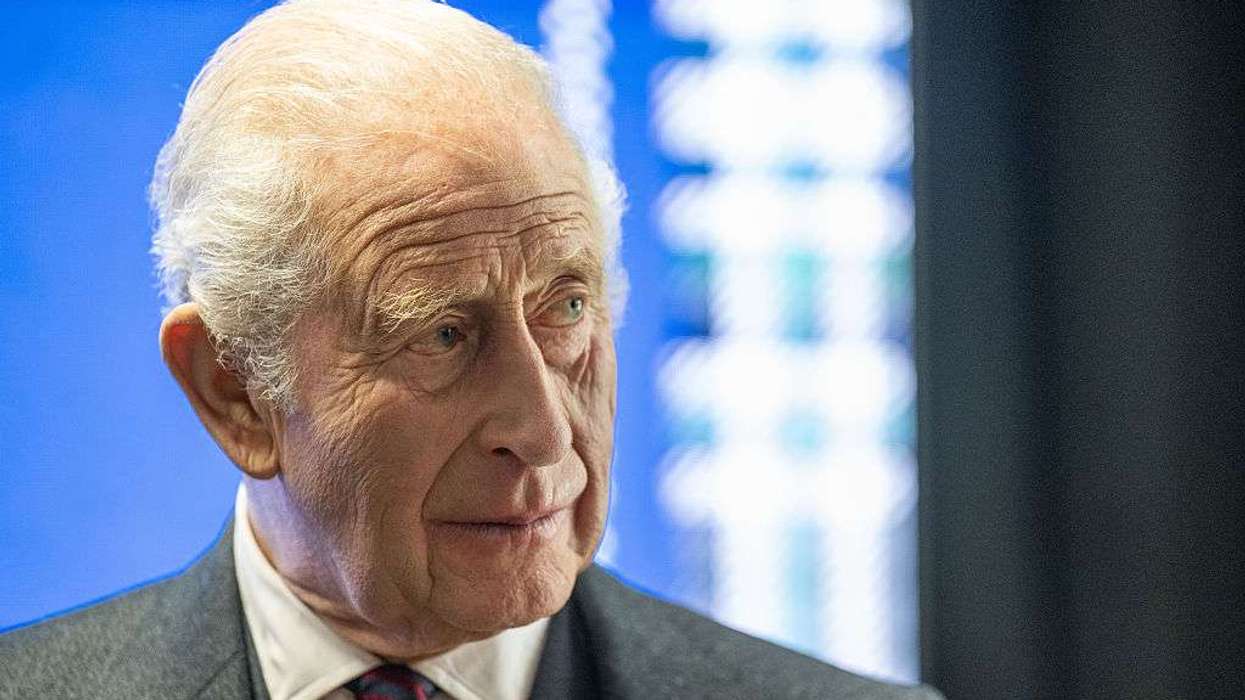
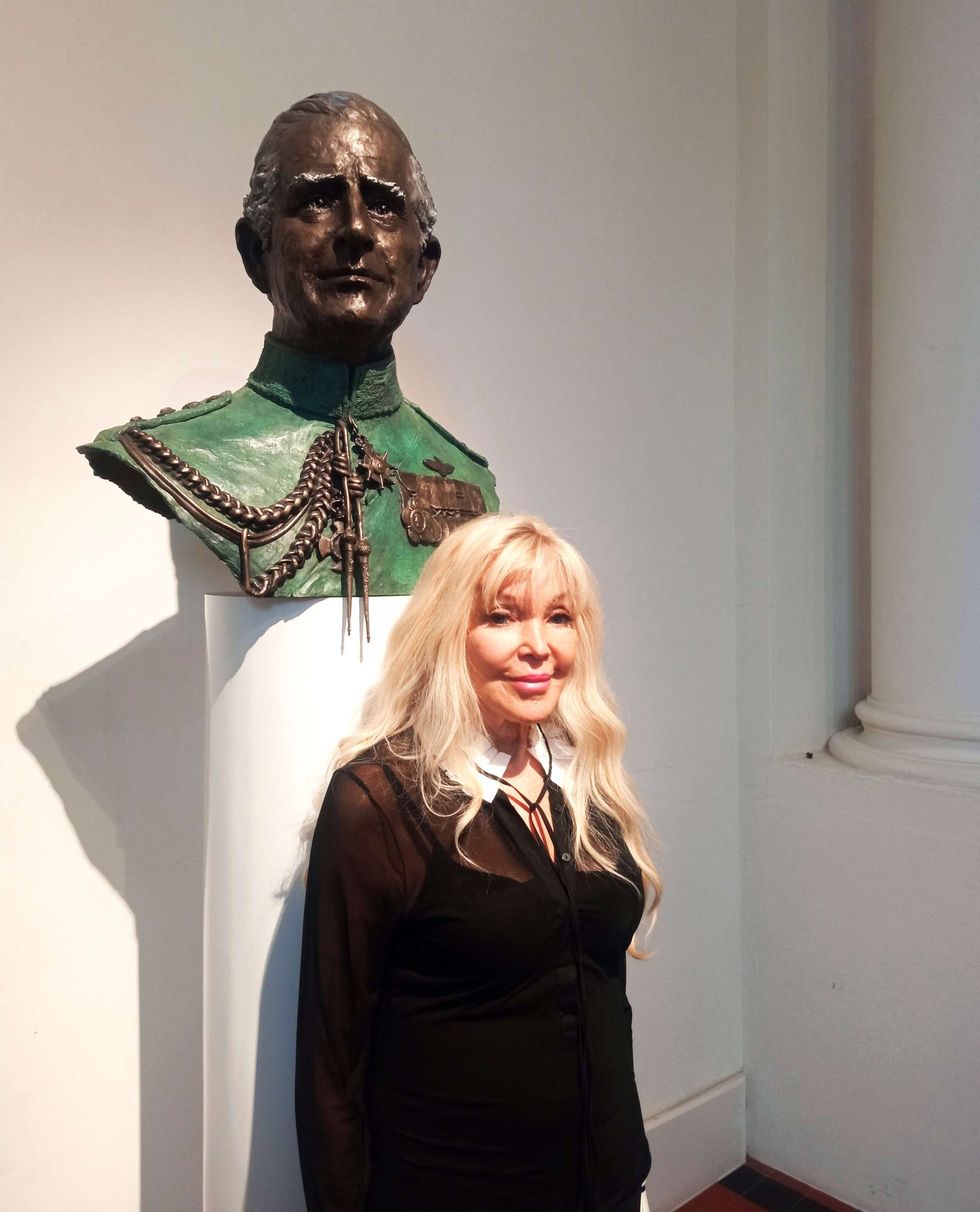 Frances Segelman did King Charles when he was the Princes of Wales Eastern Eye
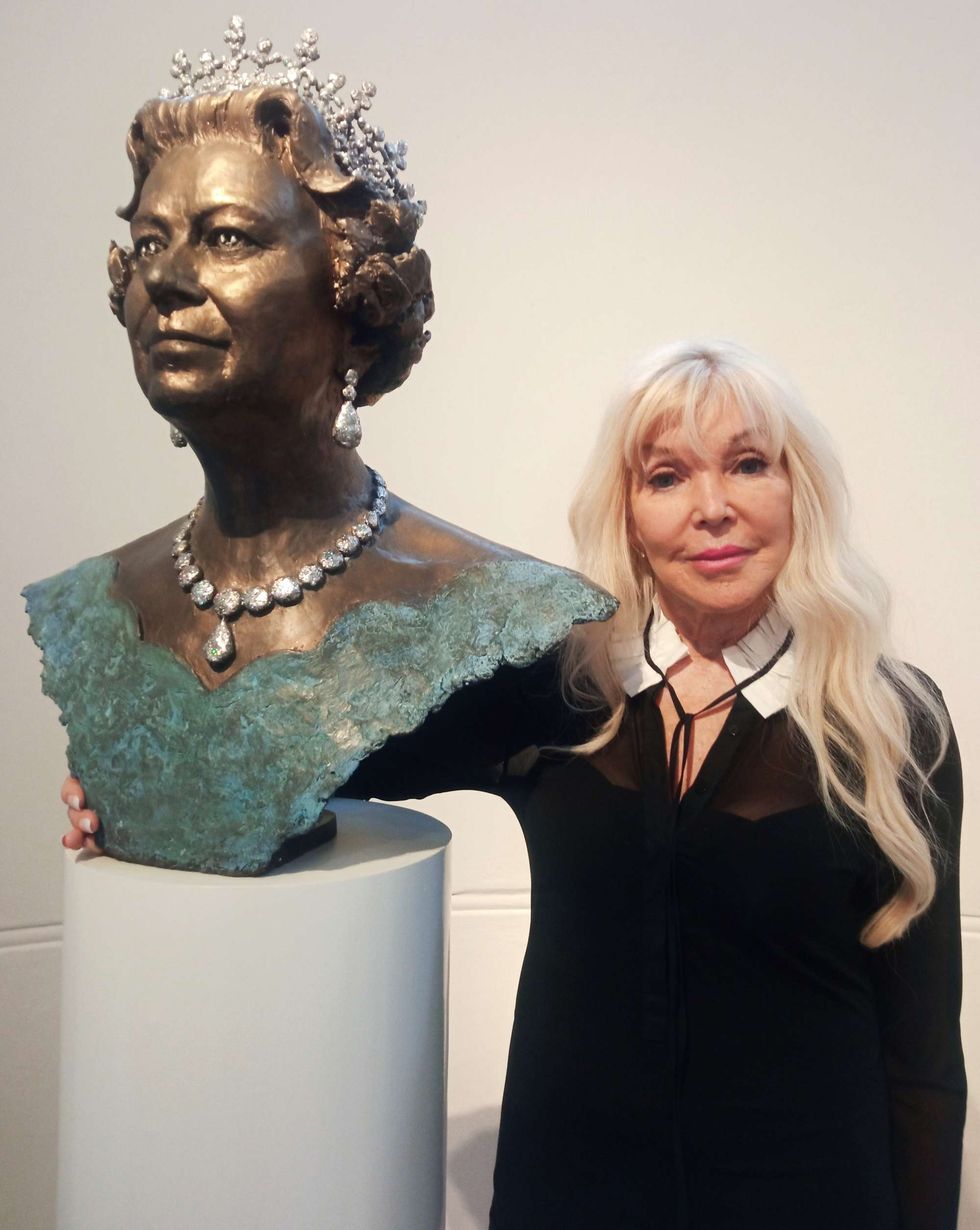 Frances Segelman has previously sculpted the late Queen Eastern Eye
 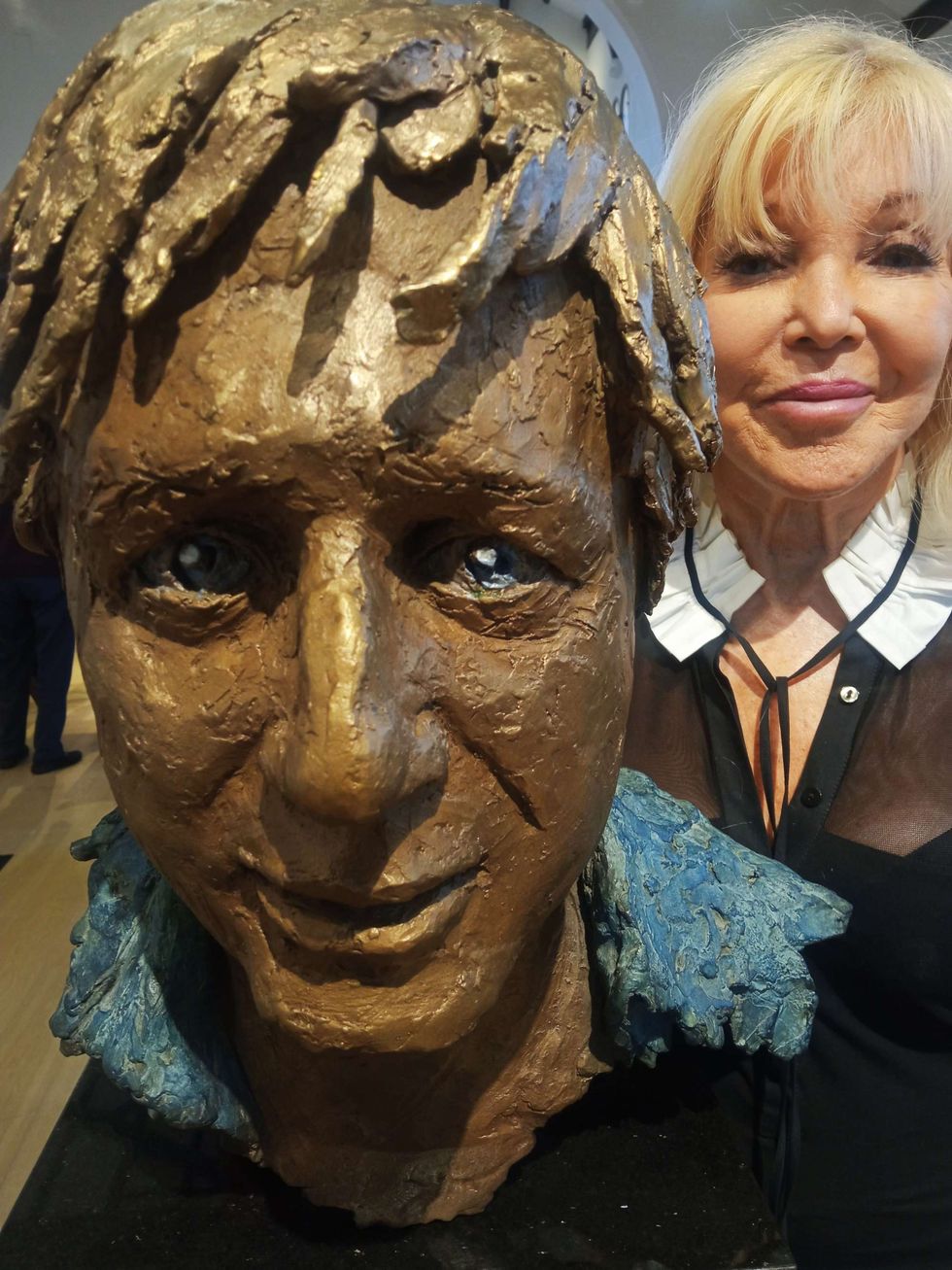 Frances Segelman has previously done the bust of Boris JohnsonEastern Eye
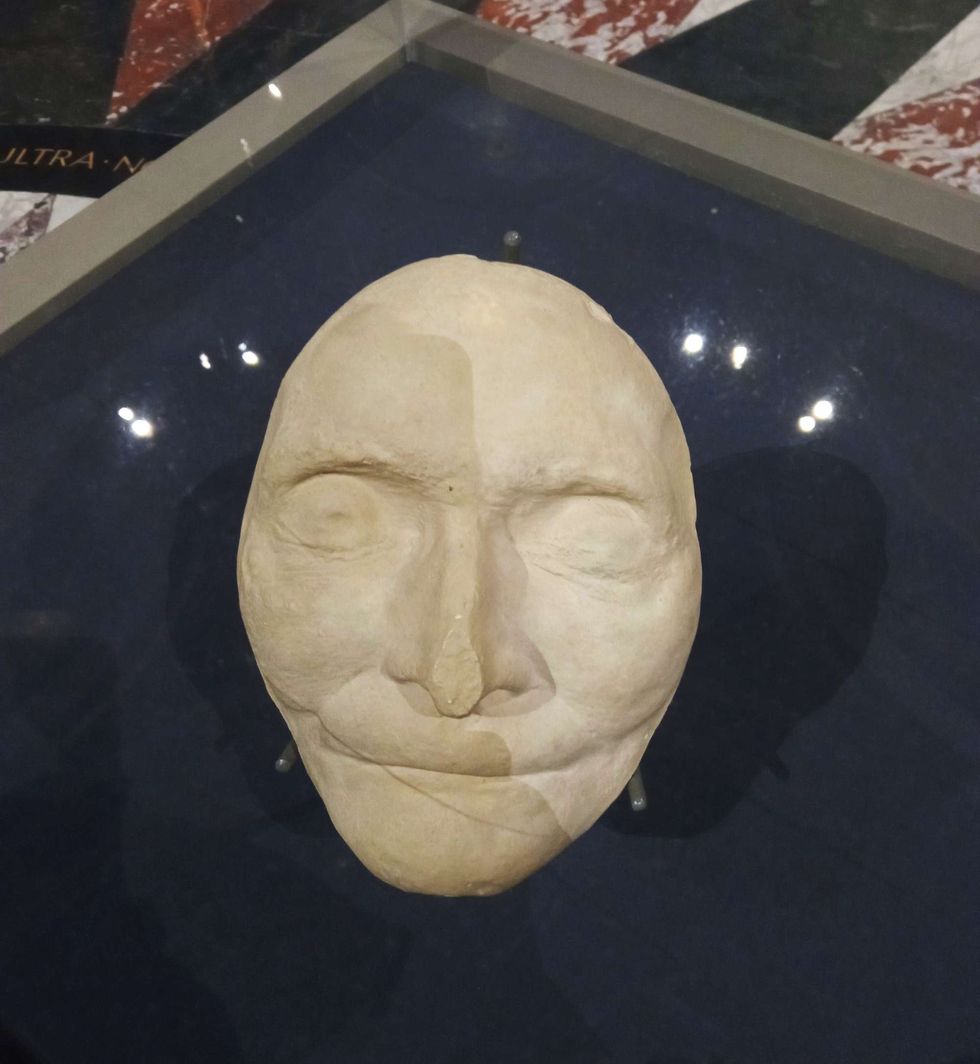 Frances Segelman worked from the death mask of Sir Christopher Wren Eastern Eye
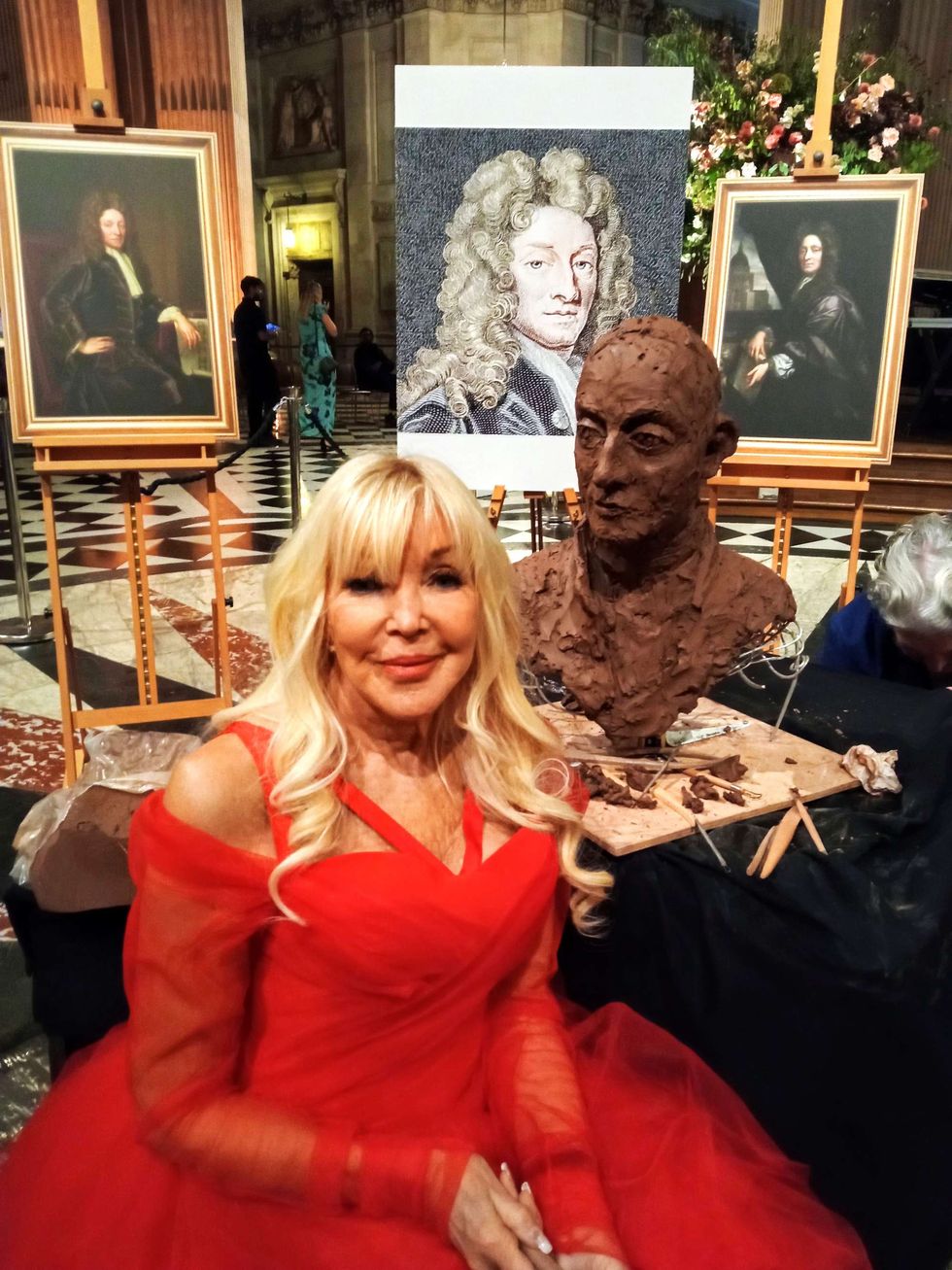 Frances Segelman sculpted bust of Si Christopher Wren from his death mask at St Paul's Cathedral Eastern Eye
 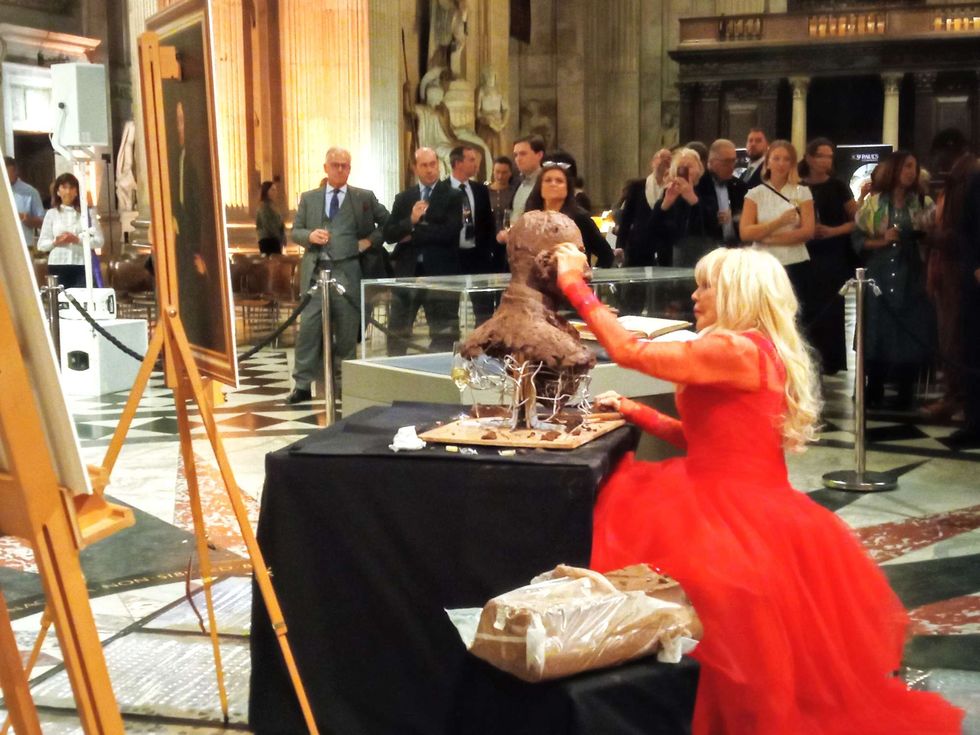 Frances Segelman working on the bust of Christopher Wren in St Paul's Cathedral Eastern Eye
 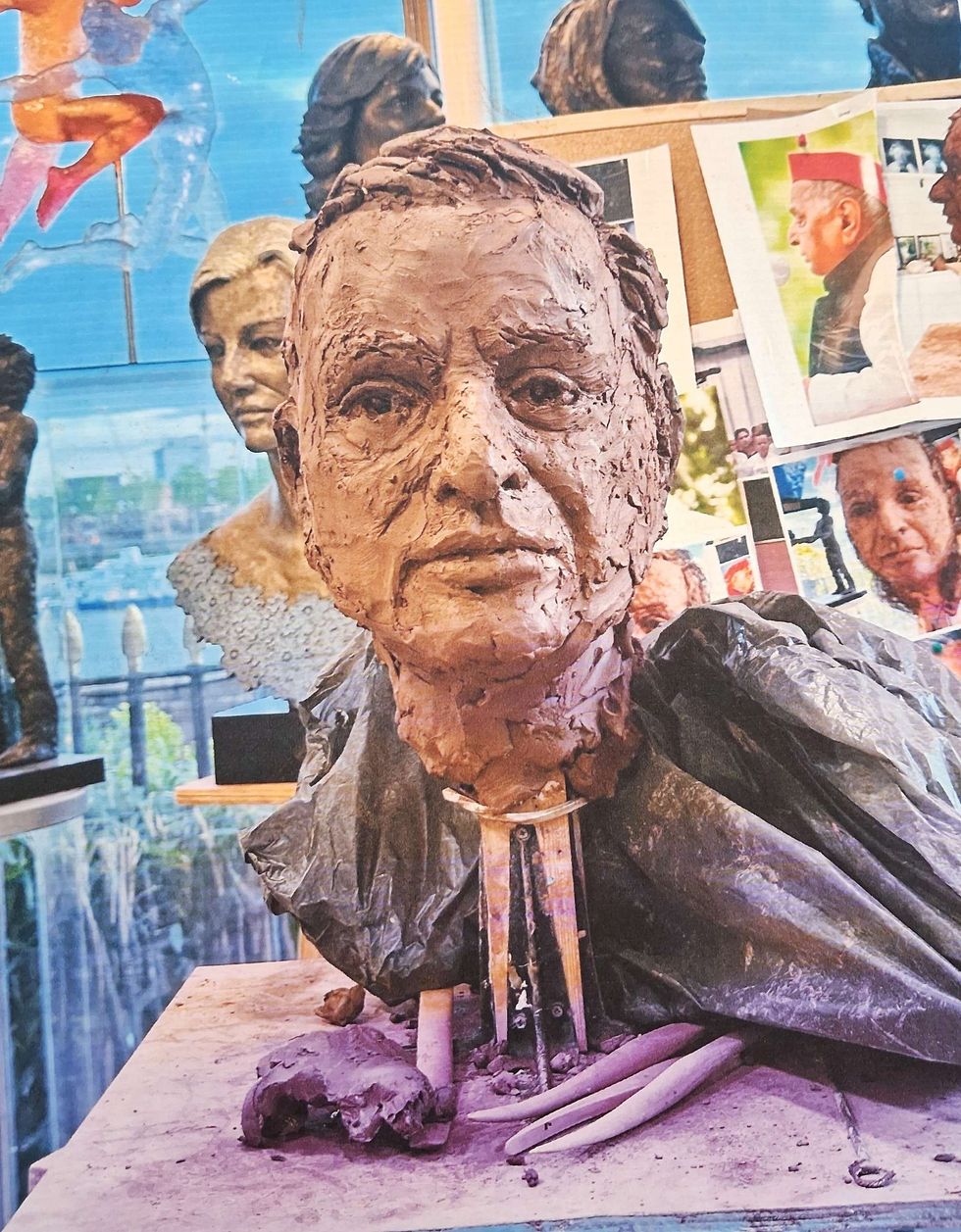 Clay head in Frances Segelman's studio Eastern Eye
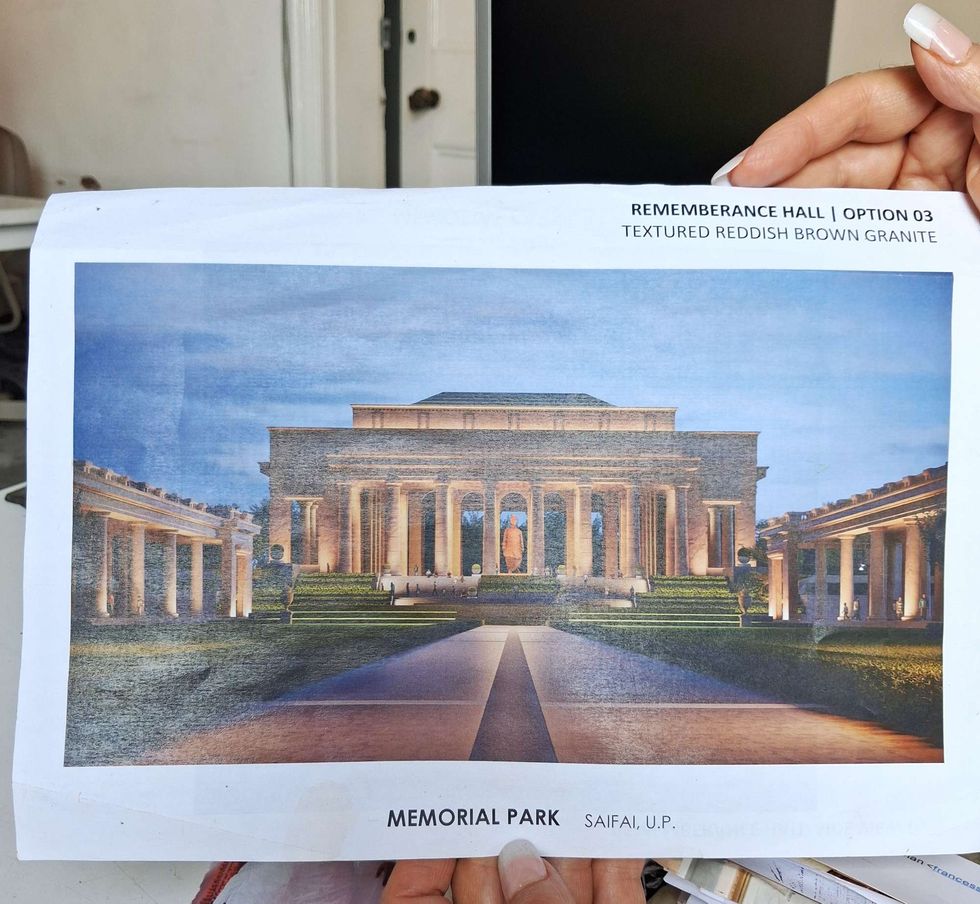 Artist's impression of Mulayum Singh Yadav Memorial Park in Saifai in UP Eastern Eye
 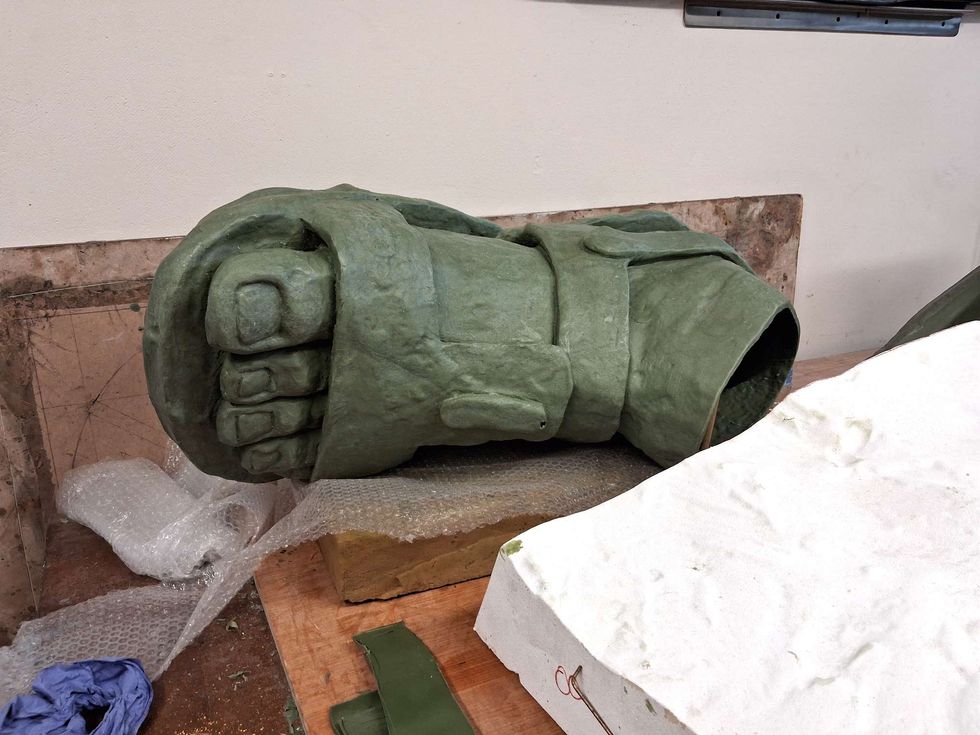 Mulayum Singh Yadav statue pic two. Foot in sandals Eastern Eye
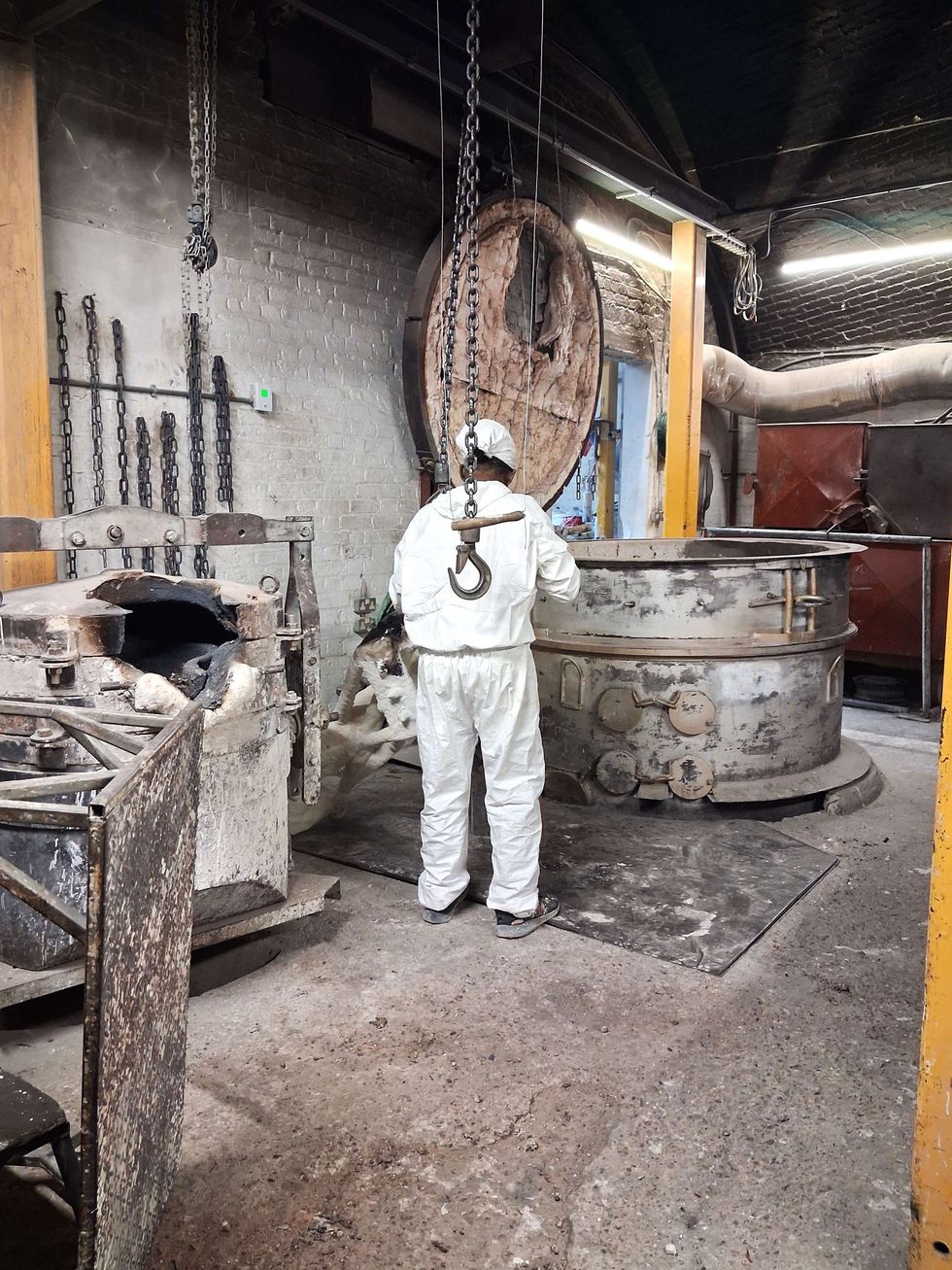 Foundry Eastern Eye
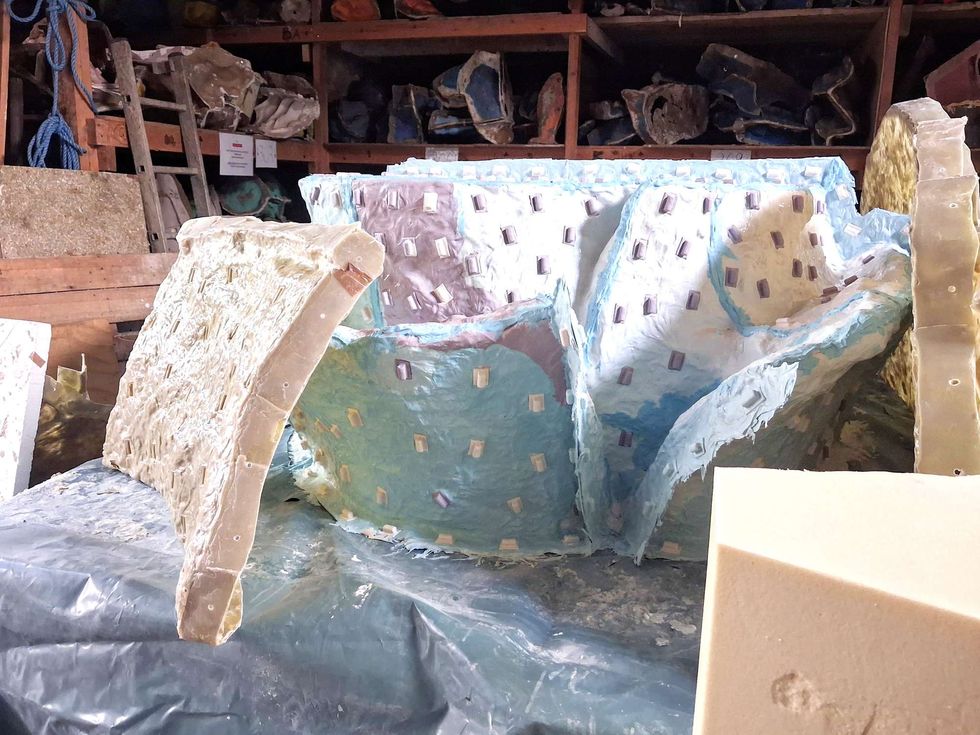 Moulds for the statue Eastern Eye
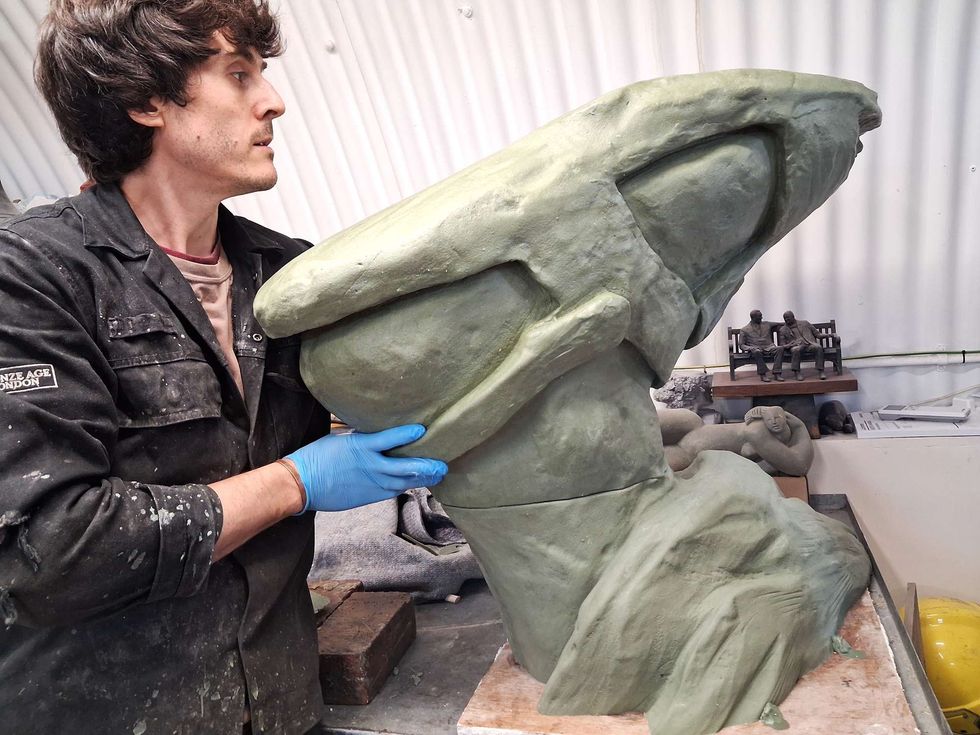 Foot being fitted to leg Eastern Eye
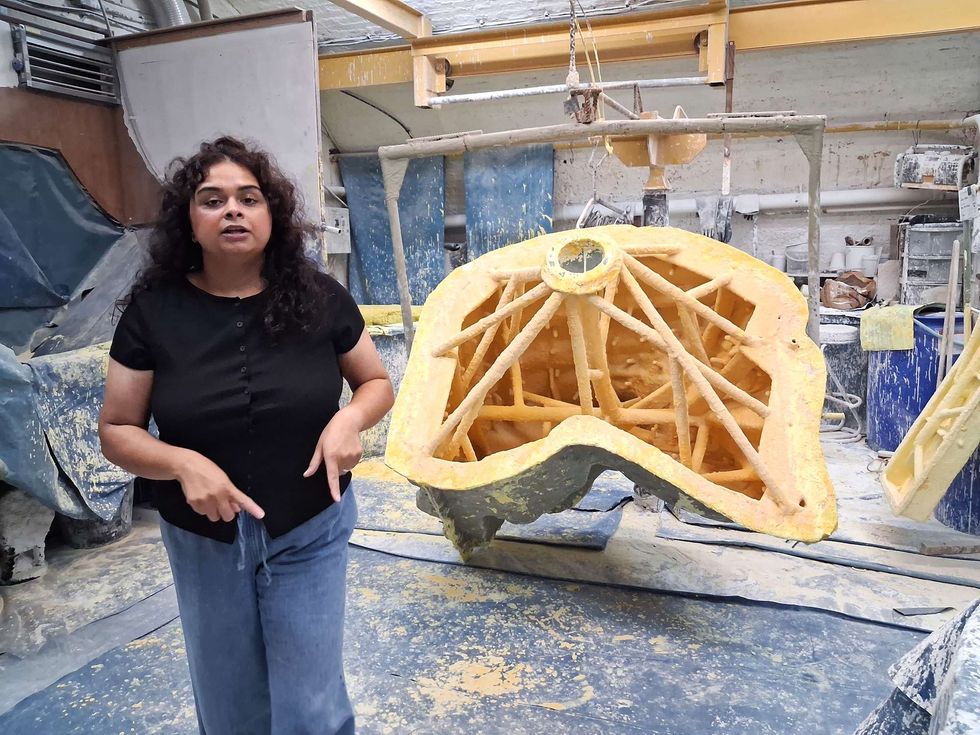 Nushra Bhoyroo showing how hot metal in poured into tubes Eastern Eye