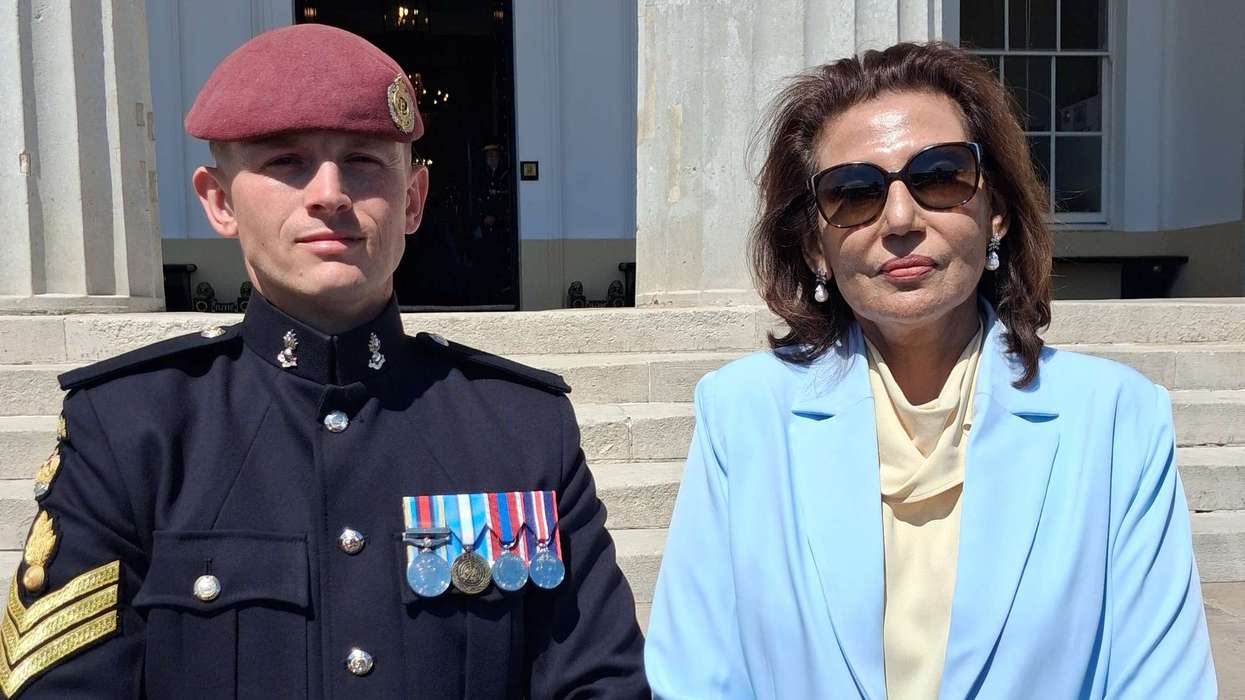

Rani Reena Kumari was at the Royal Military Academy Sandhurst on Friday last week (7) to offer her personal congratulations to a British soldier who had won the annual prize that she has set up in her father’s name.
Staff Sergeant G Blackwell, 34, from the Royal Engineers, has won this year’s “Major General Diwan Misri Chand Prize”.
The programme for the Sovereign’s Parade said that the special prize is “awarded to the individual, platoon or company that has demonstrated outstanding innovation and purpose, character and boldness through the course. The Major General Misri Chand Prize is presented in memory of the late Major General Diwan Misri Chand, RMC Sandhurst and 1/14 Punjab Regiment.”
Misri Chand was rather a dashing officer who was commissioned at Sandhurst in 1927. He was born in Dehradun on 11 October 1907 and died on 13 March 1970. His skills as “the Indian flying ace” and deeds of derring-do in the North-West Frontier and the Indo-Pakistan war of 1948 were also recognised by the Indian Post Office which issued a stamp in his honour in 2009.
He received his early education at the Prince of Wales Royal Indian Military College in Dehradun, before going to Sandhurst. After passing out from Sandhurst in 1927, he joined the British Indian army.
According to his biography, he learned to fly with the Bombay Flying Club, becoming one of the first Indians to get a pilot’s licence. He won the 1936 Viceroy’s Cup Air Race flying from Madras to Delhi in a hired Club Gipsy Moth, and became the first Indian permitted to compete in the King’s Cup Air Race in England in 1936. He flew a Percival Vega Gull G-AEAB, paired with Lt Patrick Randolph of the Grenadier Guards. He gained international fame in 1936 when he won the Viceroy’s Cup Air Race at the helm of a de Havilland DH.60 Moth biplane. He was admitted as a member of the elite Royal Aero Club alongside J R D Tata, and later the United Services Club in UK.
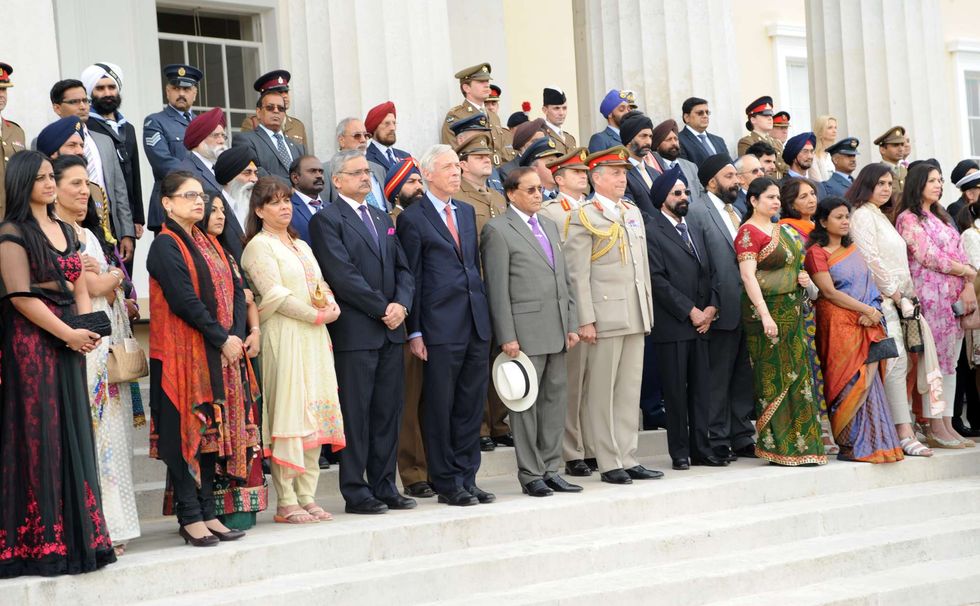 British Sikh Association members visited Sandhurst in July 2016 Amit Roy
At the Sovereign’s Parade, 198 UK officer cadets were commissioned as British Army officers. The parade marked the competition of 44 weeks of intensive training for the officer cadets.
The sword of honour was awarded to the officer cadet “considered by the Commander to be the best of the intake”.
It was won in 1993 by Charles Roland Vincent Walker, who is now General Sir Charles Roland Vincent Walker KCB DSO ADC GEN, Chief of the General Staff.
He represented King Charles at the Sovereign’s Parade on Friday, took the salute, and, following tradition at the conclusion of the ceremony, went up the Academy steps and entered the building – on a horse.
Sandhurst also allows the British to exercise its soft power. Along with the local recruits, there was also overseas representation with 40 international cadets from 31 countries, including Bangladesh, Nepal, Oman, Bahrain, United Arab Emirates and Uganda.
India does not need to send cadets for training in Britain because it has its own Indian Military Academy (IMA), which was established very much along the lines of Sandhurst on October 1, 1932.
That might be one explanation why the Indian army has been very professional and kept out of politics – unlike its counterparts in Pakistan, Bangladesh and many other countries all over the world.
At the conclusion of the Sovereign’s Parade on Friday, Rani Reena, a former member of the Legislative Assembly in Uttar Pradesh and also a former energy minister, and Staff Sergeant Blackwell chatted to each other – and to Eastern Eye.
Blackwell said: “This prize is awarded to me for daring innovation, and is (named) after the Princess’s father, who went above and beyond (duty) and was very brave to do things which required a thought process. It was given to me for developing defence infrastructure, and additionally for countering ariel moving targets. I will stay at Sandhurst for another year, and then I will move back to my home unit which is in 16 Brigade (the British Army’s global response force).”
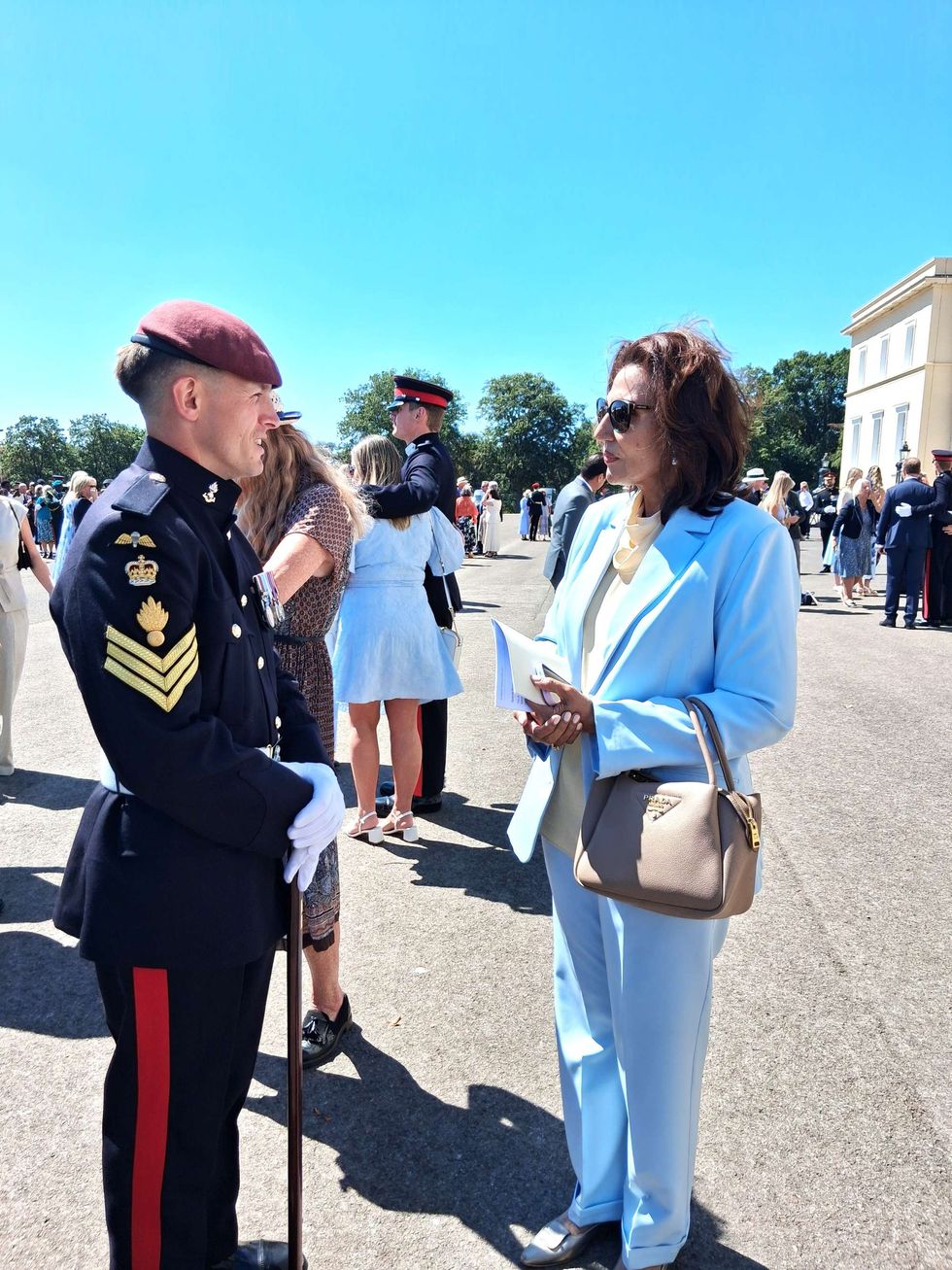 Staff Sergeant G Blackwell chatting informally to Rani Reena Kumari Amit Roy
Rani Reena found the Sovereign’s Parade, which she was attending for the first time, “very impressive – lovely”.
Rani Reena “belongs to the royal families of Labhowa and Sahaspur-Bilari, which are connected through marriage. Raja Pratap Singh Jhala of the Labhowa estate (in Uttar Pradesh’s Firozabad district) is married to Rani Reena Kumari (or Reena Singh), the daughter of the late Rani Indra Mohini and Dewan Major-General Misri Chand of Sahaspur-Bilari.”
Rani Reena said: “I was the one who instituted the award in 2011. My father was a King’s Commissioned Officer in the Indian army. He passed out in 1927, so next year they will be marking his centenary. I was very young when he died but I dug out all his records which I found, and then contacted Sandhurst. They went through his records and found he was one of their top cadets here (at Sandhurst). The prize is now given every year.”
As she learnt more about her father, she discovered “he loved Sandhurst. He had his best time here, the best days of his life here in the army. Sandhurst taught him a lot. It made me feel nice to come here, connecting with this place. He was a daredevil. He never flew for the army but he held a flying record for 17 years.”
She said that the Indian army has acquired many British values. “We were a colony of the British. The whole IMA (Indian Military Academy) is based on a very similar pattern (to Sandhurst).”
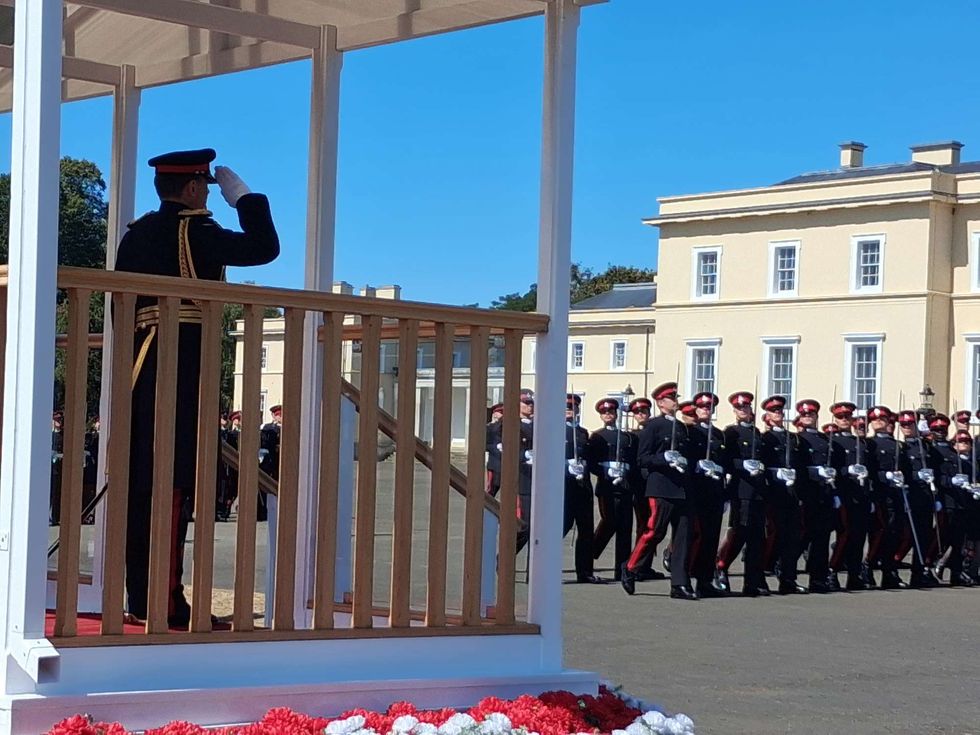 Gen Walker takes the salute Amit Roy
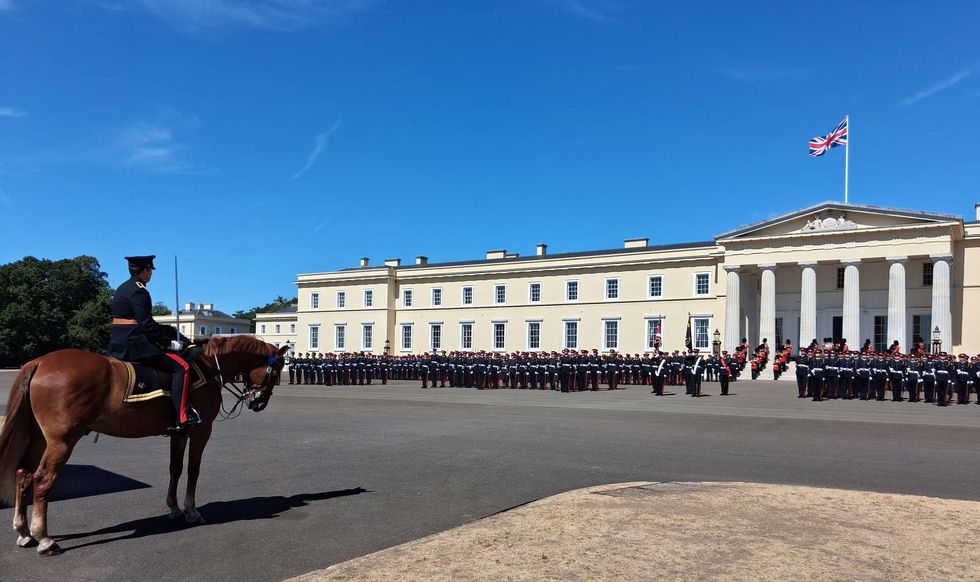 Cadets line up for inspection Amit Roy
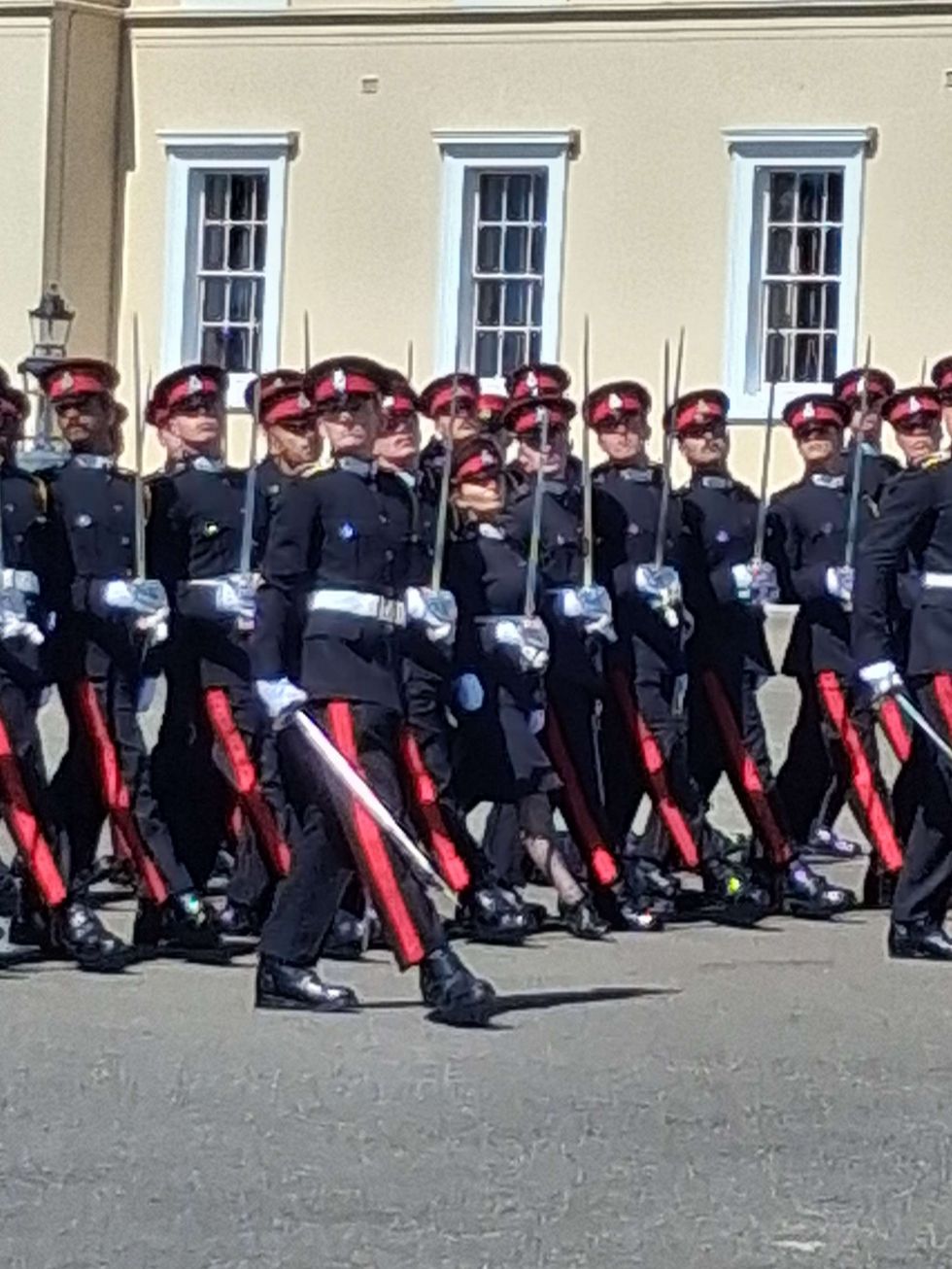 Cadets march with perfect timing Amit Roy
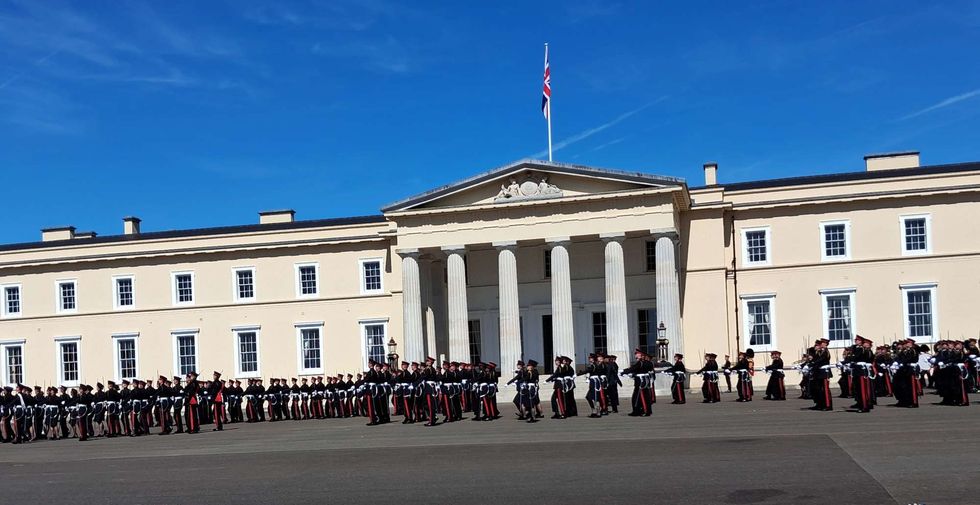 Cadets march to their positions Amit Roy
The motto of the Indian Military Academy is “Veerta aur Vivek”, which translates to “Valour and Wisdom”. At Sandhurst, it is “Serve to Lead”.
The IMA began life in 1922 when the Prince of Wales Royal Indian Military College was set up in Dehradun to prepare young Indians for admission to Sandhurst. It became the Indian Military Academy in 1932, and the Indian Military Rashtriya Indian Military College or just RIMC after independence but in 1960, the name, Indian Military Academy, was reinstated. A trainee on admission to IMA is referred to as a gentleman cadet (GC).
One reason for this is that “the IMA expects its graduates to uphold the highest moral and ethical values. it focuses on rigorous physical, mental, and leadership development to mould young men into commissioned military officers. It concentrates on character building, physical fitness, military tactics, and leadership under stress.”
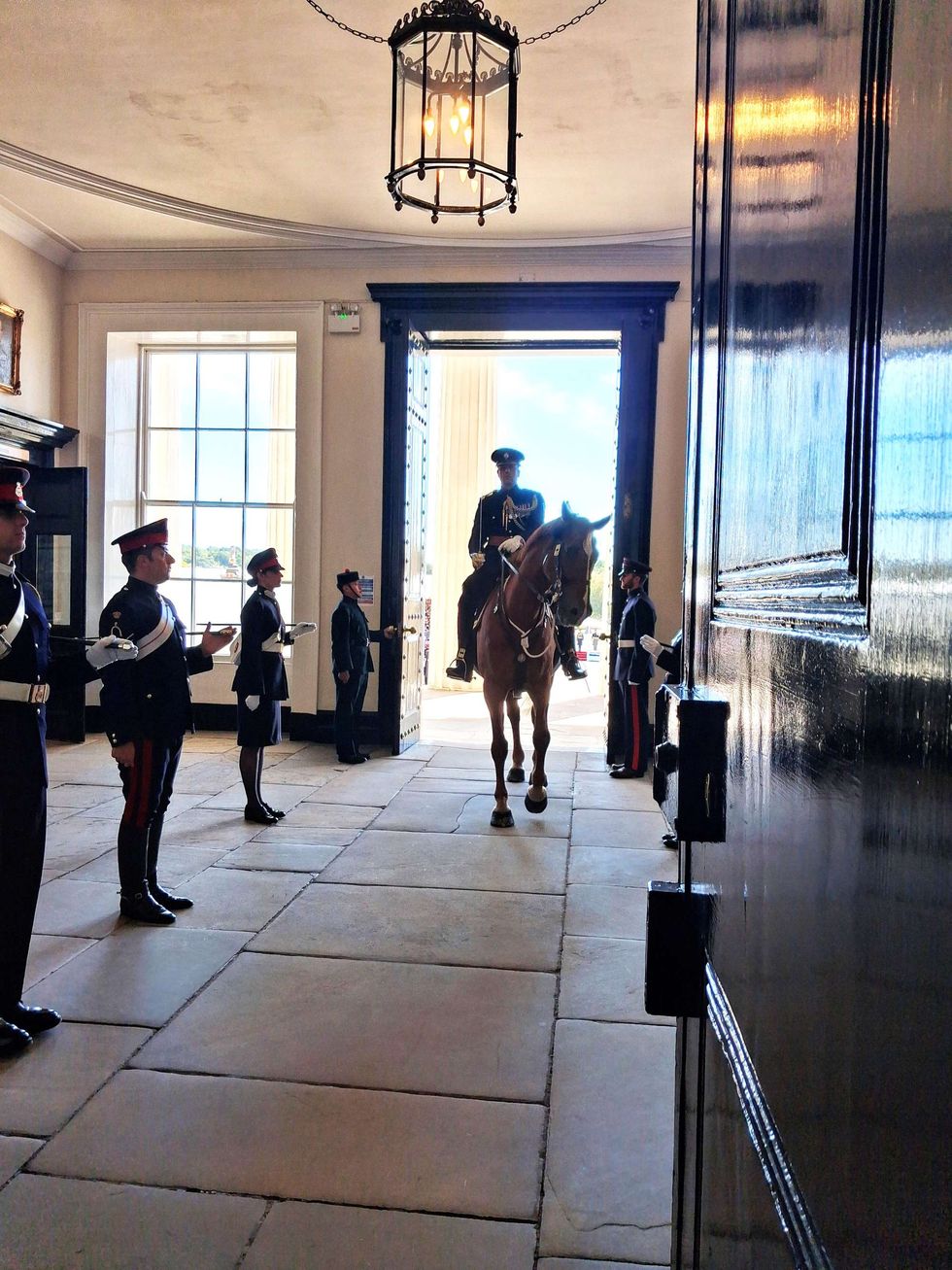 Gen Walker enters the academy on a horse Amit Roy
Inscribed in the oak panelling at the eastern entrance of the Chetwode Hall is the academy’s credo, excerpted from the speech of Field Marshal Chetwode at the inauguration of the IMA in 1932: “The safety, honour and welfare of your country come first, always and every time. The honour, welfare and comfort of the men you command come next. Your own ease, comfort, and safety come last, always and every time.”
The values inculcated into young officers at Sandhurst are almost identical.
On Friday at Sandhurst, in his stirring address to the Officer cadets, Gen Walker told the young men and women (there has been mixed training since 1993): “Our nations will need their soldiers. Those soldiers will need to be led, and that is because their duties will remain the most difficult, the most demanding, and the most dangerous to perform. And so it stands to reason that they deserve the best leaders. And that’s you.
“And you are, and you will be on orders, very soon. Our most inexperienced and youngest of soldiers will be ready and prepared to step forward out into the unknown and the uncertain, and they will do that because they trust you. And your first responsibility when you leave this place is to earn that trust just as quickly as you can, by being yourself, by being professional, by putting their interests before yours, by never asking them to do something that you are not prepared to do yourself.”
He began by saying: “Not only is it a tremendous honour for me to represent His Majesty the King at this most important waypoint in the lives of you, the young officer cadets on parade, but to do so in the company of your families and your soon-to-be regimental ones, as well as the very distinguished guests who have flown in from around the world, makes this a particularly special occasion.
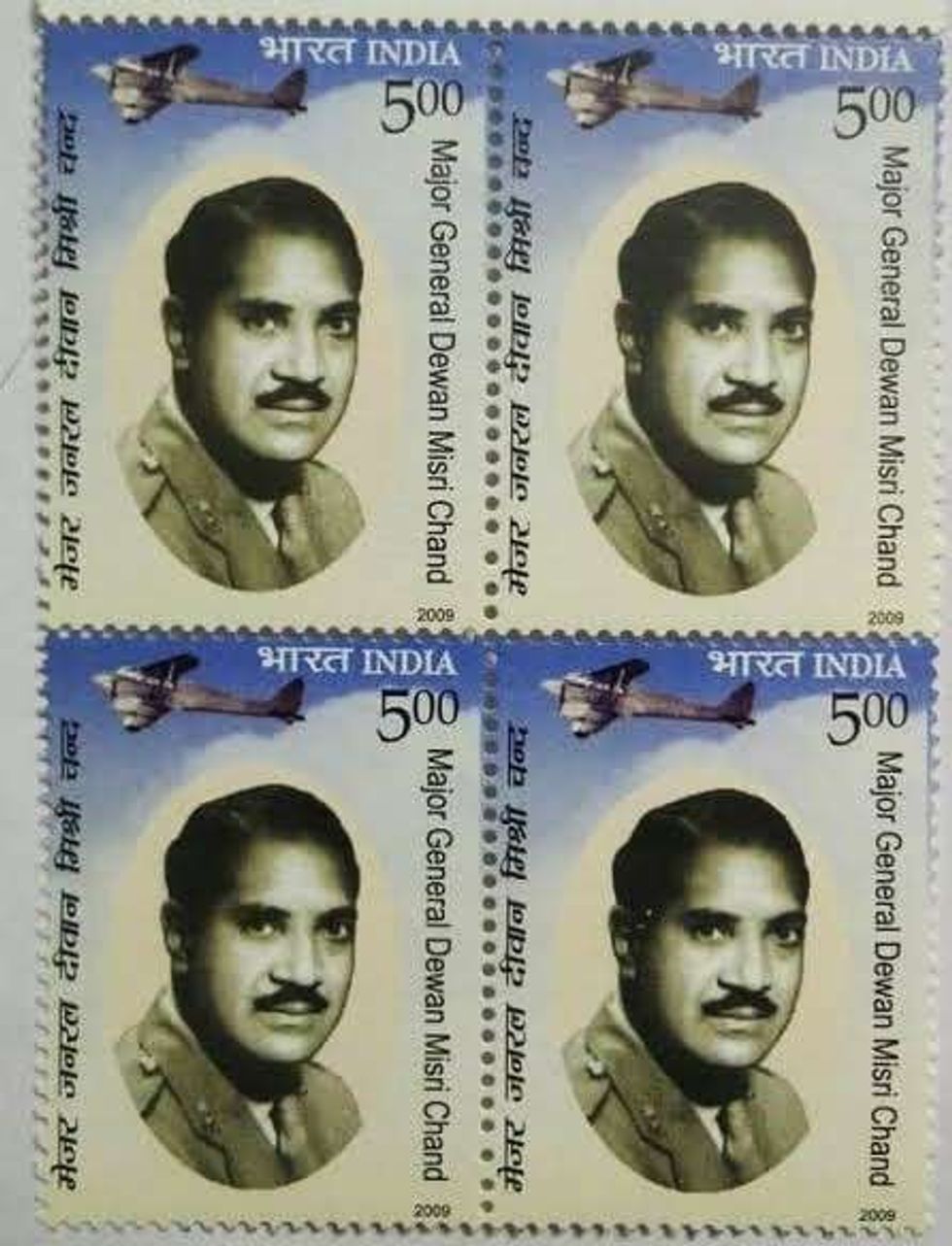 Maj Gen Dewan Misri Chand India stamp issued 2009. Amit Roy
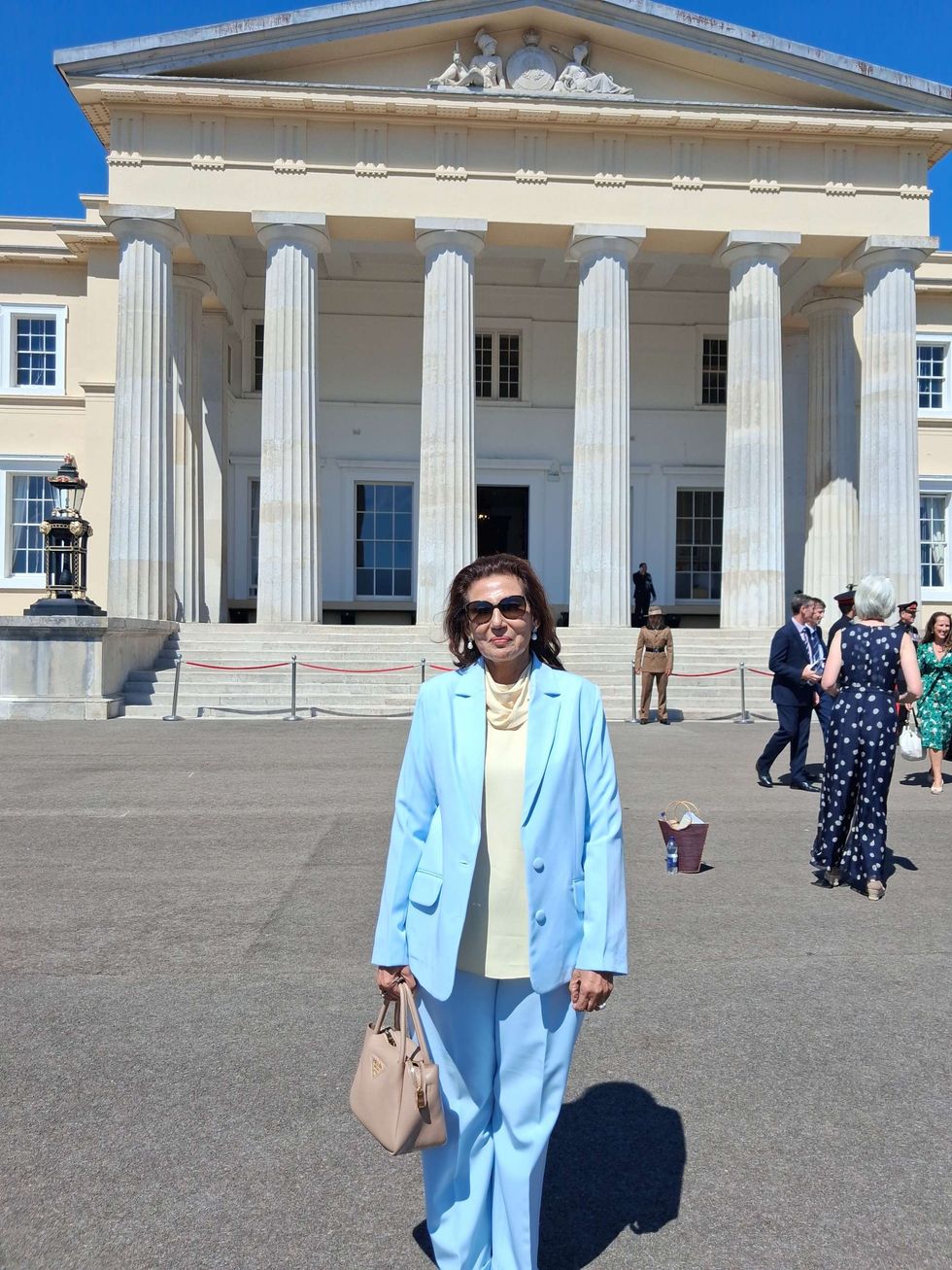 Rani Reena Kumari Amit Roy
“I’ve got to tell you that it feels like yesterday that I walked up those steps to the tunes of Auld Lang Syne……that makes it a rather alarming 33 years ago that I was where you are. But I’ll tell you this to the cadets on parade: I promise you that everything that I know now, if someone was to take me back to the start and give me my time again, I would go there without hesitation and do it all again.
“Now, to my contemporaries and I, many of whom are in the audience watching you follow in their footsteps, the world that we commissioned into was very different to yours. The spectre of general war against the Soviet Union and Russia was fading from our foreground. The scourge of terrorism was waning. The tanker wars in the Persian Gulf were over, and economic stability was returning to the oil markets. There was optimistic talk of peace dividends, and that meant that the armed forces in NATO were being disinvested in, and there was an optimistic view that the future was ours. We had won, and it was our job to keep it that way. Now the consequence was our operations and deployments tended to be under the banner of peace support and stabilisation.
“That said, still people tried to kill us. So we learned that there was nothing peaceful about keeping the peace, and that the competence in the basics of combat applied whenever and wherever we went. Here’s the thing: we had every confidence that it was a world in which we dominated militarily. And for reasons that are obvious to us all now, that world is fading fast.
“The spectre of general war is not. And there is little assurance or indeed entitlement that we hold the codes to perpetual military dominance. Now, this should not be a cause for despair. Indeed, I believe it is quite the opposite.
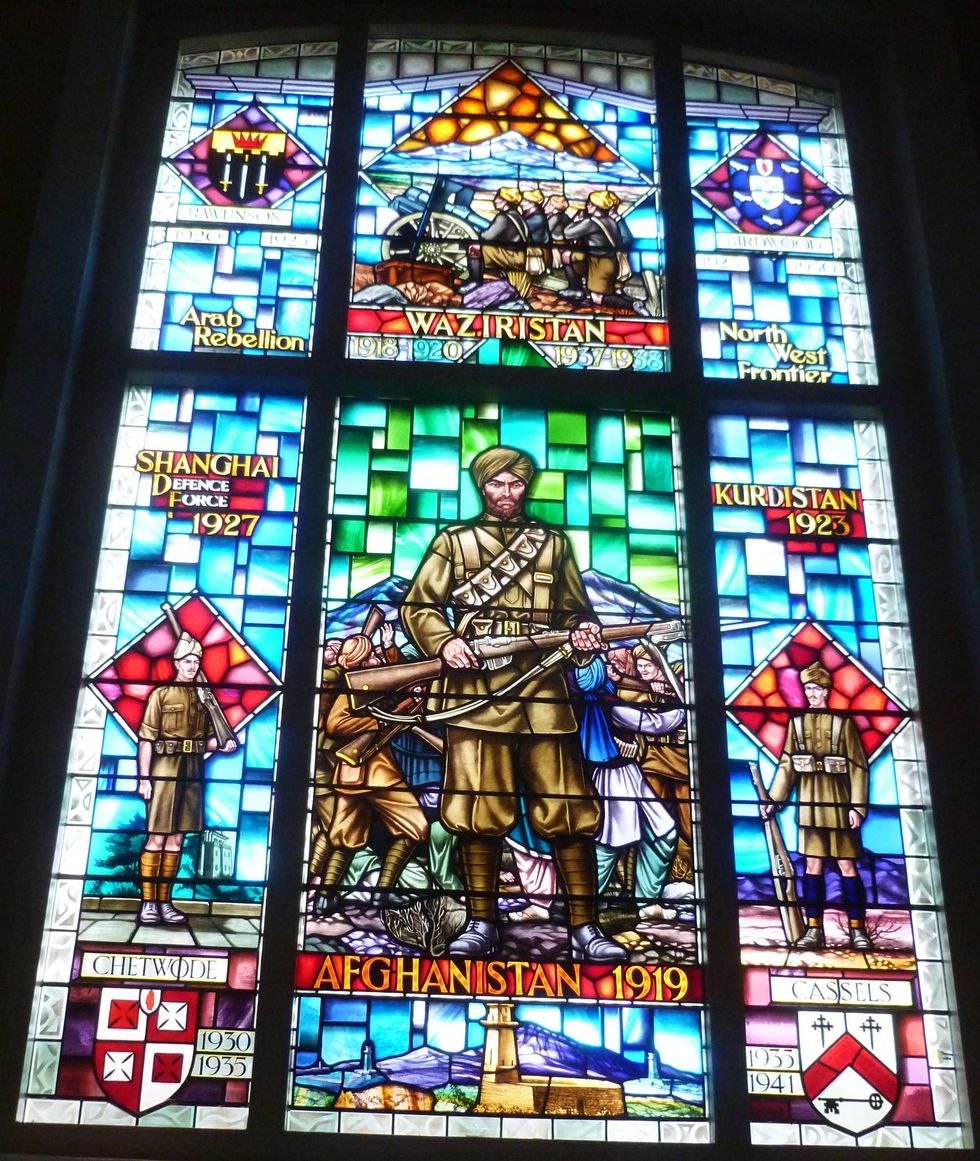 Window one in the Indian Memorial Room at SandhurstAmit Roy
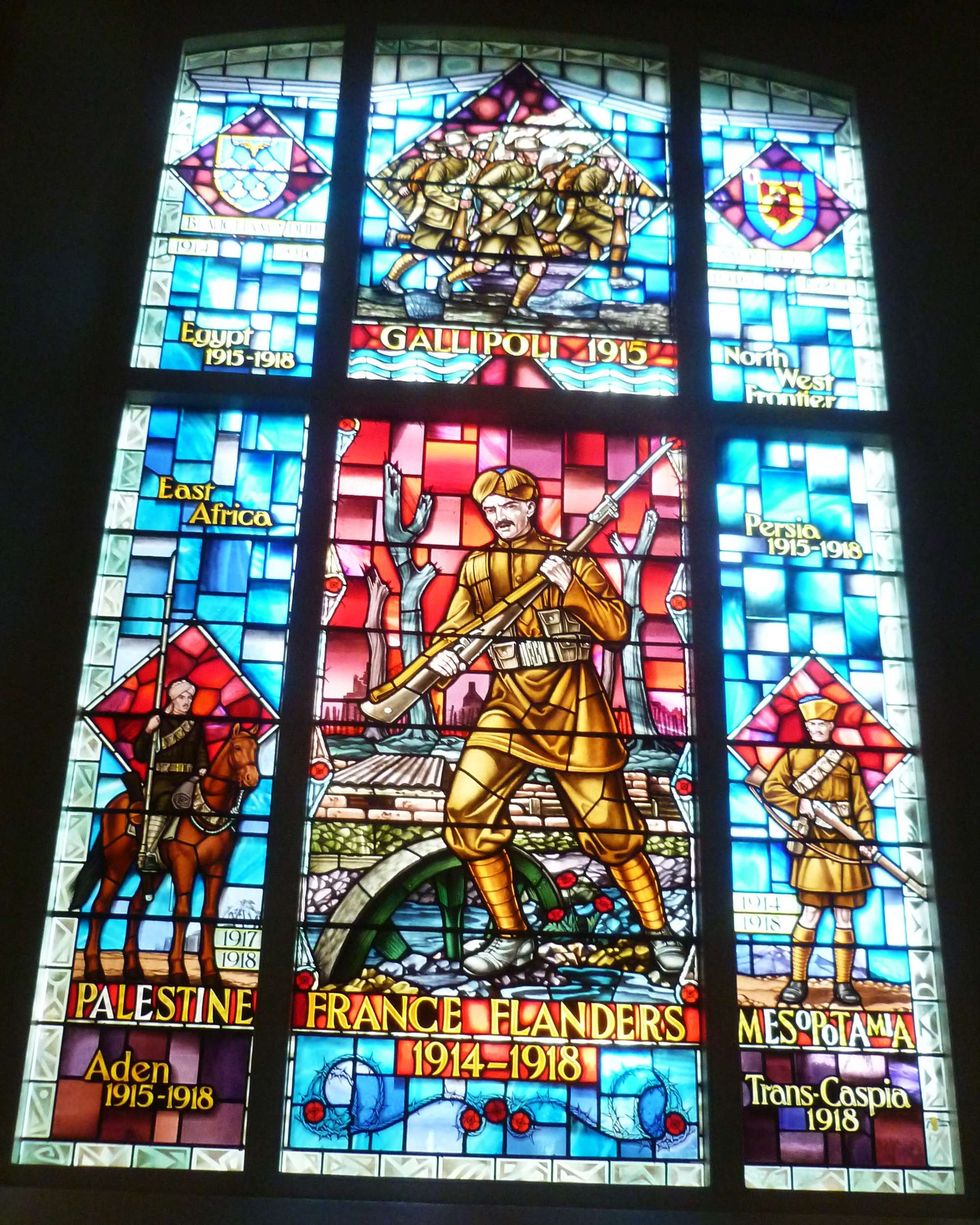 Window two in the Indian Memorial Room at SandhurstAmit Roy
“This is a time when collective defence and security becomes a national and an international effort, where investment in the armed forces is replacing disinvestment, where your operations, activities, and deployments will be done under the banner of real deterrence and hard defence, and where there is an absolute clarity to your purpose, which is to be ready to fight and win the nation’s battles, which we can, and we have done this before as this academy stands testament to, and we’ll do it again. Because it is at times like this that the very best of our nation steps up, and I see that happening every single day.
“And that is why I tell you this is a very consequential time for you to be starting your military careers, and it’s why my generation knows that the future is in good hands, and it’s also why I’m personally not going anywhere else for now. And for all of the changes in the way that you will fight your battles…there are some continuities that will not change.”
Gen Walker advised the officer cadets always to resect “the experience and advice of your non-commissioned officers. You have the character and the competence to do this from day one, week one, which, just to remind you, is tomorrow. We have every confidence that you will have the courage to make those important decisions under pressure when the time comes, and it will, and that you will always do the right thing, even when things start to go wrong around you, because that is the simplicity of the motto of this place: serve to lead, and we ask nothing more from you.
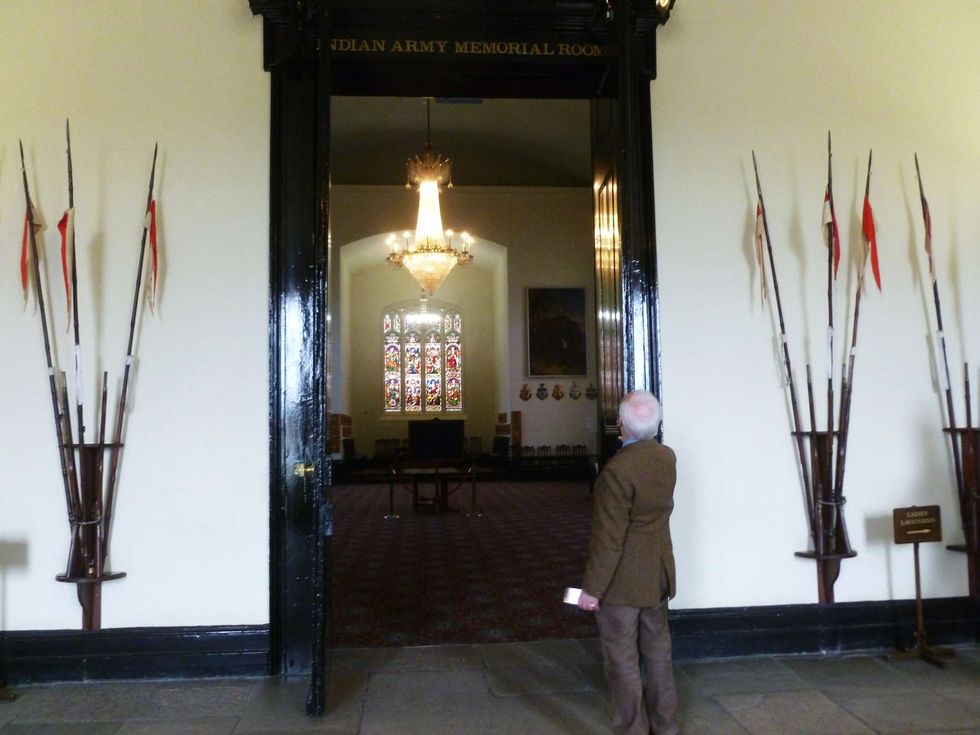 The Indian Memorial Room at Sandhurst Amit Roy
“That is now your creed, and it must define you in all that you do, not just in uniform or in your working hours. And I want to pay tribute and thank families and friends for making you who you are. And I would like them all to know that they are part of this much larger military family, and you are all most welcome.
“And I want to pay compliments to your directing staff and all the staff here at the Academy for helping turning you into commissioned officers, ready to serve King, country, and those nations represented on parade. So in summary, leading soldiers is an extraordinary privilege and responsibility. And that is why this parade is held in the name of the sovereign, and why you have met the standard to earn a commission from the sovereign personally. As of tomorrow, as in the words of the scroll of your commission, you will be considered trusted and most beloved by the sovereign. This is your day, and you’re ready. And I really think it’s time for you to march up those steps, through those doors, and into your future. So congratulations, and good luck.”
These are the values that 20-year-old Misri Chand would have taken away when he left Sandhurst nearly a century ago. Indeed, Sandhurst’s connections with India run very deep.
Sandhurst has an Indian Army Memorial Room, windows representing Indian soldiers and many paintings depicting battles in India. In July 2016, members of the British Sikh Association visited Sandhurst.




 The September 11 Memorial and Museum stands on the site of the former World Trade Centre in New York, where the twin towers were destroyed in the 2001 attacks Spencer Platt/Getty Images