
Highlights
- Suriya and Mamitha Baiju bring an easy charm to an unconventional romance
- The film avoids turning its age gap and surrogacy into predictable sources of conflict
- The first half balances comedy, romance and family drama effectively
- The second half becomes more emotional, stretched and predictable
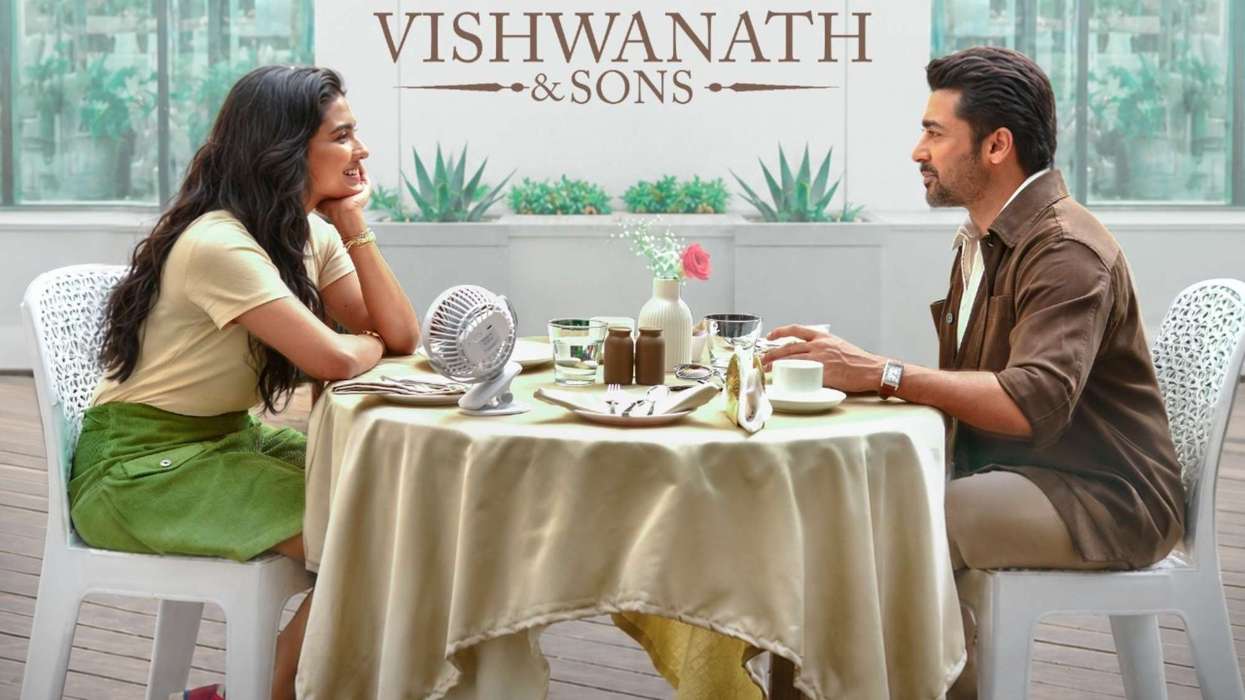
There is something refreshing about a family film that does not turn every difference between its central characters into a problem. Vishwanath And Sons finds much of its charm in the unusual pairing of Suriya and Mamitha Baiju, allowing their relationship to develop without making the age gap or surrogacy the obvious source of conflict.
Directed by Venky Atluri, the Tamil-Telugu drama follows Sanjay Vishwanath (Suriya), a wealthy businessman in his 40s who has deliberately stayed away from marriage. He lives with his mother Nirmala Devi (Radhika Sarathkumar), who repeatedly tries to find him a suitable partner. Sanjay is also an Olympic medal-winning pistol shooter, giving him a life beyond his business success.
Everything changes when Nirmala undergoes heart surgery and becomes concerned about the family's future and who will carry its legacy forward.
An unconventional romance that keeps things light
Sanjay is introduced to a doctor living in San Francisco through his cousin, and the two begin speaking regularly. A year later, however, Sanjay returns to Chennai with a baby boy, Abhay, whom he introduces as his son.
Abhay's illness brings 22-year-old Madanakameswari, known as Maddy Jay (Mamitha Baiju), into Sanjay's life. Her arrival raises questions about Sanjay's past, his resistance to marriage and his connection to Anjali (Raveena Tandon).
This is where the film is at its most entertaining. Sanjay and Maddy's interactions have an easy comic rhythm, with Mamitha bringing spontaneity and warmth to the relationship. Their age difference could easily have become the film's central conflict, but Atluri largely avoids that route.
The same applies to the surrogacy element. Rather than building the entire story around social judgement, the film uses it as part of the characters' circumstances and concentrates on their relationships instead.
The family portions work equally well. Radhika Sarathkumar's Nirmala is endearing without being reduced to the stereotypical overbearing mother, while Abhay's presence adds another layer of humour to the proceedings. This combination gives the first half a breezy quality that keeps the story engaging.
When the family drama overwhelms the romance
The film loses some of that balance in its second half. The comedy becomes less prominent and the narrative turns increasingly emotional, with the drama stretched beyond what the story requires.
The screenplay also becomes more predictable, making the second half feel considerably heavier than the first. The central relationship, which initially gives the film its freshness, takes a back seat as the family drama becomes more dominant.
There is also a subplot involving the casual acceptance of a man having multiple wives. Unlike the film's treatment of the age gap and surrogacy, this element feels unnecessary and raises questions that the story does not need to introduce.
Atluri does attempt to give the film a wider message, touching on the importance of farmers, respecting parents and the idea that money should not become the purpose of life. These themes fit the film's focus on family, although some are delivered rather directly.
Suriya is particularly effective as Sanjay. His performance is restrained and effortless, allowing him to balance the character's identities as a successful businessman, father and son. His comic timing also works well, especially during the lighter portions.
Mamitha Baiju is a strong match for him. Maddy is vulnerable without being passive, confident without becoming overbearing, and funny without turning into comic relief. Radhika Sarathkumar also brings her own warmth and presence to Nirmala.
Vishwanath And Sons works best when it trusts its unusual romance and lets its characters simply interact. The first half shows how enjoyable that approach can be. But once the family drama takes centre stage, the film becomes more conventional and loses some of the spark that made its central relationship interesting in the first place.
It is uneven, but the Suriya-Mamitha Baiju pairing gives the film enough warmth to make its better moments worth watching.