
Highlights:
- Bollywood horror has gone mainstream: bigger budgets, big stars, family audiences.
- Roots: Mahal (1949) to the Ramsay Brothers' cult run of the 1970s–80s.
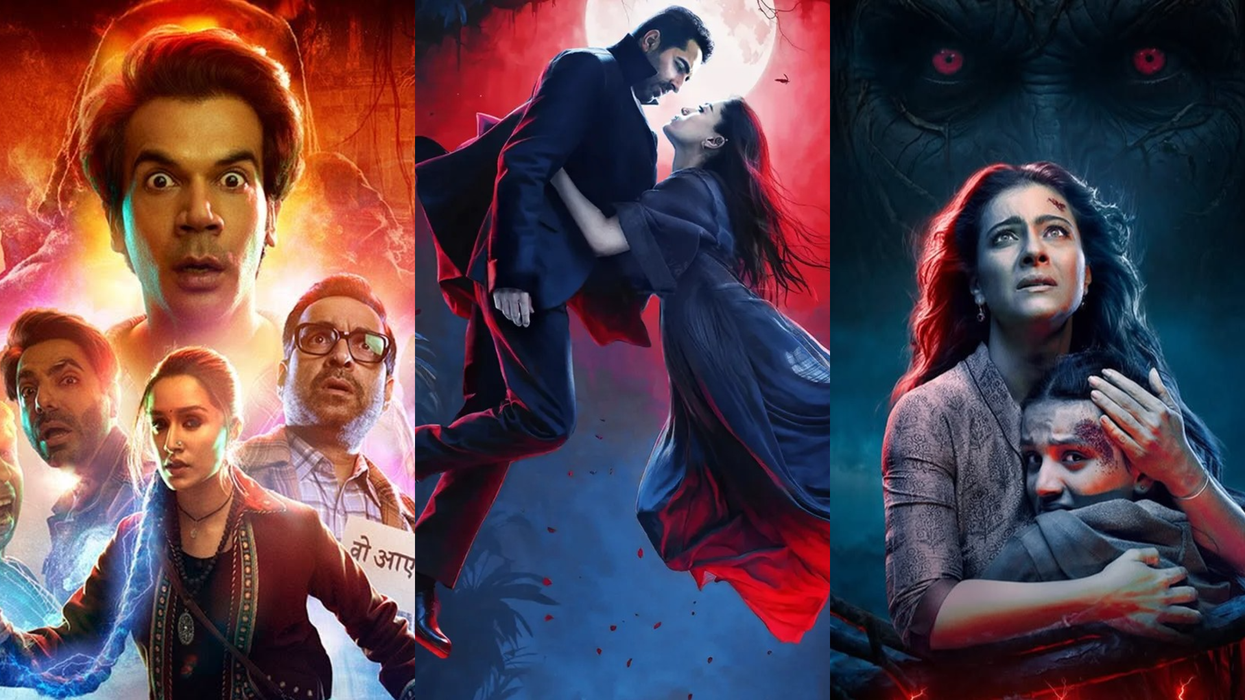
- Modern hits pair folklore with comedy, as seen in Tumbbad, Stree, Munjya, and now Thamma & Maa.
- Technical leap: prosthetics and CGI have "gone to the next level"; budgets now reach mainstream scale.
Remember when Bollywood horror meant creaky doors in a haunted haveli and a woman in a white sari? Forget it. We are in an era where a ghost's main ambition is not revenge, but finding a wife, where ancient mythology collides with suburban kitchens, and a mother's love can literally summon a goddess. The genre has exploded into the mainstream, and clearly everyone is buying a ticket.
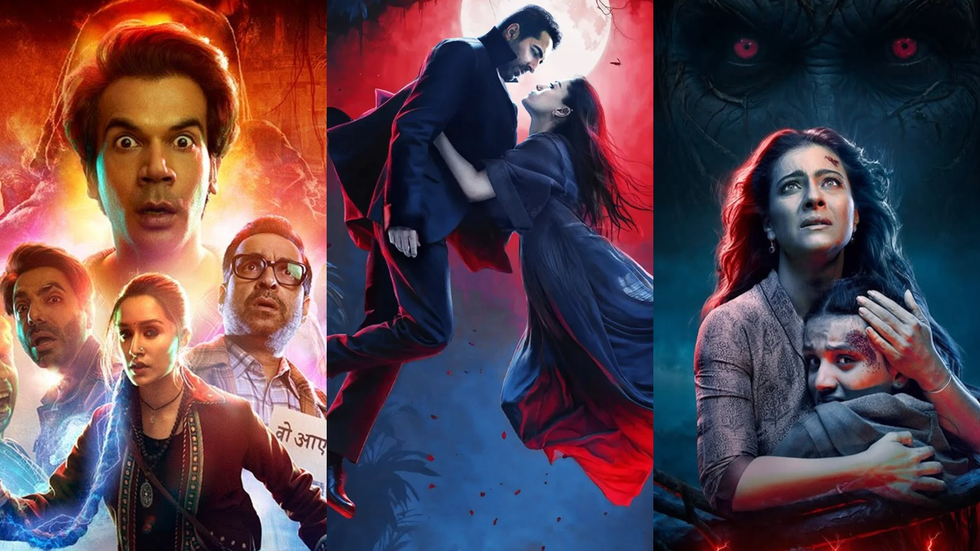 The horror revolution: How Bollywood turned ghosts, goddesses, and gore into gold Instagram/thammamovie/netflix_in/maddockfilms
Where did this all begin?
The lineage is long. Kamal Amrohi's Mahal (1949), a chilly, melodramatic original, is often cited as Hindi horror's starting point. The Ramsay Brothers then carried the torch through the 1970s and 80s, churning out roughly 30 low-budget creature features that made haunted havelis a cult staple. Their old formula was simple: lurid gore, sex, and cheap shocks because "blood and sex pulled crowds."
As Deepak Ramsay puts it, "There are new stories, fresh talent, and all of this is leading to a resurgence. Films that were once niche are turning out to be blockbusters."
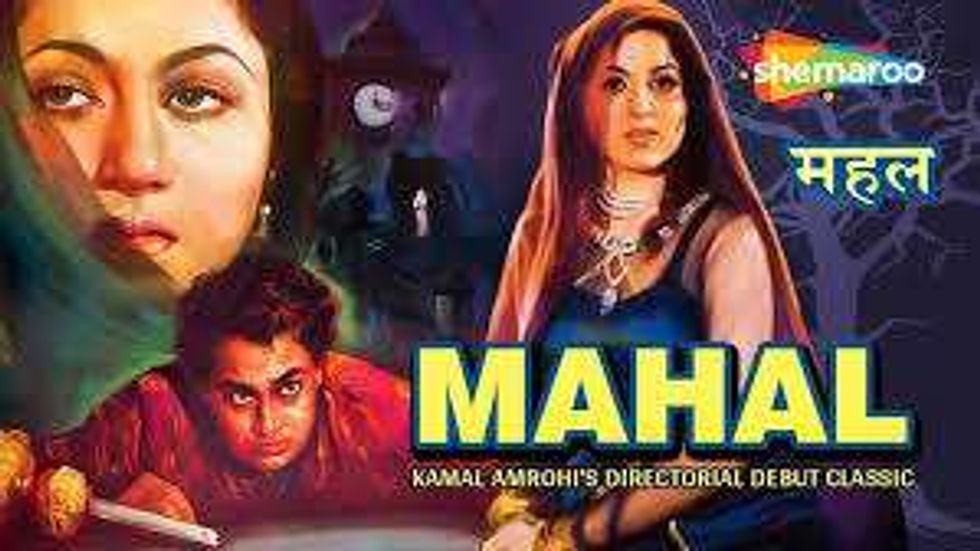 Kamal Amrohi's Mahal Youtube Screengrab
Why is Bollywood horror trending now?
Two things: smarter storytelling and better tech. Filmmakers stopped copying Western ghosts and started mining local myths, as seen in Tumbbad and Stree, and they mixed scares with laughs.
"The moment you get scared, your first reaction after the shock is to laugh," Ram Gopal Varma says, and that laugh is the neat trick, making scares sharable.
Aditya Sarpotdar explains the appeal bluntly: "There is a huge audience wanting to watch such movies. When catering to mass audiences, humour becomes key." His Munjya proved it: "Children pulled their parents to theatres." You cannot get more mainstream than that.
What's new on screen?
For decades, horror was the B-movie cousin no one wanted to acknowledge. Big stars stayed away, the effects were cheap, and an 'Adults' certificate locked out half the family audience. But not anymore. Maa (June 2025) saw Kajol in a mythic, bloody role that shocked and thrilled the audience. Thamma (Diwali 2025) is being billed as "a bloody love story" with Ayushmann Khurrana and Rashmika Mandanna in a vampire-romance that pairs fangs with dance numbers. Sequels and studio universes hits like Stree 2, Chhorii 2, and lighter fare like The Bhootnii keep the pipeline full.
Deepak Ramsay even points to the tech shift: "From as little as £20,000 to make a horror film, now budgets are closer to £7.2 million."
Veterans say prosthetics and CGI have "gone to the next level," so monsters finally look convincing.
Bollywood horror is having a moment, and it's brilliant
However, the quick, messy truth is the genre still trips; it suffers from a tonal wobble and silly beats, but it is honest. Horror has stopped hiding at midnight and is selling tickets at matinées. Directors joke about the next move. "I would love to see Shah Rukh Khan attempt horror," says Sarpotdar, but the point is clear. What was once pulpy trash has become a lively, profitable stretch of mainstream cinema. It is rough around the edges, loud, sometimes ridiculous, and that is exactly why it is working.