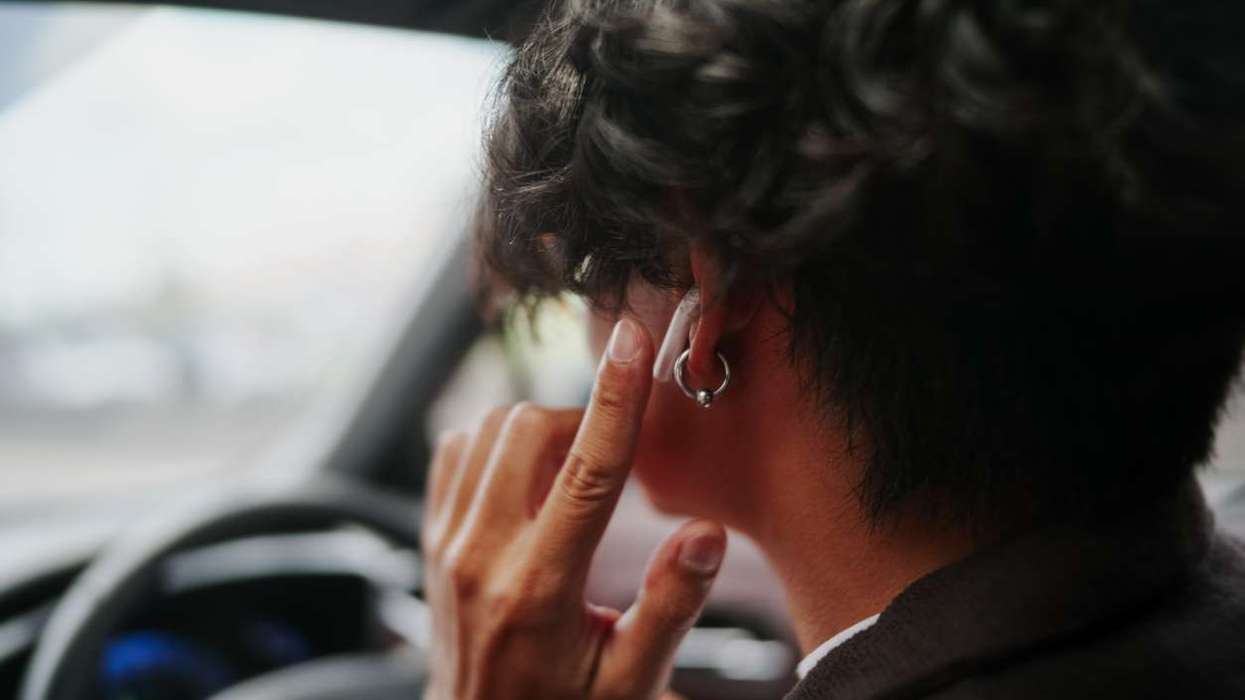

- A video found in pre-release macOS software appears to show how camera-equipped AirPods could work.
- The technology could allow AirPods to use visual intelligence to recognise objects and save information.
- Privacy concerns around cameras on wearable devices could become a major hurdle for Apple.
Would you be comfortable sitting next to someone whose AirPods could be watching the room? That may sound like a strange question, but it could become a real issue if Apple goes ahead with camera-equipped AirPods.
A video discovered in pre-release code for macOS Tahoe 26.7 appears to offer a glimpse of what Apple has in mind. In the clip, a man wearing AirPods picks up a book and looks at it while a female voice explains that, with visual intelligence, users could ask the system to save things they see for later.
The video was reportedly discovered by MacRumors in Apple's pre-release software. It is not clear whether it is finished marketing material or an internal or placeholder video, and the AirPods shown are unlikely to be the final camera-equipped version.
But the clip offers an intriguing clue about how Apple could use cameras in future AirPods.
What would a camera actually do?
Apple's Visual Intelligence feature currently uses an iPhone's camera to identify and understand things in the user's surroundings.
The apparent AirPods concept would take that idea somewhere else. Instead of reaching for a phone, a wearer could potentially look at something while the earbuds use their cameras to understand what is in front of them.
That could have practical uses. A user might be able to recognise an object, remember something they saw or interact with AI without taking their phone out.
But the same feature that makes the idea interesting could also make it uncomfortable for everyone else.
A camera in a pair of earbuds is much harder for another person to interpret than a smartphone being held up to take a photograph. If the cameras are small and the device is sitting in someone's ears, people nearby may not know whether they are being recorded, scanned or simply observed by an AI system.
And that is where Apple's potential problem begins.
Wearable cameras already have a trust problem
Camera-equipped wearables have faced growing scrutiny over privacy. Smart glasses, in particular, have attracted criticism because they can allow users to take photographs or record video without making it obvious to people nearby.
Some venues have responded by restricting their use, while public attitudes towards camera-equipped wearables have also become increasingly uncomfortable.
That could leave Apple facing a problem even if its AirPods cameras are designed primarily for visual recognition rather than recording video.
The presence of a camera may be enough to make people suspicious.
There is also the possibility that users could find ways to repurpose the hardware beyond what Apple intended. Smart glasses have already shown how wearable cameras can attract interest from people looking for ways around manufacturers' restrictions.
Apple has not confirmed that it is launching camera-equipped AirPods, and the discovery does not establish when such a product might arrive.
But if the company does eventually put cameras into AirPods, it may have to sell more than a new feature. It may have to convince everyone around the wearer that the technology can be trusted.
That could prove harder than teaching the earbuds to recognise a book.