
Highlights
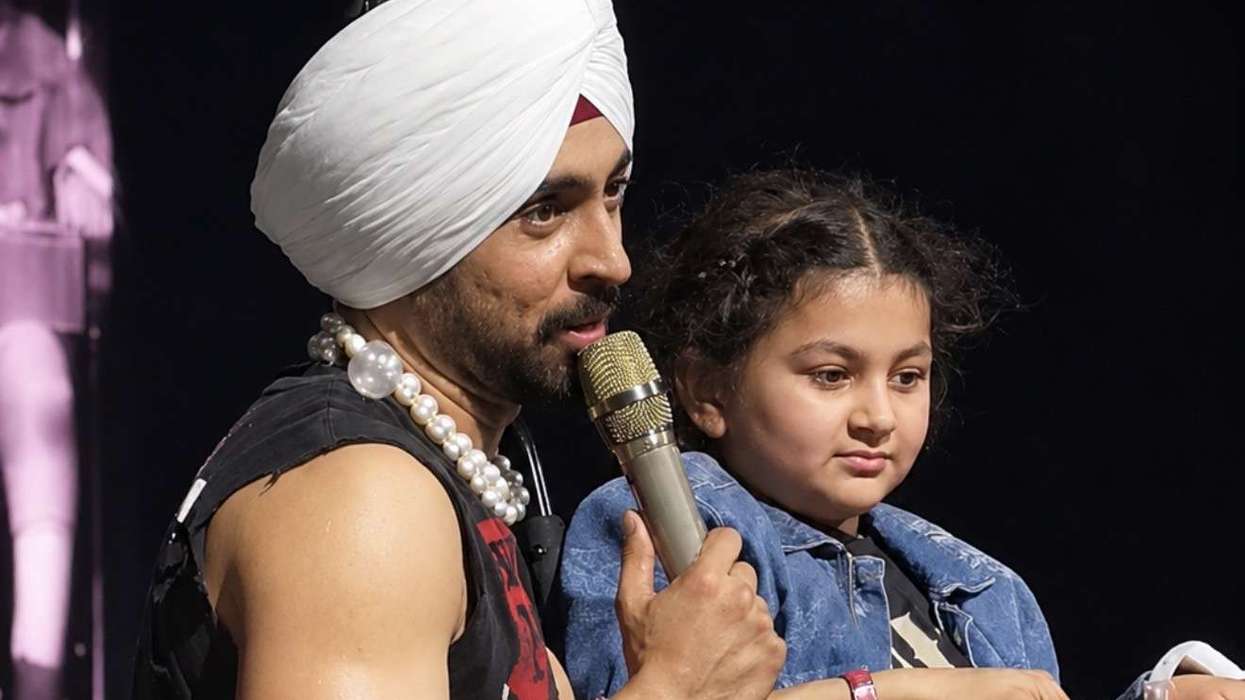
- Eight-year-old Jeevna Kaur Notay was invited on stage by Diljit Dosanjh after he spotted her dancing in the crowd at his Manchester concert.
- The Leeds girl, who was born with a congenital limb difference, told Eastern Eye about the emotional moment and why wearing her pagh on stage made her proud.
- Her father Surjeet Singh Notay explains how amputee football helped Jeevna find a community and why he hopes her story will encourage other families.
Eight-year-old Jeevna Kaur Notay arrived at Manchester’s Co-op Live on September 20 expecting to spend the evening watching her favourite singer, Diljit Dosanjh. Instead, the Leeds girl found herself on stage with the Punjabi superstar, microphone in hand, as thousands of people cheered her on. Jeevna had been dancing in the crowd when Diljit noticed her, waved at her and eventually invited her up. She proudly shouted his famous “Panjabi aa gaye oye!” before telling him she was from Leeds. The moment became one of the most memorable parts of the show when Diljit sat beside her and sang Ik Kudi.
For Jeevna, the experience was almost impossible to take in. “I felt really happy and excited,” she told Eastern Eye. “I couldn’t believe everyone was cheering for me!” When Diljit began singing Ik Kudi, she found herself wondering whether it was really happening. “I was just thinking, ‘Is this actually happening?!’” she said. “I was really happy and couldn’t stop smiling.”
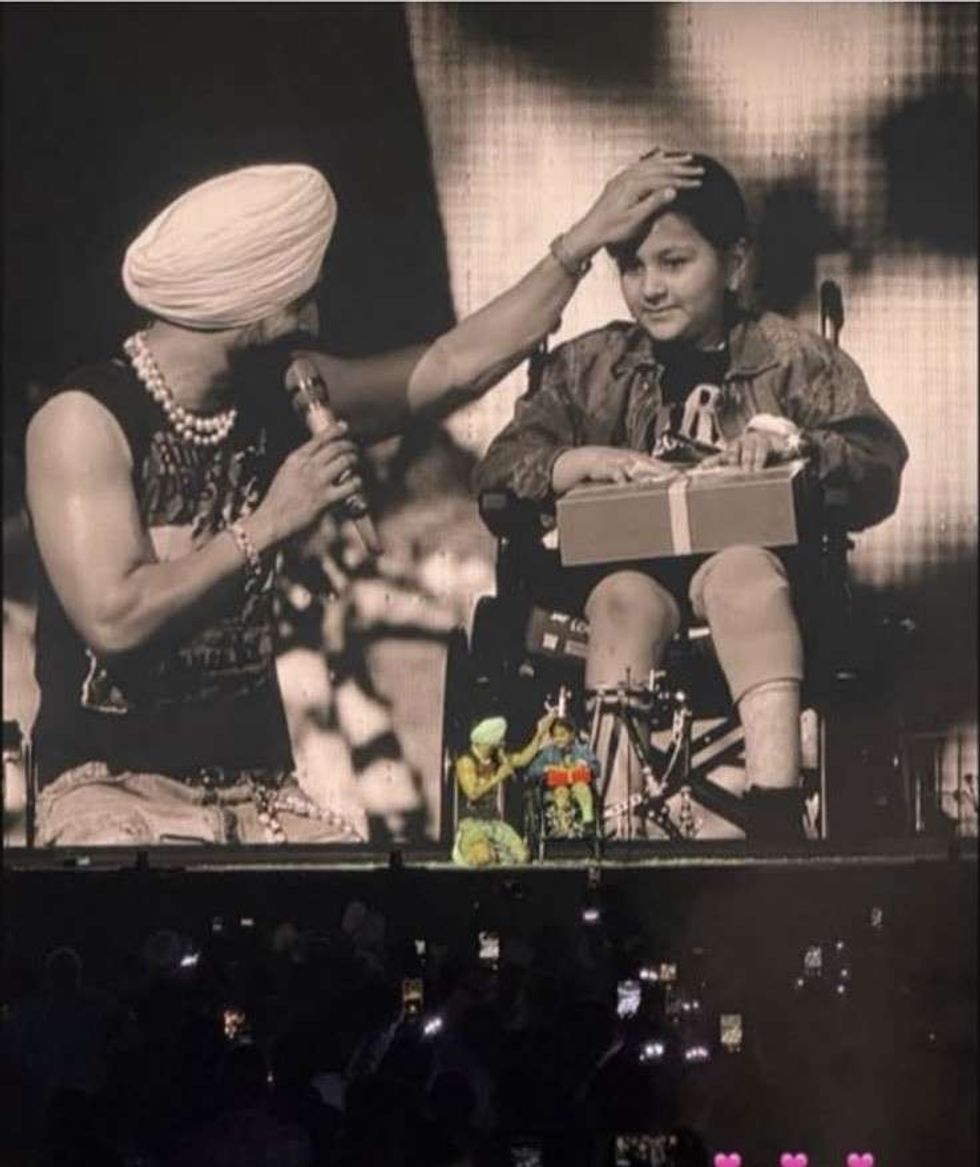 Jeevna was born with a congenital limb difference and lost her left foot when she was twoSurjeet Singh Notay
What made the moment particularly special was that Jeevna was wearing her pagh, something she says is closely tied to her identity. Standing on stage in it made her feel proud to be Punjabi and Sikh, while for her father, Surjeet Singh Notay, the significance went beyond meeting a singer his daughter admires. Watching Diljit notice Jeevna in the crowd gave him the feeling that his daughter was finally being seen for who she is. “Not only did Diljit see her, but the whole world has seen her,” Surjeet said. “That’s what made me think, wow, she has been seen.”
‘She’s not going to be defined by her disability’
Jeevna was born with a congenital limb difference and lost her left foot when she was two. At four, she underwent major reconstruction on her right leg and had to learn to walk again. She is now going through another period of treatment, using a frame on her leg and a wheelchair while she recovers, but Surjeet says the family has spent years making sure those challenges do not become the way she sees herself.
“For everything we’ve been working on for the last eight years, bringing her forward, making her confident,” he said, “when she steps out into the world on her own, me and my wife know we’ve done a really good job.” For him, the goal has always been to make sure Jeevna is recognised for the person she is rather than defined by her disability. “She’s not going to be defined by her disability. She’s going to be defined by who she is.”
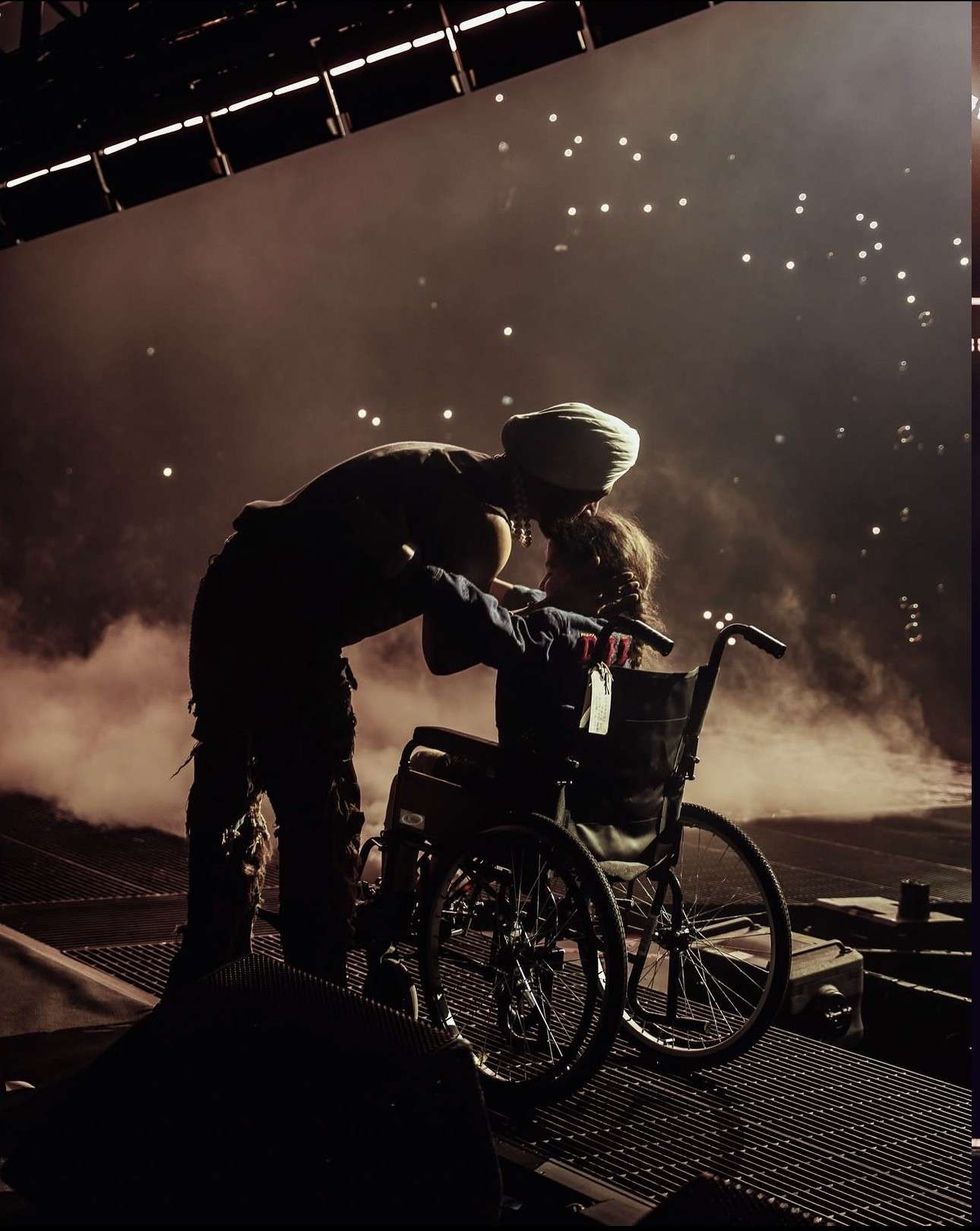 Jeevna has developed her own way of expressing that attitudeSurjeet Singh Notay
Jeevna has developed her own way of expressing that attitude. “I just keep going and don’t give up,” she said. “Like I always say, I’m not disabled, I’m differently abled.” The phrase has been part of her family’s vocabulary since before she was born. Surjeet recalled travelling with his wife in India, from Delhi towards Punjab, when he noticed the term “differently abled” being used in relation to access. He never expected it to become something so personal to his family, but the expression stayed with him and eventually became the language Jeevna chose for herself.
How football gave Jeevna a team of her own
Football has also become an important part of Jeevna’s life. She has loved the sport since she was four, and after her first frame came off, the hospital introduced the family to the England Amputee Football Association. Surjeet said the organisation’s junior programme gave Jeevna an opportunity to meet other children and families who understood experiences similar to hers, turning what could have been an isolating part of her childhood into a community.
“Joining them really helped us, because we were with like-minded people in the same situation as us,” he said. “We’ve really become like a family now, no matter what background you’re from.” Jeevna continues to play amputee football, and for Surjeet, being part of that team has been about much more than sport. It has given his daughter another space where she can simply be a child, meet people and take part without being defined by the medical challenges she has faced.
That same determination is what Surjeet saw on the Manchester stage. He often describes Jeevna as someone who gets knocked down and gets back up again, and she has a simple answer when asked how she keeps going: she does not give up. Her advice to another child who might be frightened to come forward and follow what they love is just as direct. “You’ve got this. Just be brave and believe in yourself, no matter what you do.”
‘There is light at the end of the tunnel’
The reaction to Jeevna’s appearance has made the experience bigger than one concert. After Diljit’s video spread online, Surjeet began hearing from parents of children with disabilities, including parents of autistic children, who wanted to connect with the family. For him, that response has been one of the most meaningful parts of what happened because he remembers what it felt like when his own family did not know where to turn.
“It gave a platform for other parents in my situation who may not be confident to come forward,” he said. “Jeevna will achieve, behind closed doors or in the open. That doesn’t matter to me. What matters is that I help somebody else in my position, because when I was there, I didn’t have anybody to help me.”
Surjeet hopes their experience can reassure parents who may be frightened about giving their children more independence. “We want to be the beacon for somebody. There is light at the end of the tunnel. It’s not the end of the world,” he said, urging parents to have faith and allow their children to experience life rather than letting fear dictate what they can do.
For Jeevna, though, the night in Manchester is also something much simpler: a childhood memory she will hopefully carry with her for years. Surjeet remembers being nine when his own father took him to see Michael Jackson at Wembley, an experience that has stayed with him decades later. Now he feels he has given his daughter a memory of her own.
“When I was nine years old, my father took me to see Michael Jackson at Wembley. That has stayed with me, and I’m 45 now,” he said. “This is something I’m giving her. I’ve given her this memory, and that’s like a medal for me.”
“Memories are worth more than material things,” he added. “I just want her to know that whatever she’s going through, she’s loved and blessed and cared for.”
And perhaps the best way to understand Jeevna is through the words she would offer another child facing their own challenges: “You’ve got this.”