
Highlights
- Nani’s physical transformation and committed performance are among the film’s biggest strengths
- The action, production design and cinematography add scale to Srikanth Odela’s ambitious film
- A familiar oppression-and-rebellion story, underwritten characters and an uneven second half hold it back
Nani and director Srikanth Odela reunite after Dasara with The Paradise, a much bigger and more ambitious film. Set in 1980s India, the story follows the Savaari, a marginalised tribe living without legal identity or citizenship under the control of a ruthless feudal ruler.
Nani plays Jadal, a man who initially survives within the system before becoming a key figure in the community’s fight for recognition and freedom. While the film has plenty of scale and strong technical elements, its familiar storyline prevents it from matching the promise of its lead performance.
Nani is the film’s biggest strength
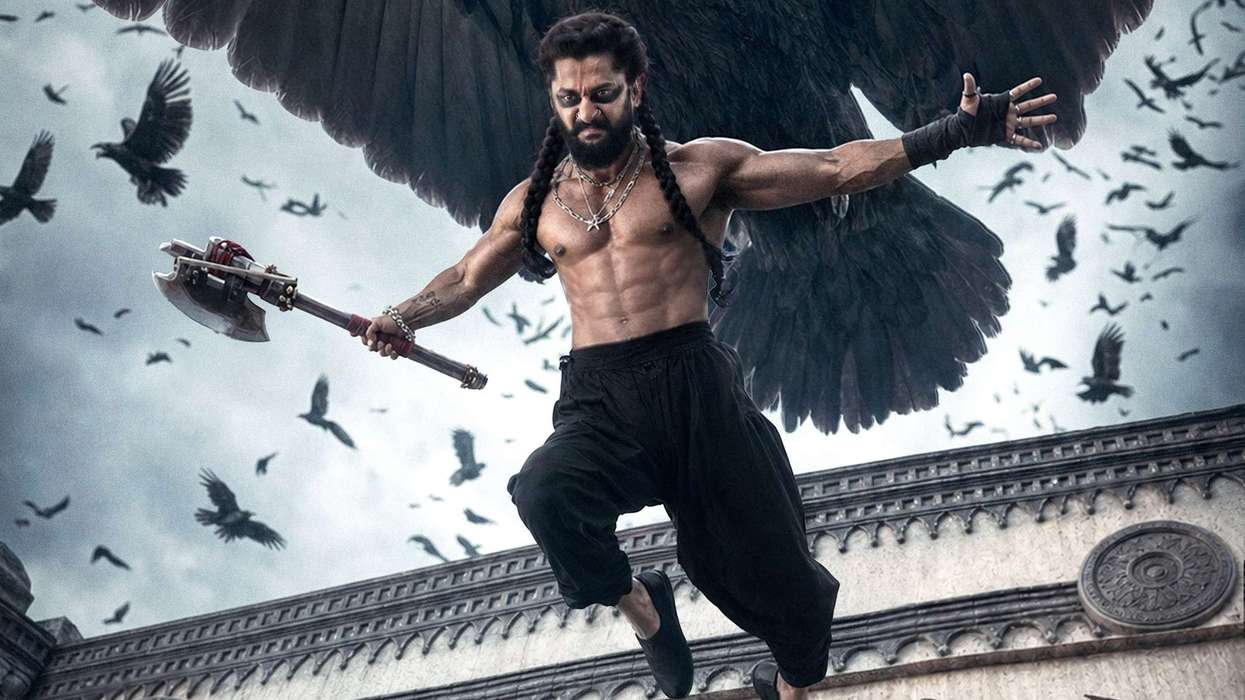
Nani undergoes a noticeable physical transformation for the role, with his braids, beard, leaner physique and changed gait helping establish Jadal as a man shaped by his surroundings.
His commitment is particularly evident in the action sequences, where he brings conviction and physicality to the character. The problem, according to the review, is not Nani but the screenplay surrounding him.
Mohan Babu plays Shikanja Malik, the feudal antagonist, but is given surprisingly little to work with despite his screen presence. Raghav Juyal is similarly underused as Vikram Malik, while Sampoornesh Babu has little opportunity to provide comic relief.
Kayadu Lohar’s character is also underwritten, while Sonali Kulkarni makes an impression as Jadal’s mother before her role becomes less significant.
The action looks bigger than the story
The film’s production values are among its strongest technical aspects. Avinash Kolla’s production design creates a detailed and convincing world, while CH Sai’s cinematography gives the film an expansive visual quality.
The action choreography also delivers, with the fight sequences offering variety and impact. Anirudh Ravichander’s songs work, although the background score does not always elevate the material.
However, technical ambition cannot fully compensate for the screenplay. The sound mixing makes some dialogue difficult to hear during the more chaotic action scenes, while the editing becomes uneven, particularly in the second half.
Abrupt transitions and repeated emotional beats affect the pacing, with the latter portions of the film struggling to maintain momentum.
A familiar story limits ‘The Paradise’
At the heart of the criticism is a story that feels familiar. The Paradise centres on an oppressed community, a tyrannical ruler, a reluctant hero and a violent rebellion — a template Indian cinema has explored many times.
The film could have overcome that familiarity with a fresh perspective, stronger character writing or an inventive narrative structure. Instead, the chapter-based storytelling does not add enough distinction, while several supporting characters remain underdeveloped.
The violence also becomes less effective as the story progresses because it is not always connected to moments that deepen the characters or their emotional journeys.
After Dasara, much of the interest around The Paradise was whether Odela could scale up without losing the rawness and specificity of his debut. The film delivers on scale, but its familiar storytelling and uneven screenplay prevent it from making the same impact.
Nani’s performance, the action and the impressive production design keep The Paradise afloat, but the film ultimately feels like an ambitious spectacle built around a story audiences have seen before.