
Highlights
- Waiting Hai turns India's familiar Tatkal ticket struggle into a quirky crime drama
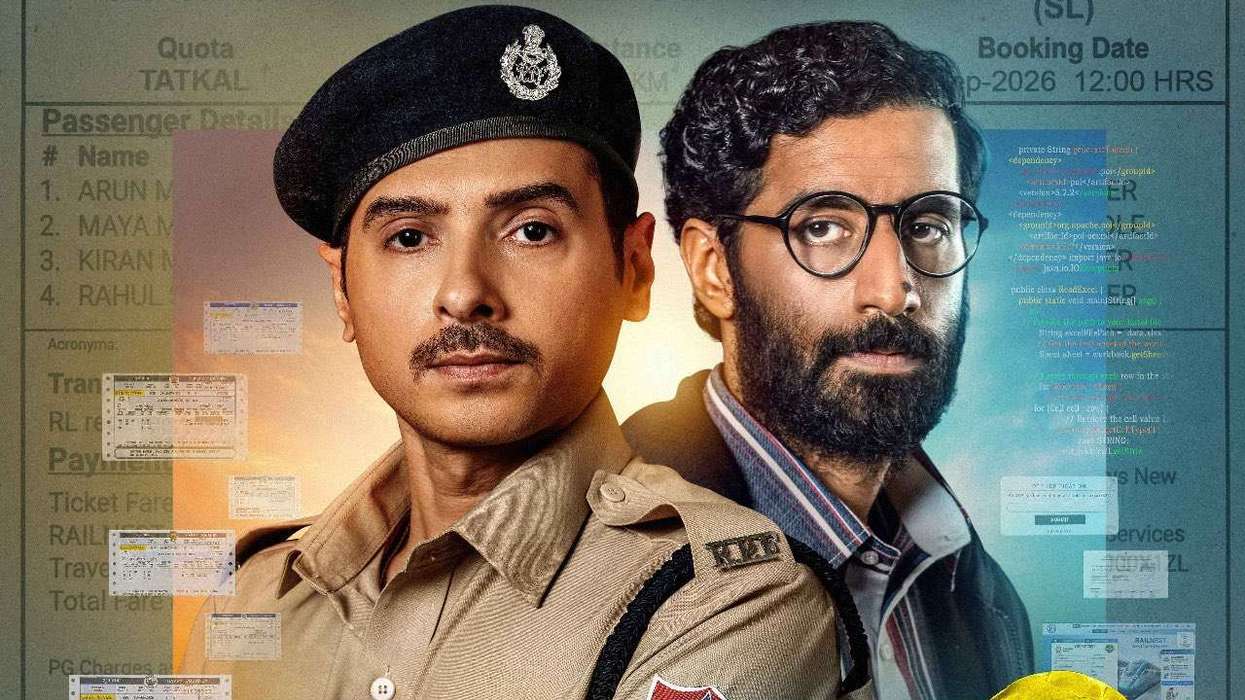
- Divyenndu Sharma and Bhuvan Arora deliver strong performances as a railway cop and a young hacker
- The series loses momentum because of uneven writing and distracting tonal shifts
Waiting Hai takes one of India's most familiar travel frustrations, the struggle to secure a confirmed Tatkal railway ticket, and turns it into a crime drama about technology, ambition and an expanding ticketing racket. Set in Patna, the seven-episode series brings together a rookie railway cop, a technically gifted student and a network of illegal agents. While the premise is engaging and the performances are convincing, inconsistent writing keeps the series from becoming the gripping scam thriller it could have been.
A familiar railway struggle gets a criminal twist
At the centre of the story is Sugam Mishra (Divyenndu Sharma), a newly recruited Railway Protection Force constable who is still learning the ropes of his profession and marriage. Soon after joining duty, Sugam notices something unusual. Ordinary passengers struggle to secure confirmed Tatkal tickets, while certain agents appear to get them with suspicious ease.
Keen to prove himself, earn the respect of his seniors and honour the memory of his late father, Sugam begins looking into the pattern. His investigation eventually takes him into the murky world of illegal ticketing.
His trail leads to Afroz Hamsa (Bhuvan Arora), a technically gifted computer student who discovers ways to manipulate the railway booking system. What begins as a relatively harmless attempt to impress a girl gradually becomes a much more lucrative opportunity.
After facing humiliation and rejection, Afroz is pulled deeper into the racket by his opportunistic uncle, Mama (Vijay Maurya). Before long, his technical skills make him part of a much larger network of illegal Tatkal agents.
Two characters caught on opposite sides
One of the more interesting aspects of Waiting Hai is that it does not reduce the story to a straightforward police-versus-criminal battle.
Sugam and Afroz are presented as parallel characters. Sugam enters the railway system wanting to do the right thing but soon discovers that working within a rigid hierarchy is not always straightforward. Afroz, meanwhile, starts out as an inexperienced youngster who sees his technical ability as a way to solve a personal problem before realising how much money it can make him.
Their journeys gradually move towards each other, giving the series a stronger emotional core than its scam premise initially suggests.
Bhuvan Arora delivers the more layered performance. Afroz's transformation from a naive and slightly awkward student into a confident operator is gradual and convincing. The character's emotional setbacks also prevent him from feeling like a conventional tech criminal.
Divyenndu Sharma is equally effective as Sugam. He brings an appealing vulnerability to a policeman who does not have all the answers. His problems with his superiors and attempts to balance his professional responsibilities with married life make him more relatable.
The supporting cast adds further depth. Harshita Gaur gives Princy enough agency to ensure she is not reduced to simply being the protagonist's wife, while Kumud Mishra brings quiet intensity to his role. The domestic portions also provide some warmth and humour between the investigation's more serious moments.
When the writing loses the plot
The central Tatkal scam is compelling enough to sustain the story, but the writing is not always as assured.
Several digressions feel disconnected from the main investigation, while some sequences seem closer to standalone social-media sketches than organic parts of the narrative. The tonal shifts are particularly noticeable. An emotionally grounded scene can suddenly give way to juvenile comedy, disrupting the tension and momentum.
The pacing also takes time to settle. The series becomes more engaging in its latter half, when Sugam's investigation gathers pace and Afroz's transformation starts carrying greater weight.
Once the two narrative strands begin moving towards each other, Waiting Hai finds some of the urgency that its premise promises from the beginning.
Ultimately, Waiting Hai has a strong and relatable idea at its centre. Turning the frustration of Tatkal ticket booking into a story about technology, corruption and ambition gives the series plenty of potential.
Divyenndu Sharma and Bhuvan Arora make the central characters worth following, and there is enough humour, emotion and suspense to keep the story moving. But uneven writing, unnecessary diversions and fluctuating tone prevent the series from becoming the sharp scam drama it could have been.