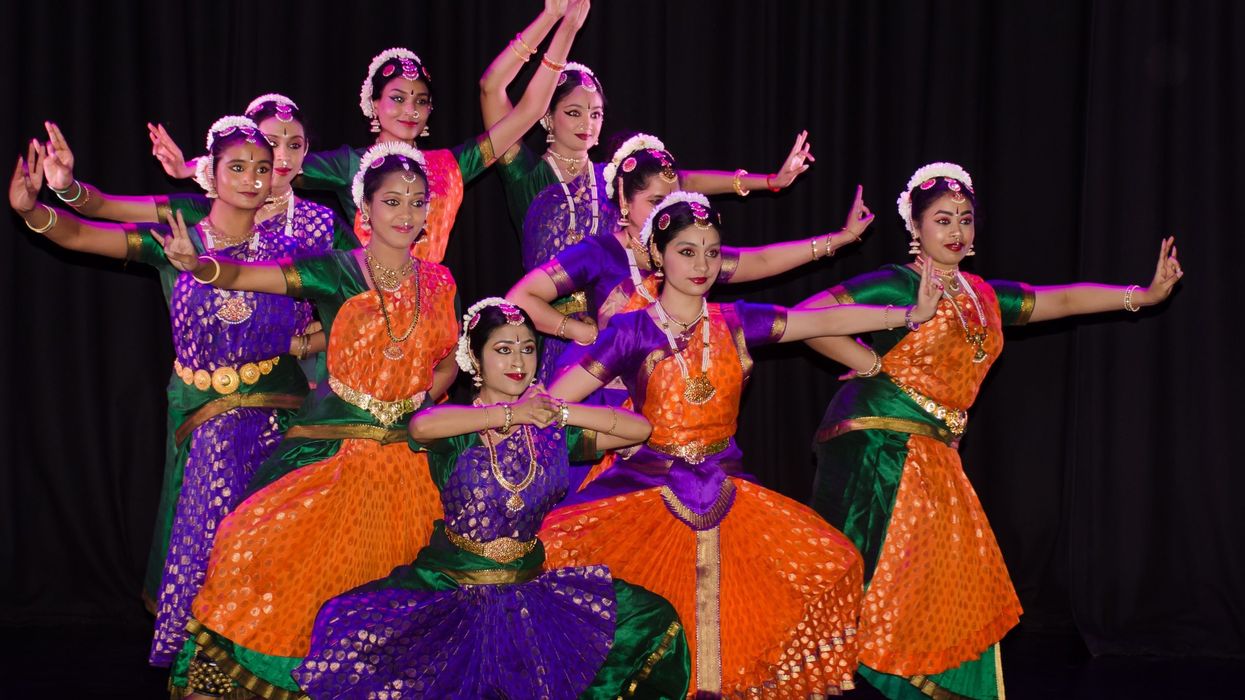

The year-long celebration of the Golden Jubilee of the Bharatiya Vidya Bhavan London was heralded on the 21st of May 2022.
As the largest institute of Indian Arts and Culture in the UK, The Bhavan has an illustrious history of hosting world renowned artists for performances and workshops, supporting emerging talents, and cultivating the next generation of artists and cultural leaders through Arts and Educational classes.
From its humble beginnings in a small space on Oxford Street in 1972 with around 90 students, The Bhavan has grown in strength and holds classes in over 23 subjects with 800 students, over 100 performances in a year, and an ongoing dialogue with the current generation of artists and thinkers. Its current location in West Kensington consists of a world class auditorium, space for classes and workshop hires, as well as an Art gallery.
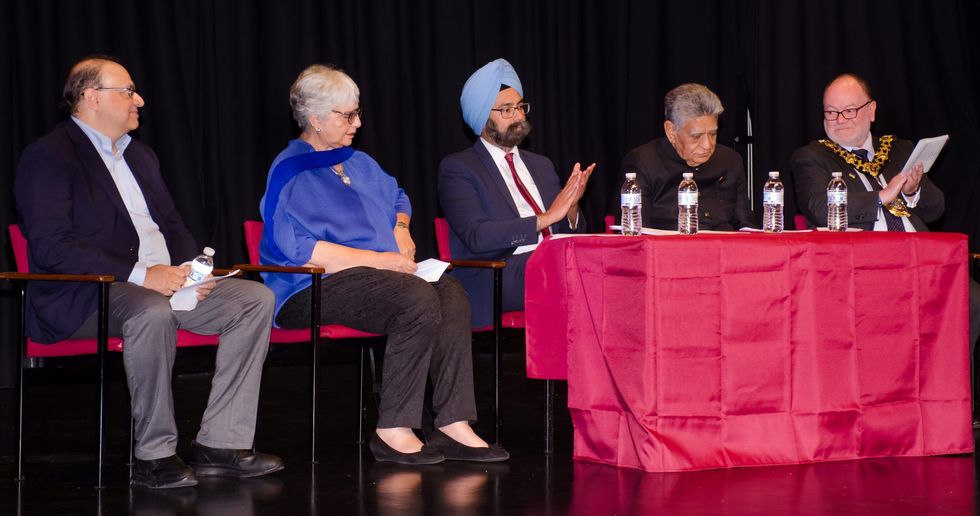 (L-R) Sri Subhanu Saxena, Baroness Usha Prashar CBE, Sri Manmeet Singh Narang, Sri Joginder Sanger, and Cllr. P J Murphy
The morning session began with a prayer by their Executive Director Dr. Mattur Nandakumar. This was followed by beautiful inaugural renditions by The Bhavan’s music students - Bengali music under the tutelage of resident teacher Smt. Sajali Roy, Karnatic vocal trained by Sri. Sampath Kumarachary Daruri, and Hindustani vocal trained by Smt. Chandrima Misra.
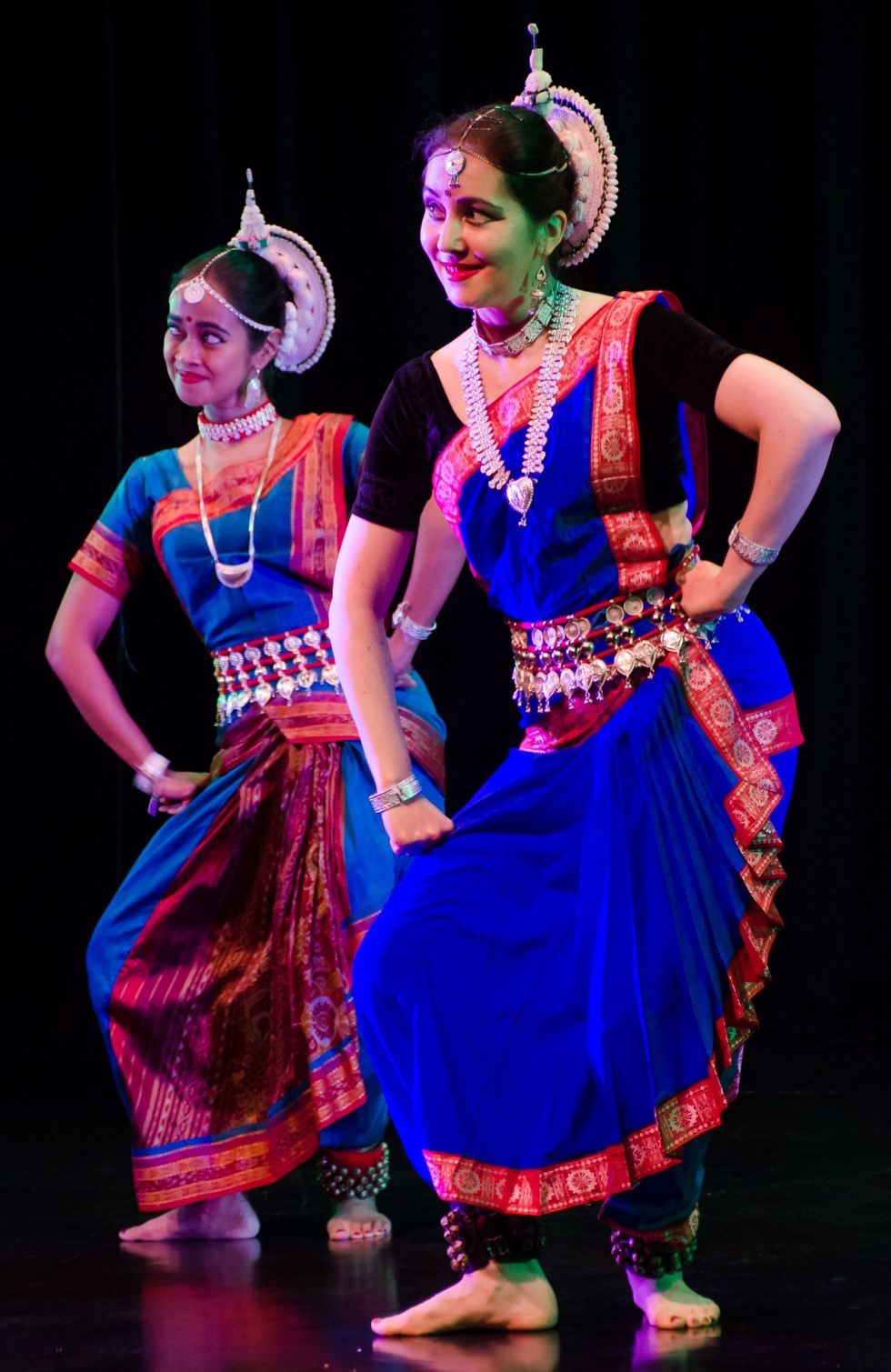 Odissi performance
The Bhavan’s activities were portrayed through a short film which gave an insight into The Bhavan’s classes, events and Bhavan’s students and their achievements. The next film was a walk down memory lane and took the audience through a journey of The Bhavan over the decades through its newsletter headlines.
Mr. Patrick Holden, The Bhavan’s Development Director, spoke briefly about the future of The Bhavan, and outlined the vision for the coming decades. It was followed by the main segment of the day where the Chief Guest and Guests of Honour addressed the gathering.
The Bhavan’s Chairman Mr. Joginder Sanger gave the welcome address and reminisced about his association with The Bhavan. Cllr. P J Murphy (Mayor of Hammersmith and Fulham), and Baroness Usha Prashar CBE (Honorary president UK community Foundation) addressed the audience and spoke about the important work of The Bhavan in promoting the cultural diversity of India and contributing to the diversity of London.
The main address was by Manmeet Singh Narang, Minister (Coordination), High Commission of India who was the Chief Guest of the morning. Bhavan’s Executive Committee Member Sri. Subhanu Saxena has given the Vote of Thanks. The contributions of Bhavan's founder Dr. K M Munshi, Dalalji, and Mathurji were fondly remembered.
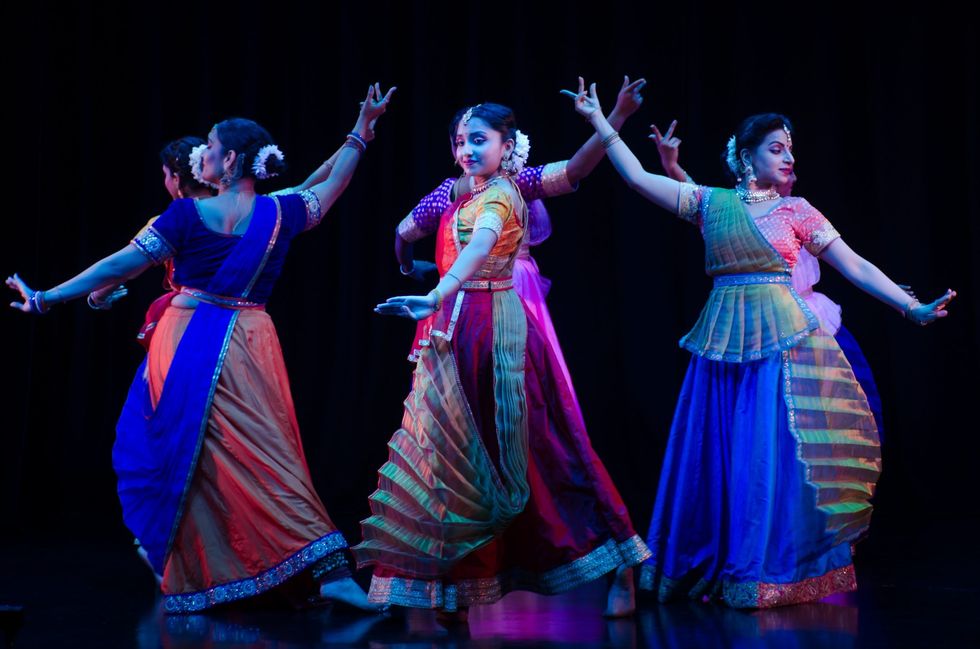 Kathak performance
The morning session closed with beautiful performances by The Bhavan’s dance students. The audience witnessed Odissi (trained by resident teacher Katrina Rute), Kathak (trained by Dhiya Arora and Amun Bhachu), and Bharathanatyam (trained by Prakash Yadagudde).
The programme was followed by lunch for all the guests. The evening session saw a scintillating performance by Bharatanatyam Dancer/choreographer Rukmini Vijaykumar.






 Curator Emma Slocombe with ikat robes and arabachi coats in the Peter the Great Room in Blickling Hall Amit Roy
 View of the entrance to Blickling Hall on a rainy autumn dayAmit Roy
 Kente cloth from Ghana in the Long Gallery in Blickling Hall
 Decoration in the Great Hall at Blickling Hall Amit Roy
 Palampore fragment made in coastal south-east India in the Brown Room in Blickling Hall Amit Roy
 Bed valance dating from early 1700s in the Italian Print Room at Blickling Hall Amit Roy
 Indian inspired fabric draped on sofas in the South Drawing Room in Blickling Hall Amit Roy
 Indian inspired fabric draped on sofas in the South Drawing Room with Indian carpet in Blickling Hall Amit Roy
 Karun Thakar has picked out the geometric patterns in the bookcase and the Kente cloth in the Long Gallery in Blickling Hall Amit Roy
 Large tapestry depicting Peter the Great defeating the Swedish army at the Battle of Poltava in 1709 Amit Roy
 ikat robes and arabachi coats in the Peter the Great Room in Blickling Hall Amit Roy
 Baghs and kanthas made by women provide contrast to the men only portraits in the Great Hall at Blickling Hall Amit Roy
 Baghs and kanthas in the entrance Great Hall at Blickling Hall Amit Roy
 Baghs and Kanthas in the Great Hall in harmony with stained glass window at Blickling Hall Amit Roy
 Kimonos reflect Japanese influence in Upper Ante Room in Blickling Hall Amit Roy
 Kimono in Upper Ante Room in Blickling Hall
 A view of the Palace and fort at Agra shows romantic side of India Amit Roy
 Blickling Hall Amit Roy
 Table carpet, European 1670-1680 Amit Roy
 Unfinished 17th century Italian embroidery in the Print Room at Blickling Hall Amit Roy
 Picture of Kashmir shows a romantic view of India Amit Roy
 A panel of Ashburnham bed hangings made in Gujarat for sale in Europe in the Brown Room in Blickling Hall Amit Roy
 Colcha made in the 1600s by women in Bengal for the Portuguese market in the Long Gallery at Blickling Hall Amit Roy




