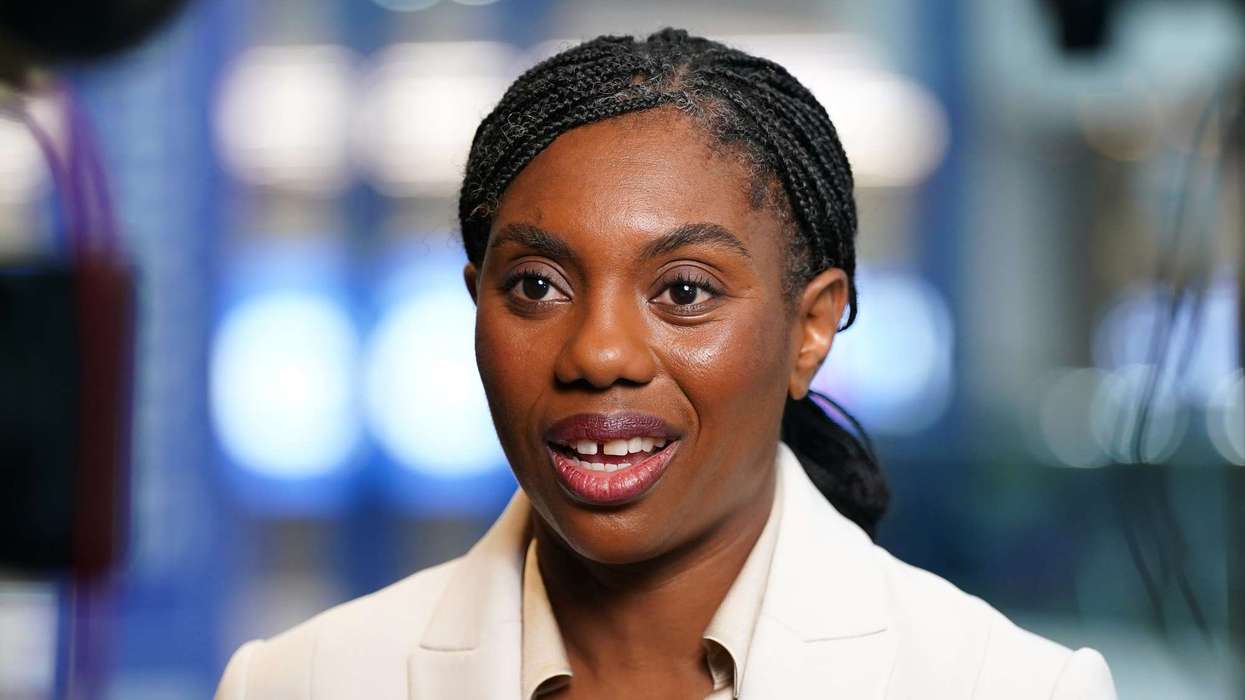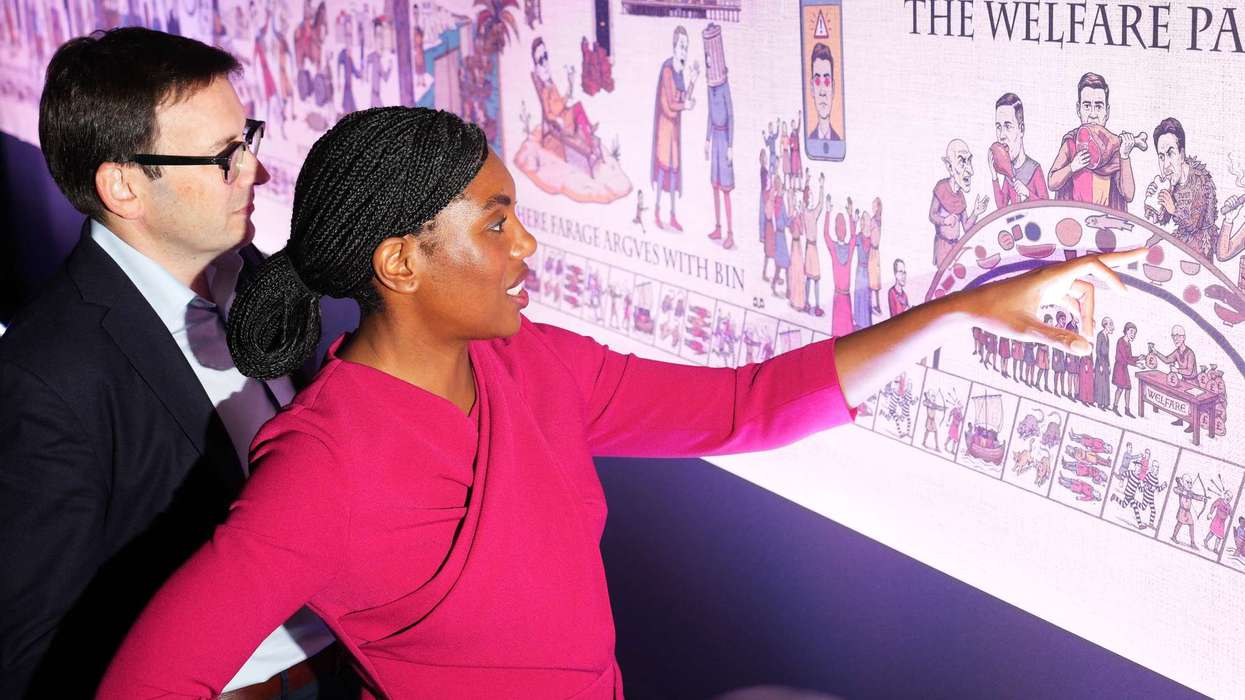

THE Tory tribe gathering for the party's annual conference are sure this has been a good year for party leader Kemi Badenoch. The Birmingham Tapestry – a 25-metre pastiche of the British Museum's famous Bayeux exhibit created for the party conference – could even seem hubristic. Queen Kemi's leadership triumph is heralded in front of a wailing Robert Jenrick, cast out as a traitor, while Reform leader Nigel Farage argues with a bin by the sea. Depicting chancellor John Healey as a money-grabbing goblin risks satirical mockery tipping into something cruder.
The game of thrones back in 1066 was a three-way battle. So is today's battle for Downing Street. Badenoch is the first leader of the opposition since Michael Foot to face serious questions about whether she is the main alternative prime minister. The Conservatives fell behind Reform early in Badenoch's leadership, lagging in third for eighteen months, but are now closing the gap for second place again. It has been a comparatively good year for Badenoch because it has been much more turbulent for Farage. The progress of the past twelve months – with the leader's standing improving more than her party's – has mostly mitigated the retreat of Badenoch's first year. Polling guru John Curtice told a Birmingham fringe the Conservatives are still trailing where they were at their landslide general election defeat.
So Badenoch hopes to be the beneficiary of the rise of prime minister Andy Burnham. His high-energy start has seen Labour seek to set the political agenda in a way that his predecessor, Keir Starmer, rarely managed. But Burnham has begun a new argument about the past and future to which Badenoch is eager to respond.
Burnham and Badenoch were born exactly a decade apart, in the January of 1970 and 1980, respectively. Both think of themselves as children of the Thatcher era. Burnham was nine when Thatcher came to power and nearly twenty-one when she left office, so his formative experiences were the impact of the 1980s on Merseyside – and how Neil Kinnock and New Labour sought to construct an alternative.
Badenoch's experience of Thatcherism was indirect, yet no less formative. She was born British in west London, her parents returning home with her to Nigeria before Thatcher's 1981 nationality reforms would have denied her birthright citizenship. Badenoch returned to Britain, aged sixteen, in 1996, late in the John Major era. Yet she has said she found the image of Margaret Thatcher, a female leader, inspirational - when boys set limits to what girls could aspire to in Nigeria. The contrast between the two countries was to shape Badenoch's conservative politics. Badenoch met her heroine once, then 84, as a 29-year-old first time parliamentary candidate in 2009.
Major, Tony Blair, Gordon Brown and David Cameron all led political projects founded on ambiguity about Thatcher's legacy, as they sought to expand their electoral coalitions. Theresa May did not want to be pigeon-holed by the Tory media’s search for a new iron lady. Liz Truss did want to embrace Thatcher's mantle, but imploded on the launchpad. Nearly two decades of flatlining wage growth since the 2008 financial crash have sharpened Burnham's appetite to make an argument about the 'wrong turns' in British politics of the past four decades.
So Burnham spoke about Thatcher in a party conference speech that did not mention Badenoch or Farage once. Badenoch opened her Birmingham conference speaking about Thatcher as her inspiration – publishing a pamphlet, 'The Right Way', that sought to emulate Thatcher's 1976 tract, 'The Right Approach'.
Badenoch says she hopes it too will be referenced, half a century from now, as a guide to her governing philosophy. Her core argument is for a smaller state: spending cuts, reduced deficits and tax cuts. But her support for the pension "triple lock" and calls for higher spending on defence and more prisons capture the electoral difficulty of sticking to a case for a smaller state.
Tory strategists believe they have more chance of emerging as Labour's primary opponent if the focus of British politics moves away from identity and immigration to a left versus right argument on the economy.
Badenoch's pamphlet offers a new triangulation "against the identity politics of the left and the right" to oppose a rising fashion of ethno-nationalism on the right, while making a conservative case for high expectations on integration that it should be possible for migrants and ethnic minorities to pass.
Should this parliament last its full term, the next election will coincide with the 50th anniversary of the 1979 general election. It is an unlikely twist for Thatcher's legacy to be back on the ballot paper. Wrong turn or right choice? It is an argument about history, pitching different visions of the future.