
MAHATMA GANDHI’S approach to conflict resolution and his influence on global peace leaders Martin Luther King Jr and Nelson Mandela were highlighted at a Peace Festival in Stafford this week.
The event, held at the Collegiate of St Mary in Stafford on Monday (29), brought together peace activists, family mediators and members of civil society to discuss Gandhi’s role as an early influence on transformative mediation and non-violent social change.
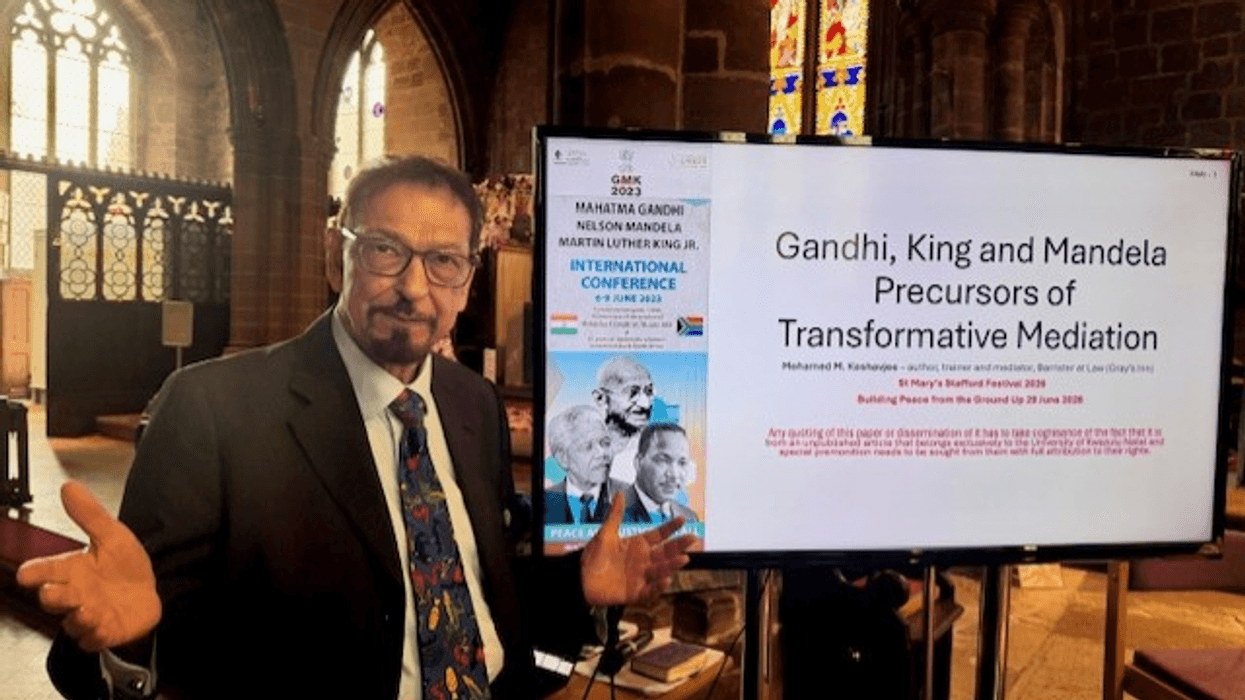
Dr Mohamed Keshavjee, recipient of the 2016 Gandhi, King, Ikeda Peace Award, delivered a lecture titled Gandhi, King and Ikeda – Precursors of Transformative Mediation.
He explained how Gandhi, King and Japanese author and nuclear disarmament advocate, Daisaku Ikeda, based their activism on deep moral and philosophical reflection.
Keshavjee said conflicts often leave people trapped in “hatred, pain and selfpity”, while transformative mediation, through recognition and empowerment, can help turn negative emotions into constructive hope.
Stafford Borough mayor, councillor Mark Winnington and mayoress Rosie Winnington attended the festival, which featured a special PeaceBuilding Day as part of its fortnight-long programme of arts, culture and community activities.
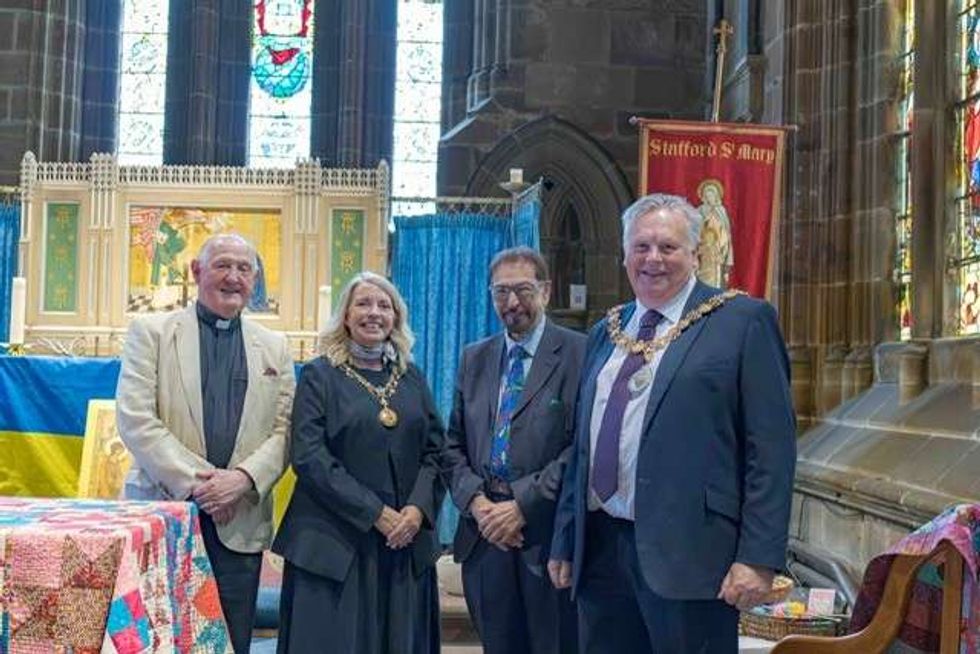 Father John Davis, mayoress Rosie Winnington, Keshavjee and mayor Mark WinningtonPaul-Milgate Scarrott
Neil Robinson, facilitator of the Peace-Building Day and an official of the Family Mediators Association of England and Wales, said Gandhi’s contribution remained central to modern discussions on peace.
“No discussion on peacebuilding today can afford to ignore the seminal influence of Mohandas Karamchand Gandhi in working towards lasting peace through moral reinforcement and social action,” Robinson said.
He added that Gandhi’s philosophy of Satyagraha, or “soul force”, influenced global leaders such as Martin Luther King Jr and Mandela, who drew inspiration from his methods during their struggles against racial injustice in the United States and South Africa.
David Gengen, president of the Gandhi Foundation of Pietermaritzburg, South Africa, also praised the Stafford event. Pietermaritzburg is the South African city where Gandhi was famously removed from a whites-only train in June 1893, an incident often seen as a turning point in his journey towards activism.
Gengen said the festival had given the Gandhi Foundation fresh motivation to organise a conference in the UK celebrating the three figures.
International conferences have already been held in the US and South Africa, while the next Gandhi-King-Mandela conference is planned in Madurai, Tamil Nadu, from January 13 to 15, 2027.
Robinson said a UK conference would be an addition, given Gandhi’s formative years in Britain. He spent two years in England studying law and was called to the Bar at the Inner Temple.
According to the organisers, the UK conference would complete the international programme by recognising Britain’s role in shaping Gandhi’s early thinking and his later influence on movements for justice around the world.