
Same-sex romance came out of the mainstream cinema closet with Karan Johar’s Dostana in 2008. Indian movies have come a long way from that gaze of ridicule and slapstick laughter in the 15 years since with empathetic, real-life portrayals of the queer community but it’s still a road less travelled.
The recent Supreme Court verdict refusing to recognise same-sex marriages has put the spotlight once again on LGBTQIA+ persons, who have been struggling for equal rights and were hoping desperately for legal validation for same-sex relationships. This indifference, say members of the community, is reflected in cinema too with most narratives pivoted on the acceptance of a heteronormative society.
LGBTQIA+ rights activist and director Onir said films such as Margarita, With a Straw, about a woman with cerebral palsy discovering her sexuality, and Kapoor & Sons, in which a gay protagonist struggles to find acceptance in his family, were appreciated for the sensitive way they depicted the community. While the former, directed by Shonali Bose, was a small, intimate film, the latter from the Karan Johar stable was packaged in mainstream format.
"It is more important to assert queer identity and not camouflage it to suit a heteronormative palette," Onir, who is open about his gay identity and sexuality, told PTI.
"The filmmakers are trying to say the right thing but what is often problematic is that these films are made by cis-gendered men and they themselves are learning how to accept. So, there's a lot of unease when it comes to portraying any kind of queer desire," he added.
From Dostana to Badhaai Do in 2022, mainstream Hindi films have had quite a journey in their portrayal of same-sex romance and the third gender.
Dostana was some steps ahead of Johar’s 2003 production Kal Ho Naa Ho. Starring Shah Rukh Khan and Saif Ali Khan, the film had a brief segment involving Kantabai, Saif's domestic help, who thinks the two men are having an affair. It was also used for comedic relief.
Directed by Tarun Mansukhani and produced by Johar, Dostana revolved around two heterosexual men, Abhishek Bachchan, and John Abraham, pretending to be gay so they could be around the woman they want to woo. The plot detail was largely for laughs and was panned for its stereotypical gaze. But many argue that it was the first time that the very idea was discussed in a mainstream Bollywood film.
The caricaturisation stopped in Johar’s later films.
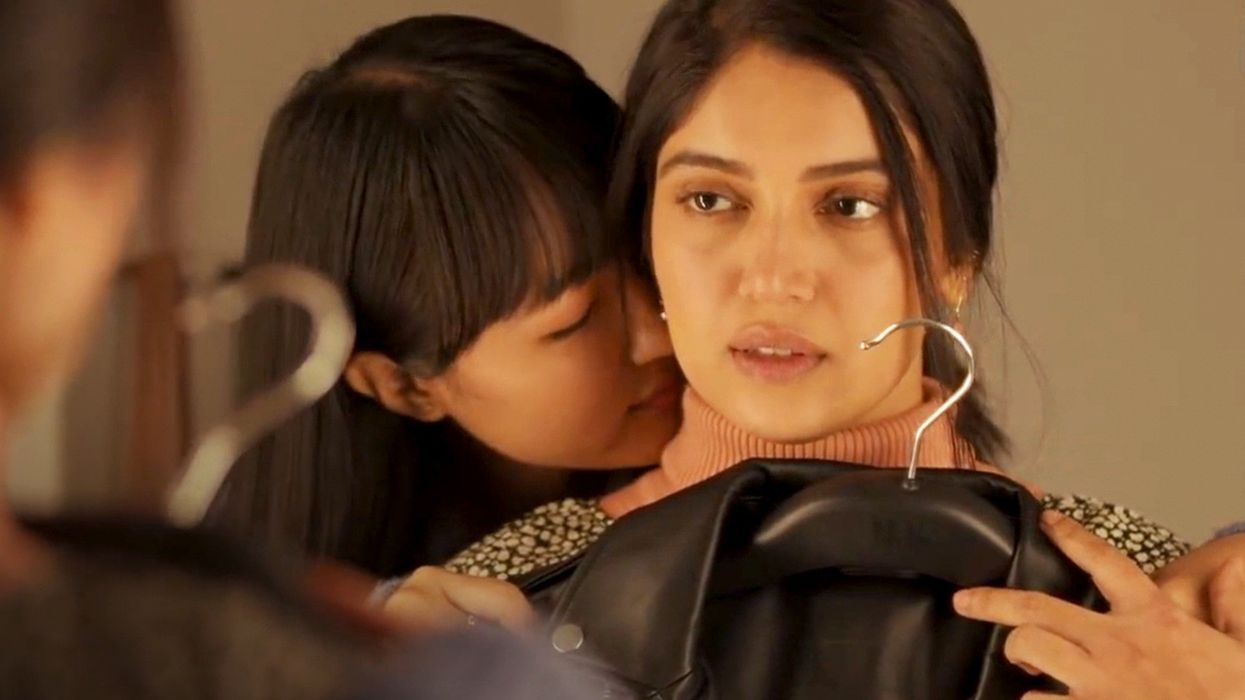
According to Onir, the most beautiful part of Badhaai Do was when the two same-sex couples – one played by Rajkummar Rao and Gulshan Devaiah and the other by Bhumi Pednekar and Chum Darang -- participate in the Pride March.