
Arsenal's Friday night win over newly-promoted Coventry City opened the richest football league on earth for another season. Millions watched. Billions will follow across the campaign. And for the first time in recent memory, not one of them will be watching a British south Asian player turn out in the Premier League itself.
It isn't for lack of names. Four years ago, English football had what looked like a genuine breakthrough group: Hamza Choudhury at Leicester, Zidane Iqbal at Manchester United, Arjan Raikhy at Aston Villa, Kam Kandola at Wolves. Between them they carried the weight of a community that makes up roughly six per cent of grassroots football in England but, by the Professional Footballers' Association's own count, barely 0.45 per cent of the professional game.
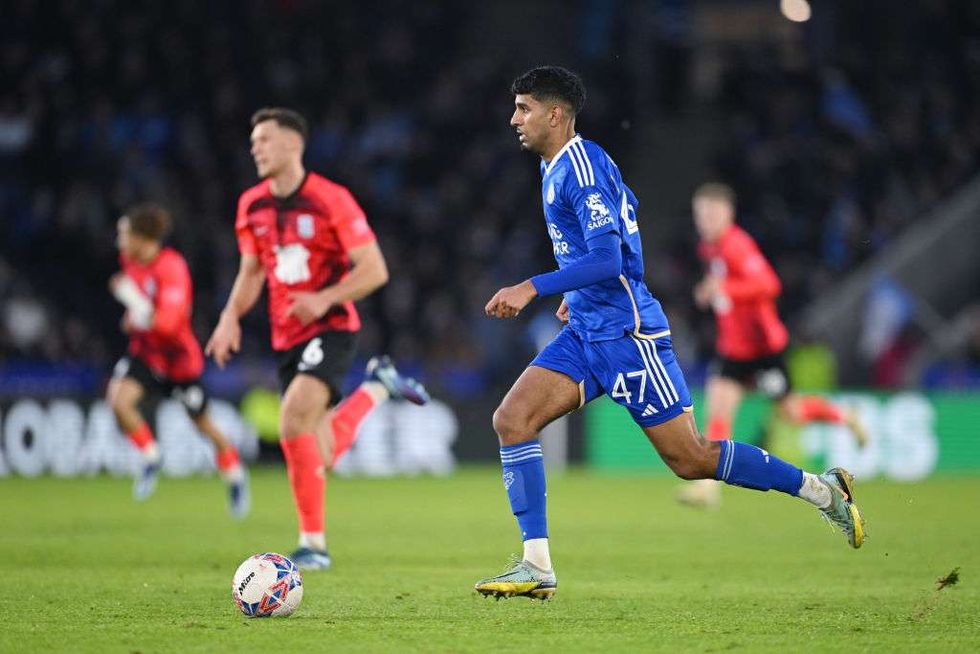 Arjan Raikhy Arjan Raikhy of Leicester in action during the Emirates FA Cup Fourth Round match between Leicester City and Birmingham City at The King Power Stadium on January 27, 2024 in Leicester, England. (Photo by Michael Regan/Getty Images)
Today, none of them are playing top-flight football.
Choudhury is still going — he's Leicester's longest-serving player and captained the side through pre-season — but Leicester have been relegated twice since 2023 and now play in League One. Iqbal is out on loan at Jong FC Utrecht, the reserve side of a Dutch second-tier club, though he did become the first player of British south Asian heritage to appear at a men's World Cup finals, turning out for Iraq at the tournament this summer. Kandola was released by Wolves and is now at National League club Hereford. Raikhy, once tipped as a Villa "wonderkid," left Leicester after a string of loan spells and is playing for Boston United, also in the National League.
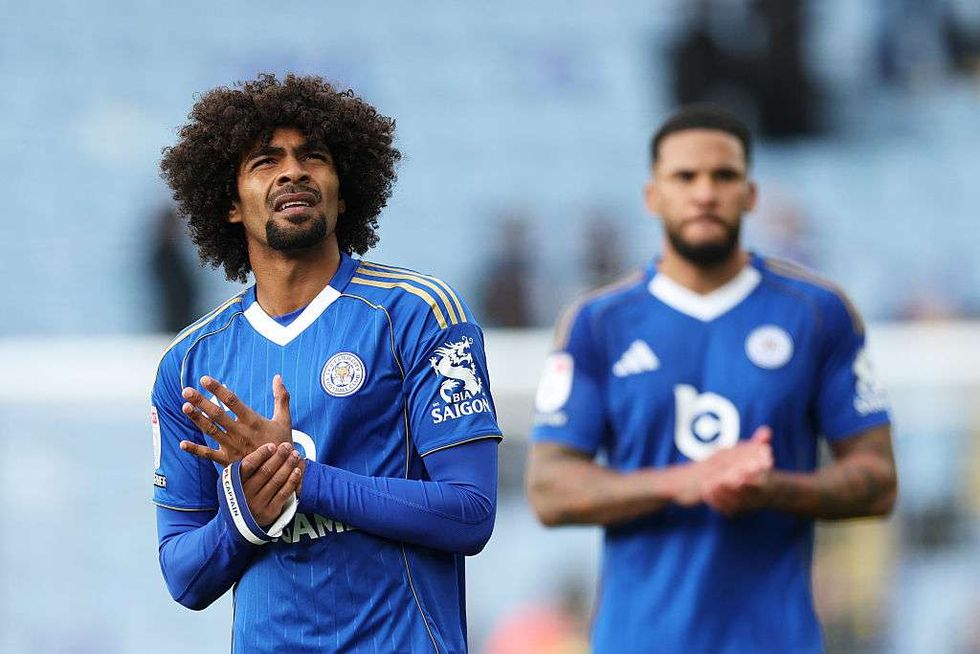 Hamza Choudhury Hamza Choudhury of Leicester City applauds fans after the Sky Bet Championship match between Leicester City and Swansea City at The King Power Stadium on April 11, 2026 in Leicester, England. (Photo by Michael Regan/Getty Images)
It's a quiet, unremarked-upon reversal — and it lands four years after the Premier League and Kick It Out launched the south Asian Action Plan specifically to fix this. Kick It Out chair Sanjay Bhandari, when the plan launched, called the numbers "the biggest statistical anomaly" in English sport, and said simply that the community wants to be seen more on the pitch.
The PFA has been blunt about the scale of what's needed. Riz Rehman, who runs the union's Asian Inclusion Mentoring Scheme, has said the goal is to get professional representation up to around six per cent — matching participation at grassroots level. Reaching that would mean not four players, but dozens.
None of this is a story about talent running out. Iqbal captained his way to a World Cup finals shirt this summer. Choudhury has led a Premier League dressing room and now leads a League One one. The pipeline that produced them hasn't disappeared — but for a season opener watched by a global audience, it's still not delivering a single face at the top level for the community that follows the game hardest.
The next generation is out there, in academies and mentoring schemes up and down the country. Whether the numbers look different by the time the next World Cup comes around is the real question this season opens with.