AN EXHIBITION at the National Army Museum in London depicts life in the trenches and away from the battlefield for soldiers from the Indian subcontinent during the First World War.
Drawn on the Western Front: Paul Sarrut and the Indian Army offers a unique insight into the experiences of Indian troops fighting alongside British forces at the beginning of the last century.
It features more than 50 original drawings by Sarrut, a French artist, as well as works on paper, many exhibited publicly for the first time in a century.
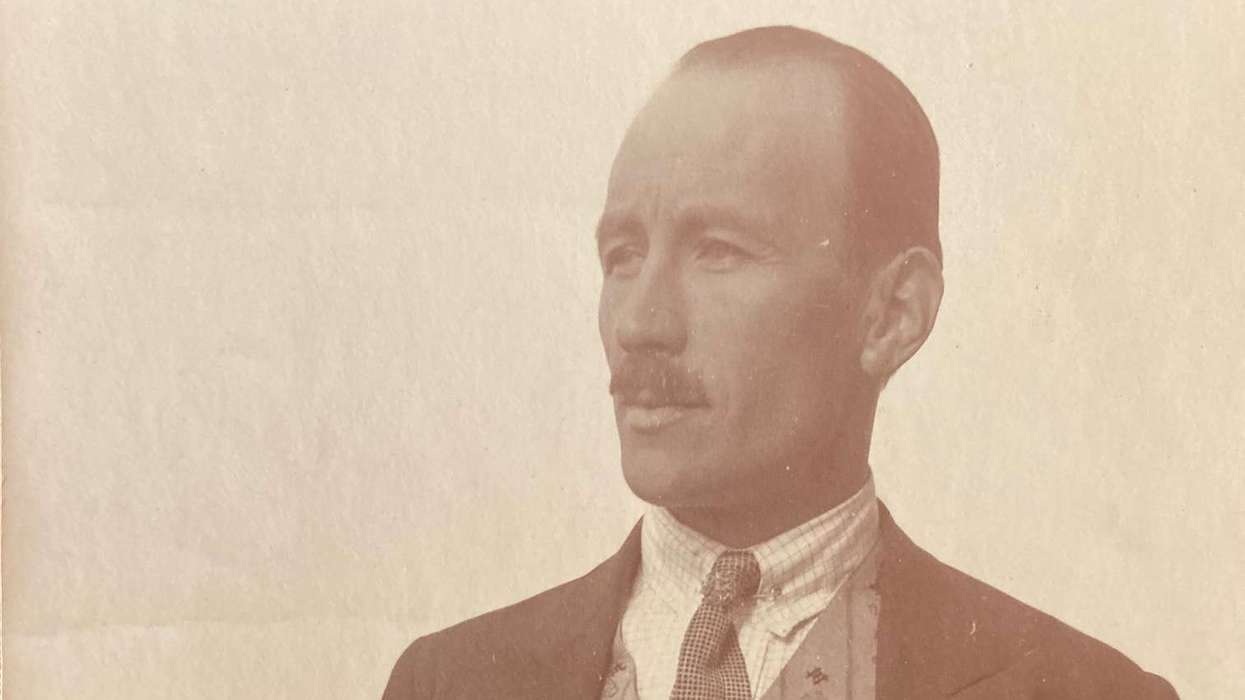
Uniforms, photographs, archives and medals are also on exhibit. Sarrut served as a liaison officer and interpreter with British, French and Indian units on the Western Front, giving him access to soldiers whom he sketched as they lived and fought far from home.
Anna Lavelle, the exhibition’s lead curator, said: “What makes Sarrut’s work so compelling is its immediacy. He was living among the soldiers he drew and capturing moments as they happened: resting, reading, waiting, recovering.
“The sketches feel deeply personal and unguarded. They reveal aspects of military life that are often absent from official wartime imagery and help us connect emotionally with people living through extraordinary circumstances more than a century ago.”
One highlight is Sarrut’s portrait of Sepoy Harnam Singh, whose image became famous in Britain during the war. More than one million Indian men are estimated to have volunteered to serve in the British Indian Army during the First World War.
In 1914 alone, more than 140,000 soldiers travelled 4,500 miles from India to France to fight on the Western Front.
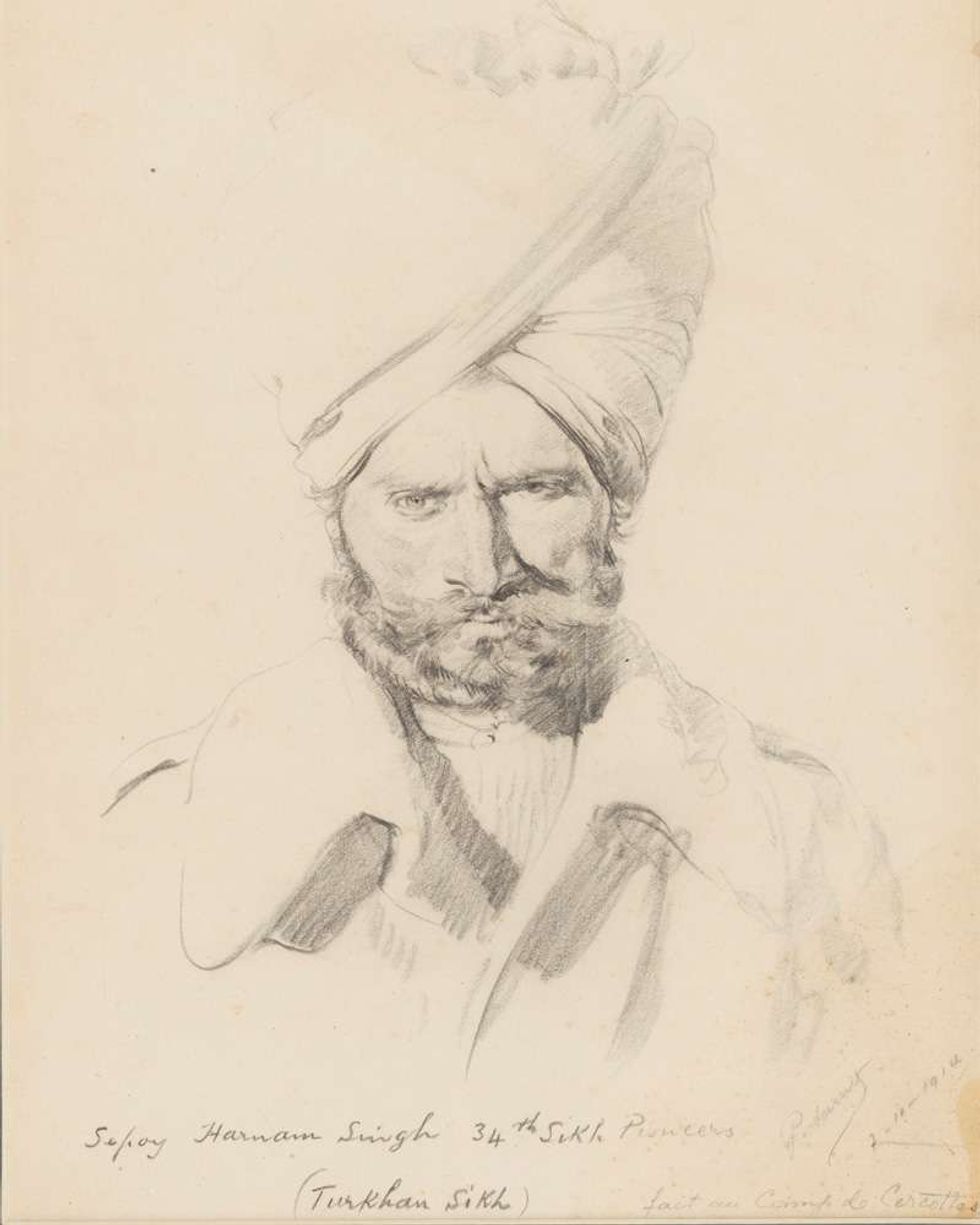 His portrait of Sepoy Harnam SinghThe Estate of Paul Sarrut/National Army Museum
When they arrived in Europe, their clothing and shoes proved inadequate for the winter conditions, prompting changes to their uniforms. Many suffered from illness and frostbite, being unaccustomed to the weather.
A diary entry from Captain Amar Singh describes the cold as “most intense”.
Sarrut also helped medical staff communicate with injured soldiers, giving him access to scenes of treatment.
A letter in the exhibition tells the story of an Indian soldier billeted at the home of an elderly French woman. Three of her sons had gone to war and one had died.
The soldier describes her kindness, from cleaning his uniform and making his bed to preparing tea and food. When he offered her money before leaving, she refused.
Lavelle told Eastern Eye, “Instead, she wept on his shoulder and then gave him a five franc note. It shows actually how the war really affected civilians as well, because you were having soldiers in your home, especially with all the different language barriers.
“These moments exist and are captured; often you wouldn’t hear about them.”
The Victoria Cross awarded to Khudadad Khan, the first Muslim and first soldier from the Indian subcontinent to receive the honour, is also on display.
On loan from Lord Ashcroft, it is the first medal from his collection of Victoria and George Crosses to feature in the exhibition.
Lord Ashcroft said Khan’s courage at the Battle of Ypres was “quite incredible”, adding: “His gallantry deserves to be championed far and wide.”
“It is also important to recognise that many loyal and brave Muslims have risked, and sometimes given, their lives for Britain, its allies and for wider freedoms.”
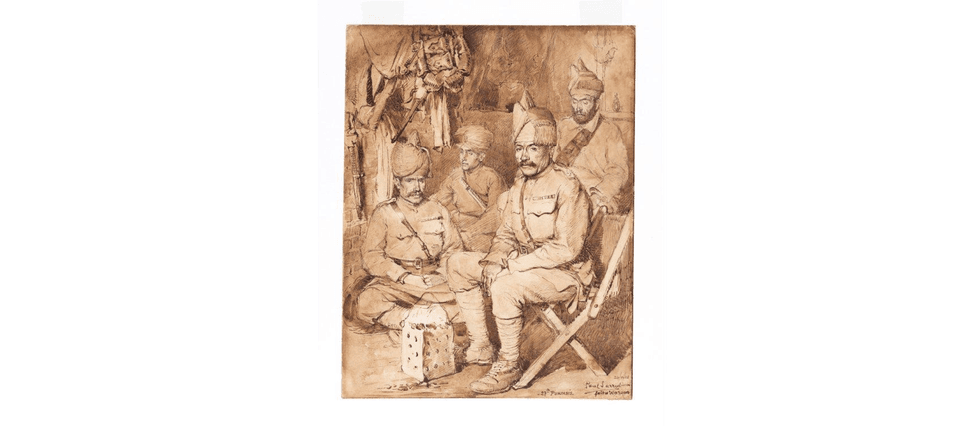 The 27th Punjabis at WasnesThe Estate of Paul Sarrut/National Army Museum
Following the war, a selection of Sarrut’s sketches was reproduced as a series of lithographic prints, helping to preserve some of his observations of Indian soldiers on the Western Front, according to a statement from the museum.
Its director, Justin Maciejewski, said: “As the home of Britain’s most important collection related to the pre-1947 Indian Army, we are proud to share their stories.
“The Indian Corps played a vital part in the opening months of the First World War. “These medals are a powerful and inspiring reminder of the courage shown by soldiers of many faiths and backgrounds who served in the Indian Corps during the First World War.”
Due to the fragility of the works on paper, many are unlikely to be shown again for many years.