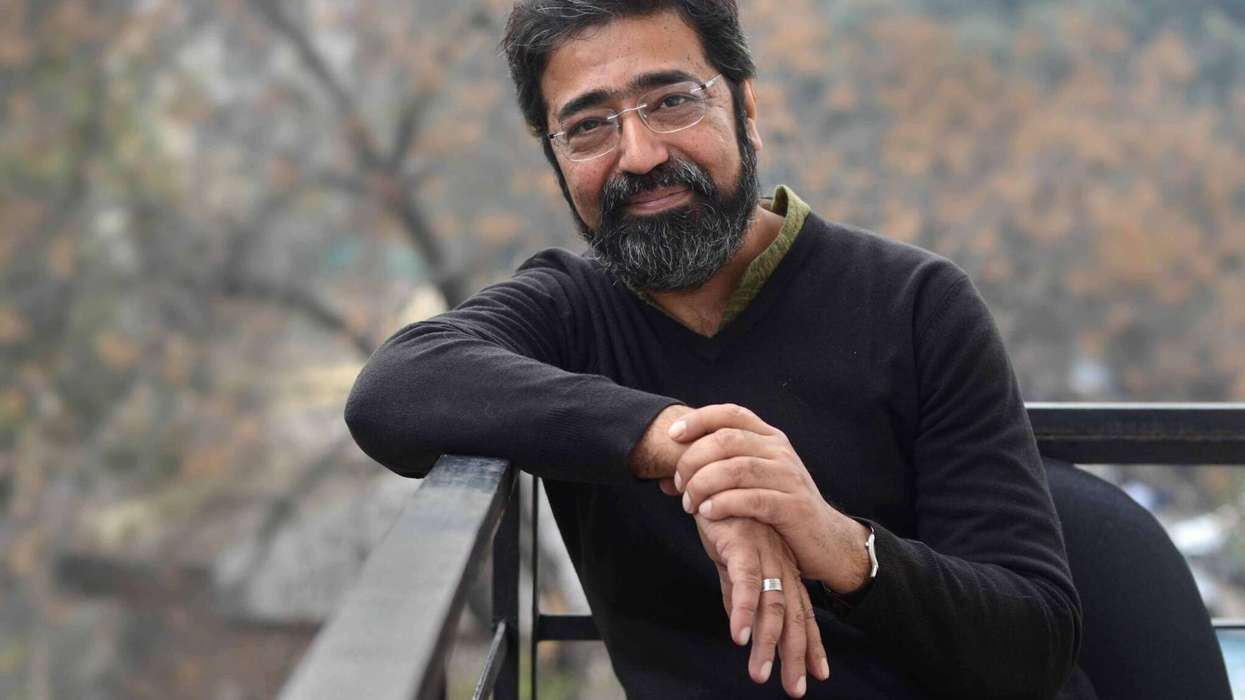

ARTIST and filmmaker Amar Kanwar is bringing a new seven-screen film installation to London's Serpentine, exploring the continuing impact of the 1947 Partition of the Indian subcontinent.
The Charcoal Man, which is on display at Serpentine North, forms the centrepiece of the solo exhibition bringing together new and existing works by Kanwar.
The exhibition has brought together three major works: The Charcoal Man (2026), The Peacock’s Graveyard (2023) and the feature-length Such a Morning (2017).
Kanwar, born in New Delhi in 1964, has developed a distinctive style that moves between documentary, travelogue and visual essay. His work often draws on the history of the Indian subcontinent, including the legacies of decolonisation and the Partition of India and Pakistan.
According to a statement, his films combine personal histories with wider questions about how societies remember violence and upheaval. Kanwar uses film, text, archival material, fables and music to encourage viewers to sit with difficult questions about the past and present, it added.
Speaking about the exhibition, Kanwar reflects on the darker side of human experience.
“Our capacity for evil is not new and yet the last decade has twisted this knife deeper into our souls,” he said.
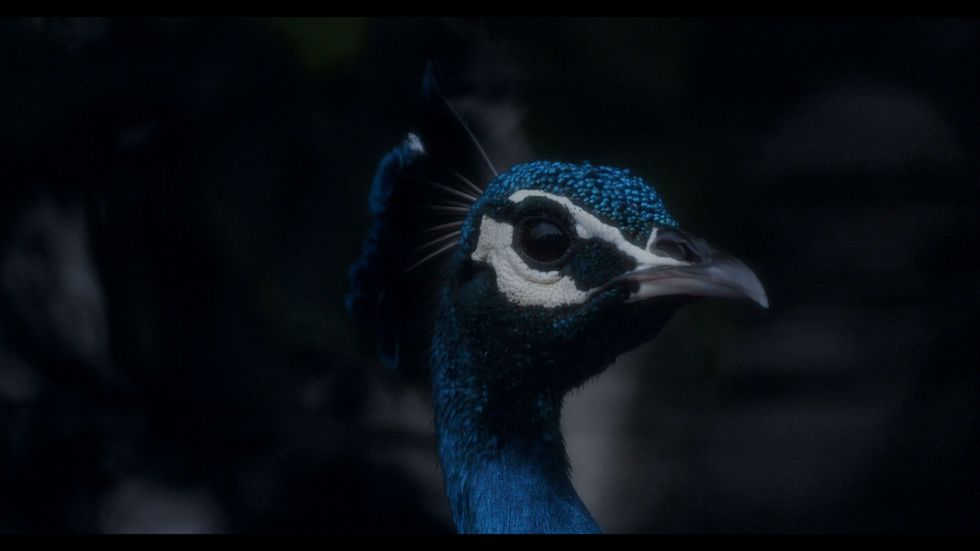 Amar Kanwar, The Peacock's Graveyard, 2023 (film still). Courtesy of the artist and Marian Goodman Gallery.
He also expressed his gratitude to Serpentine and the people who helped bring the new installations to life, saying: “Everyone has shared a part of themselves while making this possible.”
The Charcoal Man has been developed over three years. Commissioned by the Kiran Nadar Museum of Art in Delhi, the seven-screen work extends Kanwar’s engagement with Partition.
The artist said the work seeks “coherence from disintegration, insight from fusion, and stories from within stories”.
It brings together images and text to explore cycles of betrayal, vengeance, illusion, passion, jealousy and rage, linking the violence and divisions of the past with patterns that continue to shape society.
Alongside it, The Peacock’s Graveyard, first commissioned for Sharjah Biennial 15, will be shown in London for the first time. Kanwar has described the work not as “a lament or mourning” but as “a kind of gift, a collection of stories” that can help people reflect on life and confront “our unbearable arrogance, delusions and deep desire for violence”.
Such a Morning, presented in one of Serpentine North’s brick-vaulted Powder Rooms, takes a different route into questions of truth and darkness. The 85-minute film follows a famous mathematician and professor who suddenly retires and takes refuge in an abandoned train carriage in a forest.
The exhibition will also feature the professor’s letters through projected images, videos and texts on handmade ramie and cotton-fibre paper.
Serpentine CEO Bettina Korek and Artistic Director Hans Ulrich Obrist described Kanwar as “one of the singular voices of our time” and said his work has expanded “what film can be and how it can exist within an exhibition”.
They said the new work had been developed through a process of research, filming, writing and listening, while the exhibition as a whole brings together interconnected works that combine “fables, news, music and archival documentation”.
Kanwar has previously exhibited at Tate Modern in London, the Metropolitan Museum of Art in New York and Palazzo Grassi in Venice. His work has also featured at documenta and the Sharjah and Kochi-Muziris biennales.
The exhibition is curated in close collaboration with Kanwar by Chris Bayley, exhibitions curator, with Kit Gurnos, assistant exhibitions curator.
Amar Kanwar will be presented at Serpentine North, Kensington Gardens, London, until January 31, 2027.



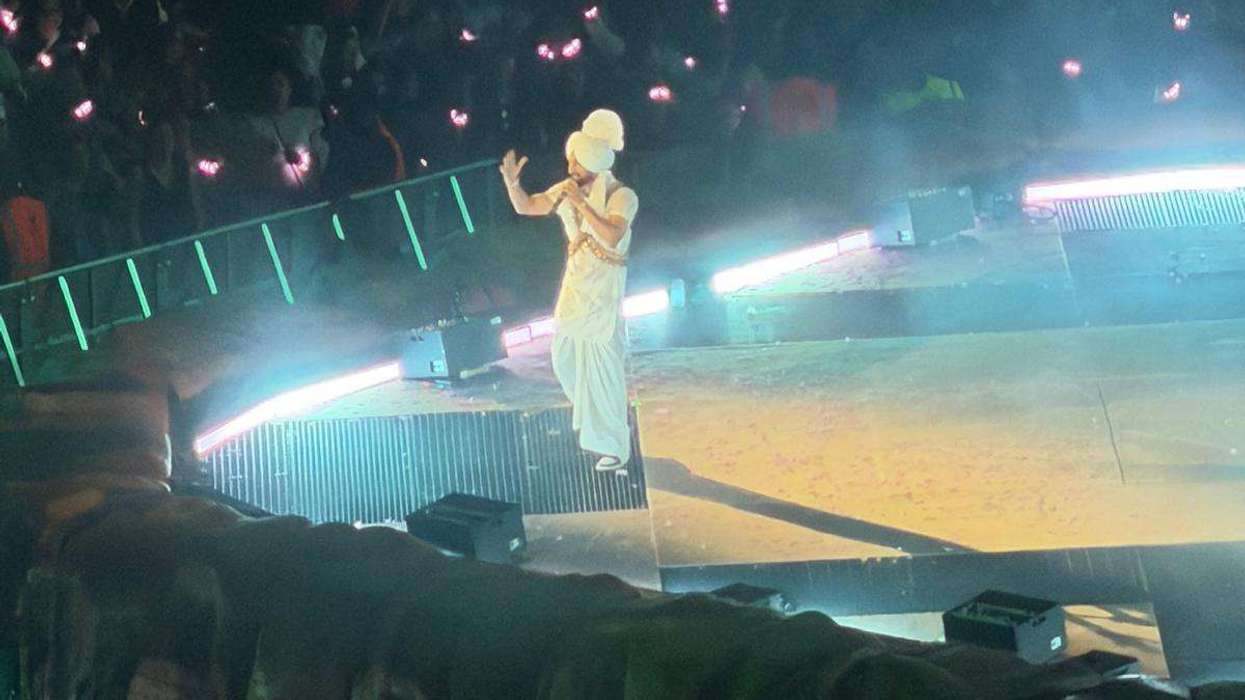
 Diljit DosanjhEastern Eye
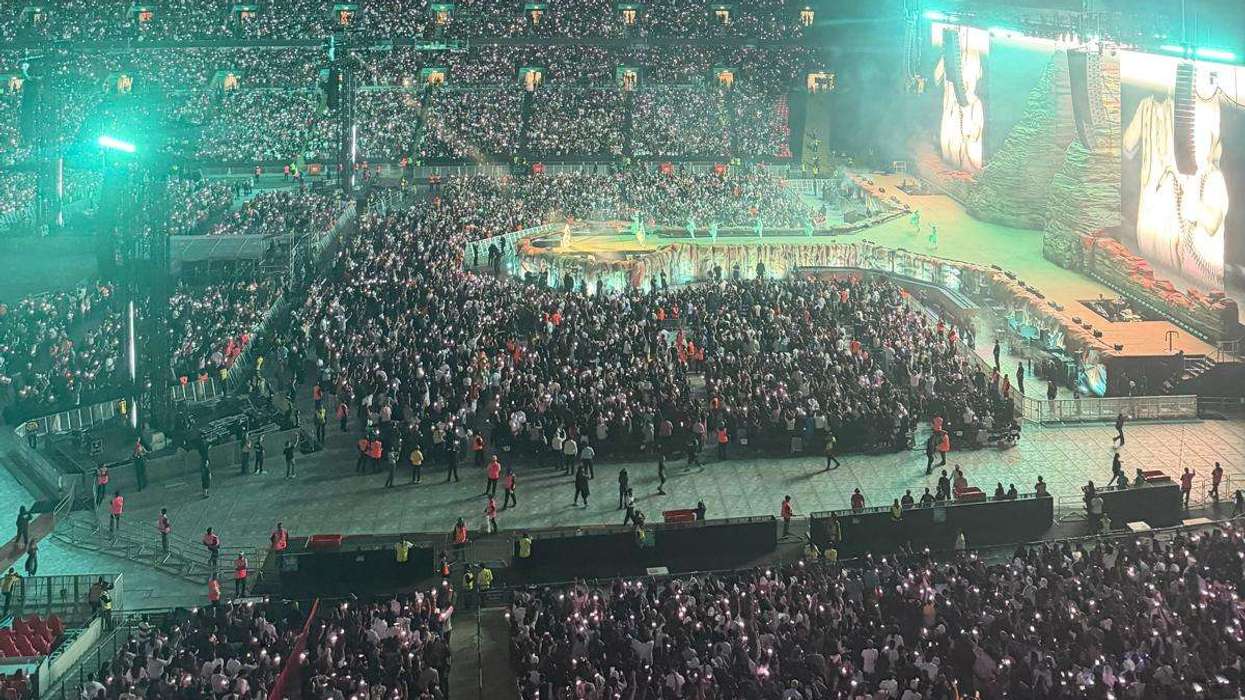 A packed audiencePhoto: Surina Narula
 Surina NarulaPhoto: SN 14