
A MUSLIM woman was sentenced to death in Pakistan on Wednesday (19) after being convicted of sending a blasphemous text message and caricatures of Prophet Muhammad via WhatsApp.
Aneeqa Ateeq, 26, was arrested in May 2020 and charged with posting "blasphemous material" as her WhatsApp status, according to a summary issued by a court.
When a friend urged her to change it, she instead forwarded the material to him, it said.
Caricatures of Muhammad are forbidden by Islam.
The sentence was announced in the garrison city of Rawalpindi, with the court ordering her to be "hanged by her neck till she is dead".
She was also given a 20-year jail sentence.
Up to 80 people are known to be jailed in Pakistan on blasphemy charges - half of whom face life in prison or the death penalty - according to the US Commission on International Religious Freedom.
While many cases involve Muslims accusing fellow Muslims, rights activists have warned that religious minorities - particularly Christians - are often caught in the crossfire, with blasphemy charges used to settle personal scores.
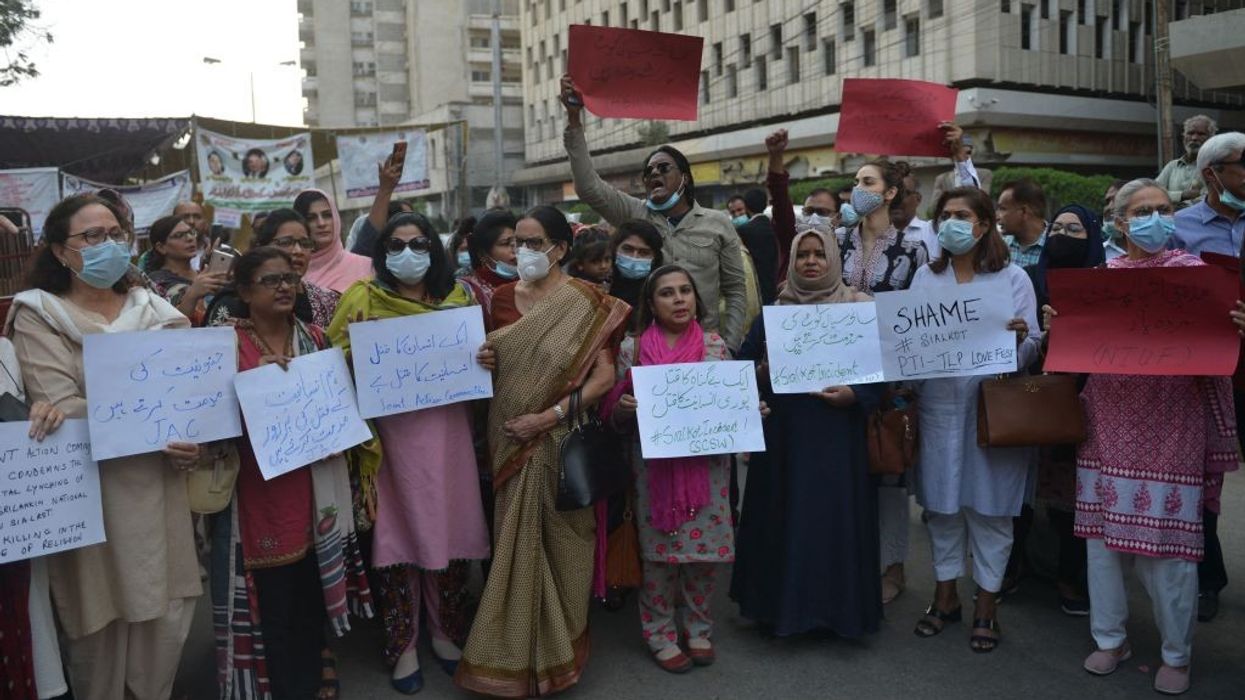
In December, a Sri Lankan factory manager working in Pakistan was beaten to death and set ablaze by a mob after being accused of blasphemy.
(AFP)