
AT LEAST 54 people have died in the last 24 hours due to heavy monsoon rain in Pakistan, the country’s disaster management agency said on Thursday. The latest fatalities have pushed the overall death toll since the start of the monsoon season in late June to around 180.
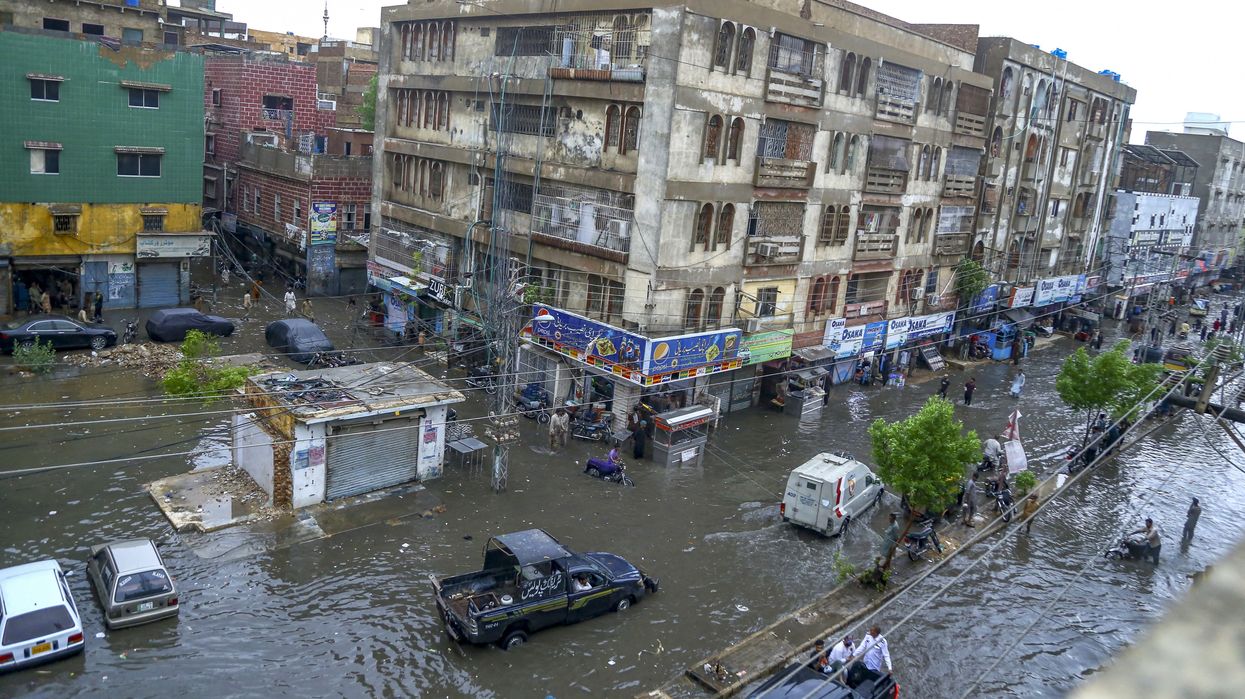
Heavy rain has continued almost non-stop across parts of Punjab province since Wednesday morning, leading to urban flooding and house collapses.
Authorities have ordered residents living in low-lying areas near the Nullah Lai river in Rawalpindi, adjacent to Islamabad, to evacuate due to a sudden rise in water levels.
Some evacuations have already been carried out in areas close to the river, while rescue teams are on standby for further evacuations, a spokesperson for the disaster agency said.
“Residents of vulnerable areas should prepare emergency kits with food, water, and essential medicines for three to five days in case of an emergency,” the National Disaster Management Authority (NDMA) said in an alert.
The Rawalpindi administration announced a public holiday on Thursday to keep people indoors. The national meteorological department has forecast heavy rainfall to continue until Friday.
“In the last 24 hours, 54 people were killed and 227 injured across Pakistan, with the majority of fatalities reported from Punjab,” the NDMA spokeswoman told AFP, adding that the numbers were compiled at 8:00 am (0300 GMT) on Thursday.
According to NDMA, nearly 180 people have been killed and around 500 injured since the monsoon began on 26 June. Among the dead are 70 children.
Most of the deaths have resulted from house collapses and sudden flash floods. Several people were also electrocuted.
The monsoon brings 70 to 80 per cent of South Asia’s annual rainfall and typically runs from June to September across India and Pakistan.
The rains are crucial for farming and food security and support the livelihoods of millions of farmers, but they also cause widespread damage every year.
South Asia is witnessing rising temperatures and changing weather patterns, though scientists remain uncertain about how exactly climate change is affecting the region’s complex monsoon system.
Pakistan, with a population of 255 million, is considered one of the most climate-vulnerable countries in the world and is facing extreme weather events more frequently.
In 2022, floods caused by monsoon rains submerged one-third of the country and killed 1,700 people.
(With inputs from agencies)