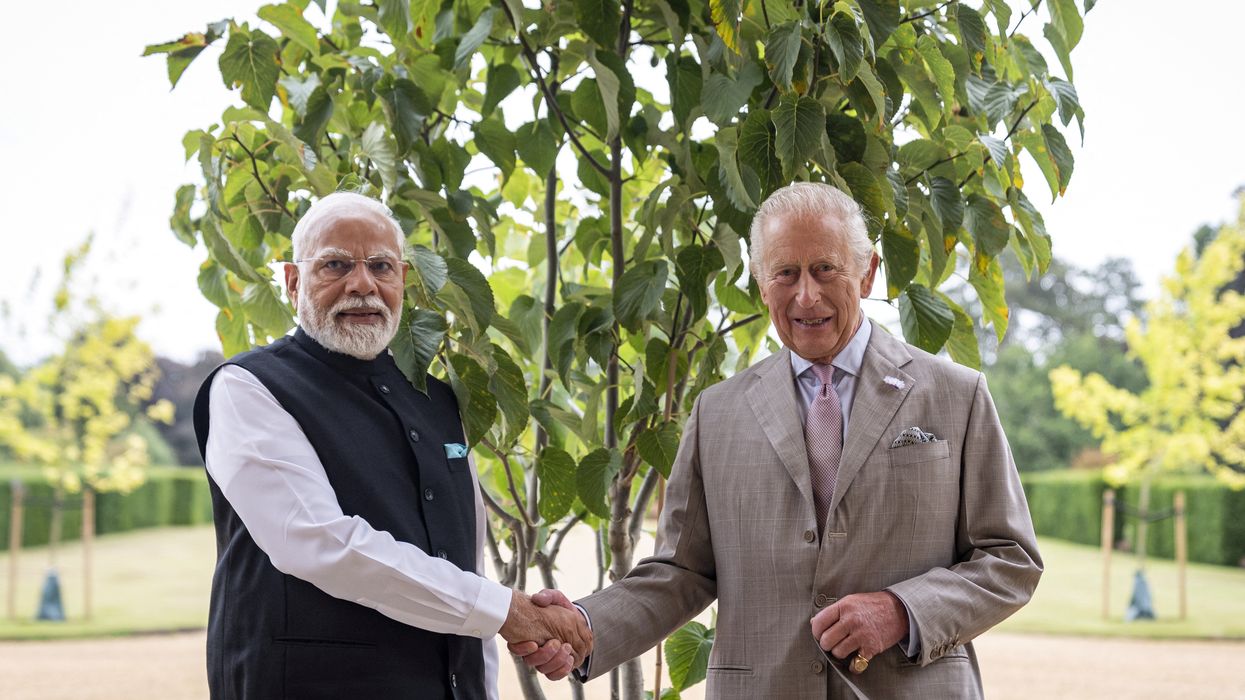

INDIA’s prime minister Narendra Modi wrapped up his twoday visit to Britain last Thursday (24) with a special meeting with King Charles III at the royal Sandringham Estate in Norfolk.
The Indian leader’s final engagement in the UK took place at the King’s countryside home in eastern England, marking the end of a visit that has strengthened ties between the two nations. During their meeting, Modi presented King Charles with a thoughtful gift – a Sonoma dove tree, also known as a handkerchief tree, which will be planted at the royal estate this autumn.
The gift was part of Modi’s environmental programme called Ek Ped Maa Ke Naam, which means “one tree in mother’s name” in Hindi. This initiative encourages people to plant trees as a tribute to their mothers while helping the environment.
“Had a very good meeting with His Majesty King Charles III. We discussed different aspects of India-UK relations, including the ground covered in trade and investment in the wake of CETA and Vision 2035. Other subjects of discussion included education, health and wellness, particularly yoga and ayurveda, which are subjects His Majesty is very passionate about. We also talked about environmental protection and sustainability,” Modi wrote on social media after the visit.
Earlier in his visit, Modi held lengthy discussions with British prime minister Keir Starmer at Chequers. The talks at Chequers covered many important topics beyond trade. Both leaders discussed defence cooperation, security matters, technology sharing, and educational partnerships. They also spoke about regional and global issues that affect both nations.
A sad note was struck when the leaders remembered the victims of last month’s Air India plane crash. Starmer assured Modi that Britain would continue supporting all those affected by the tragedy, expressing sympathy for the families and loved ones of the victims.
He thanked Starmer, the British government, and the British people for their warm welcome during his stay. Downing Street praised the meetings, highlighting how the new partnership would bring growth to every part of Britain, especially in sectors like technology and trade.
The strengthened relationship between the two countries builds on their long-shared history. Britain and India have maintained close ties since India’s independence, with both nations benefiting from cultural, economic, and political connections.
Before leaving Britain, Modi extended an invitation to Starmer to visit India. The British prime minister accepted the invitation, and officials from both countries will now work out the details of when this return visit might happen. Downing Street noted that both leaders were looking forward to meeting again soon.