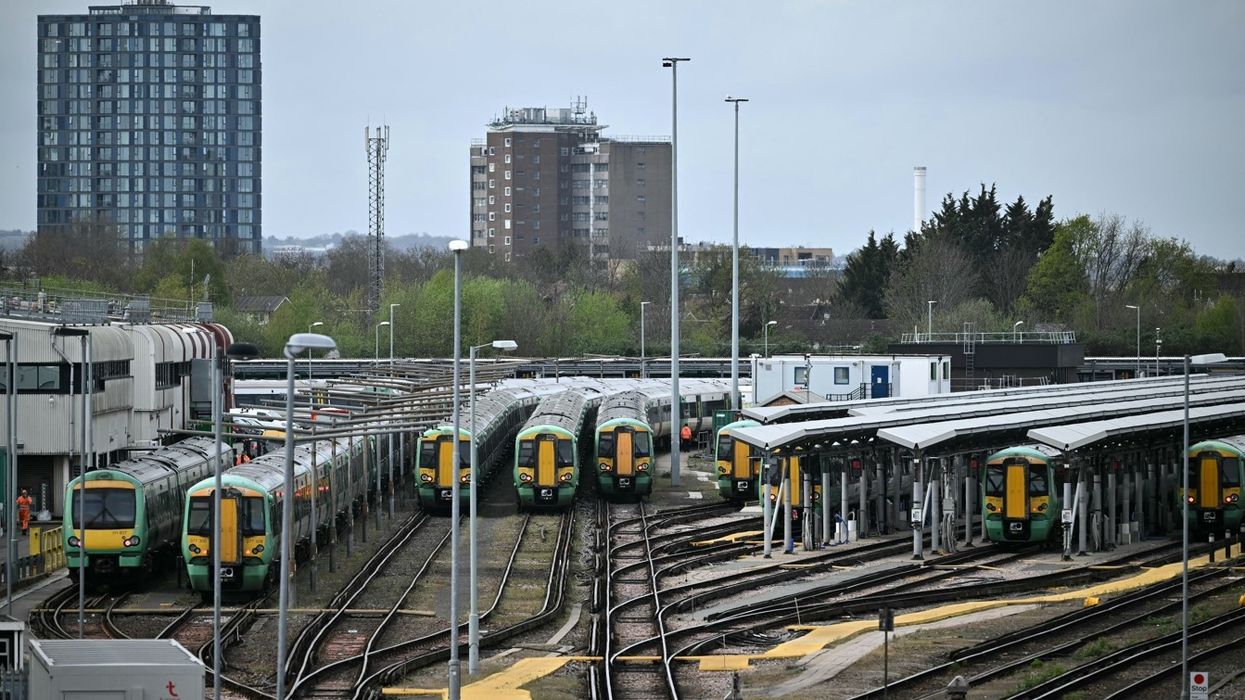

Labour has announced its intention to nationalise the country's rail network within five years without compensating private operators, as part of its strategy to address issues within the railway system.
Since the privatisation of Britain's train services in the 1990s, several operators have been brought back under public ownership due to performance issues.
The party aims to establish a publicly owned entity called Great British Railways, which will take over passenger rail contracts from private firms as they expire, a process expected to be completed within Labour's first term.
"Labour will deliver the biggest overhaul to our railways in a generation," said Labour's transport policy chief, Louise Haigh.
Amid disruptions caused by the Covid-19 pandemic and industrial unrest, the declining quality of key services has faced widespread criticism.
A recent poll by YouGov showed nearly 70% of voters supporting the permanent return of train operators to public ownership, with less than 10% opposing it.
Shares in FirstGroup, the only quoted stock among Britain's rail contract operators, fell by 2% following the announcement. Analysts noted that the stock does not account for any future rail contracts.
Other companies currently operating rail contracts in Britain, such as Trenitalia and Arriva Group, are unlikely to be surprised by Labour's plans, according to analysts.
Despite Labour's proposals, train operators in Britain may still have opportunities to run some lines, as Transport For London plans to outsource certain connections, such as the Overground.
The current government has also proposed the establishment of a new Great British Railways company, albeit with a different role, maintaining a franchise system and involving private firms in passenger services.
The government emphasises the need for private sector involvement to enhance efficiency in the network, particularly after the decrease in commuting due to the pandemic.
Labour argues that the increase in cancellations and rail fares indicates the failure of the current system, which already sees four rail operators managed by the government.
To address these issues, Labour plans to establish a Passenger Standards Authority to oversee GBR's performance and offer price guarantees for future fares to passengers.
(Reuters)